

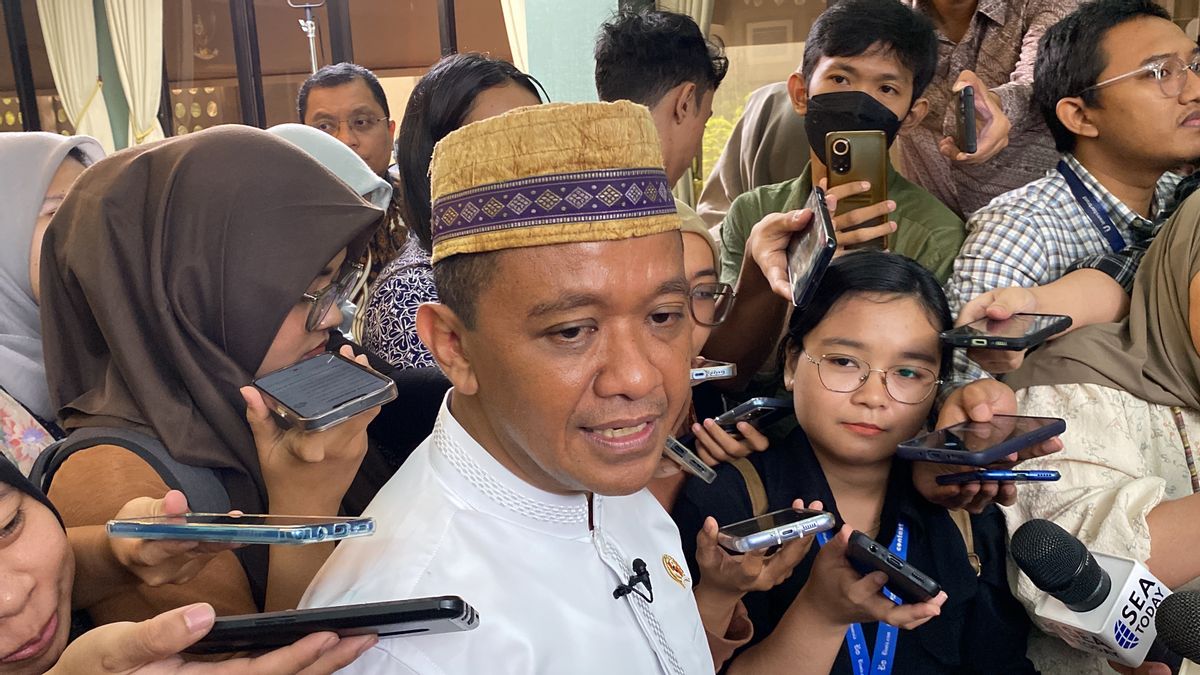


JAKARTA - Minister of Energy and Mineral Resources (ESDM) Bahlil Lahadalia said that the government is carrying out a thorough overhaul of the approval process for the Work Plan and Budget (RKAB) for the mineral and coal (minerba) mining sector in 2026.
According to him, this step is aimed at balancing between supply and market demand in order to maintain the stability of commodity prices.
"Why do we cut RKAB? because we adjust between supply and demand. Efforts to coordinate between supply and demand are also considered important, not only to maintain the stability of coal commodity prices, but also to ensure the availability of energy reserves for future generations," said Bahlil, quoted Friday, February 13.
He explained that the steps to adjust the 2026 RKAB were intended to prevent oversupply due to excessive exploitation and production. According to Bahlil, if the commodity is not sold at a reasonable price, massive production should be postponed for the sake of the availability of resources for future generations.
"If it doesn't sell well, don't produce it massively, it's a pity for our grandchildren. One day we die, they are the ones who continue the struggle of this country. Don't let them lead the goods run out because of our behavior, it's like selling cheap again," he said.
Director General of Minerals and Coal Tri Winarno highlighted the positive impact of this policy on market dynamics. According to Tri, the announcement on December 23, 2025 regarding production cuts caused a rapid market response and an increase in nickel prices.
"On December 23, 2025, when the Minister (Bahlil) announced that he would cut production. Then the nickel price immediately rose. The price is now from 14,800 (when there is an oversupply), the peak was 18,800, but now it may be checked around 17,000 something," said Tri.
The significant market reaction shows that Indonesia's production adjustment measures, as one of the world's largest nickel producers, have a significant impact on the global market. For the government, a more selective RKAB policy is expected to be able to maintain price stability while ensuring energy reserves for the future.
The English, Chinese, Japanese, Arabic, and French versions are automatically generated by the AI. So there may still be inaccuracies in translating, please always see Indonesian as our main language. (system supported by DigitalSiber.id)
Most Popular Tags
#Prabowo Subianto #donald trump #Febrie Adriansyah #8791 #giias 2026Popular


