
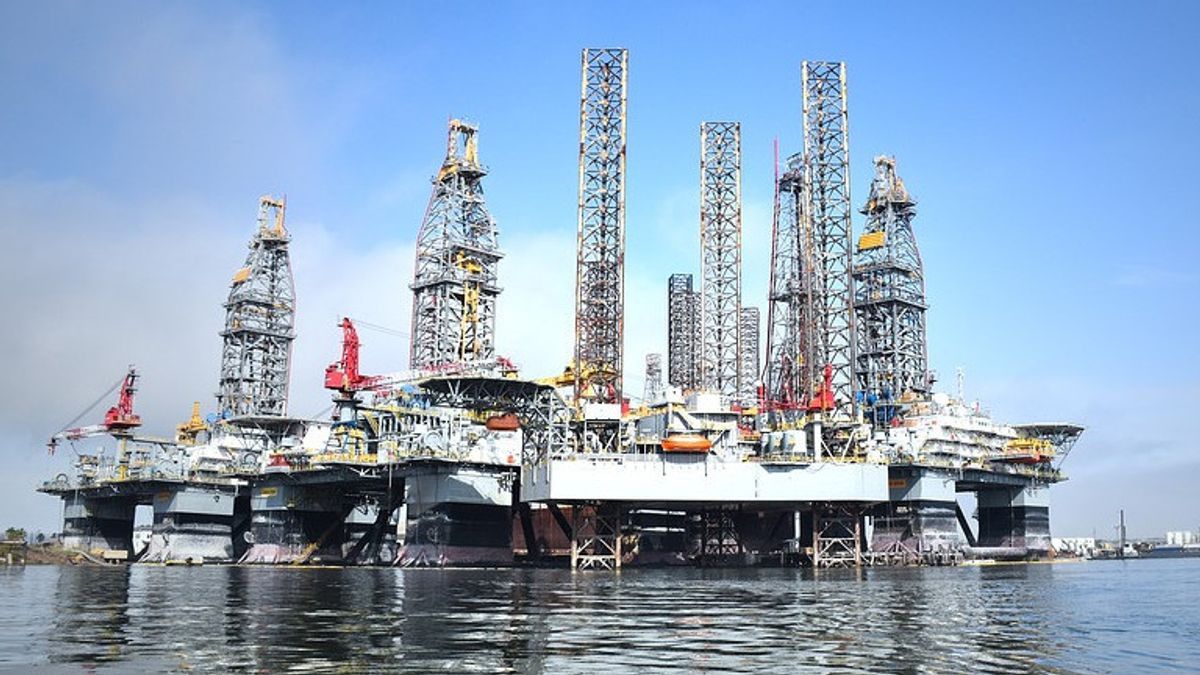


YOGYAKARTA - Oil refineries are industrial facilities that function to process crude oil into various high-value products. Among others, fuels, asphalt, LPG, and petrochemical raw materials. Refineries are vital parts of the national and global energy supply chain, because crude oil cannot be used directly by the public. In this article, we will also discuss how oil refineries work.
What is the Main Function of an Oil Refinery?Quoted from the American Fuel & Petrochemical Manufacturers website, the main function of an oil refinery is to separate, transform, and purify crude oil into products that meet the specifications of market demand. The main products of an oil refinery include:
LPG: Household and industrial fuel Fuel: Premium, Pertamax, Solar Basic petrochemicals: Nafta and propylene for the plastics and chemical industries Asphalt: Road infrastructure What are the main components of a refinery Crude Distillation Unit (CDU)CDU is the first distillation unit which serves to separate crude oil components based on their boiling point.
Vacuum Distillation Unit (VDU)At this stage, the residue from CDU is processed to produce heavy diesel fuel and cracking feedstock.
Hydrocracker UnitChanging the heavy fraction into a light product with high quality through a reaction with hydrogen.
Reforming UnitIncrease the octane of gasoline by changing the structure of hydrocarbon molecules.
How Oil Refinery WorksOil refineries have a working system with the principles of physics and chemistry. Initially, crude oil is heated and separated based on its boiling point, changed through chemical reactions for quality improvement, then purified to remove contaminants before finally being distributed to the market.
Main Stages in Oil Refinery SeparationAt this stage, the separation of crude oil components based on boiling point occurs through distillation.
Conversion (Conversion)The next stage, heavy molecules are changed or converted into light products such as gasoline and LPG.
Treatment (Treating)Remove sulfur, nitrogen, and other contaminants to meet environmental standards.
Distillation Process (Atmospheric Distillation)In the process of atmospheric distillation, crude oil is heated to 350°C-400°C, then separated in a fractionation column into:
Naphtha (gasoline) Gas (LPG) Kerosene (avtur) Residue Diesel Separation Process: Vacuum DistillationAtmospheric distillation residues are processed in vacuum distillation at low pressure so that the boiling point can be lowered. The results are as follows:
Heavy gas oil (HGO) Vacuum residue for asphalt or feed cracking Vacuum gas oil (VGO) as feed hydrocracker Conversion process: Cracking and reforming Thermal cracking: At this stage, high temperatures are used to break large molecules into small ones without catalysts. Catalytic cracking: catalysts at lower temperatures are used for better efficiency and product quality. Reforming to raise octane: turning naphtha into high-octane gasoline through a reforming process with platinum catalysts. Treatment process (Treating and Blending)After conversion, the product will be treated to remove sulfur (desulfurization) and other contaminants. Then blending is carried out so that the fuel meets octane, cetane, and emission specifications.
Types of Modern Technology in Oil Refineries Hydrocracking: Producing high quality light products Isomerization: Changing the isomer structure to improve quality Alkylation: Combining light molecules into high octane gasoline Desulfurization: Reducing sulfur content to ultra low sulfur fuel Oil Refinery End Products and Their UsesThe shape of the final product of the oil refinery and its use can be seen in everyday life:
Fuel (Premium, Pertamax, Solar): Motor vehicle and heavy equipment fuels. Asphalt: Road, port, and runway infrastructure materials. LPG: Household fuel, restaurants, and small industries. Basic Petrochemicals: Nafta for the plastics industry, propylene for basic chemicals and the textile industry.This is an overview of how oil refineries work, the work process, and the final product form that can be known. Visit VOI.id for other interesting information.
The English, Chinese, Japanese, Arabic, and French versions are automatically generated by the AI. So there may still be inaccuracies in translating, please always see Indonesian as our main language. (system supported by DigitalSiber.id)
Most Popular Tags
#Prabowo Subianto #donald trump #2026 World Cup #Febrie Adriansyah #8791Popular


