

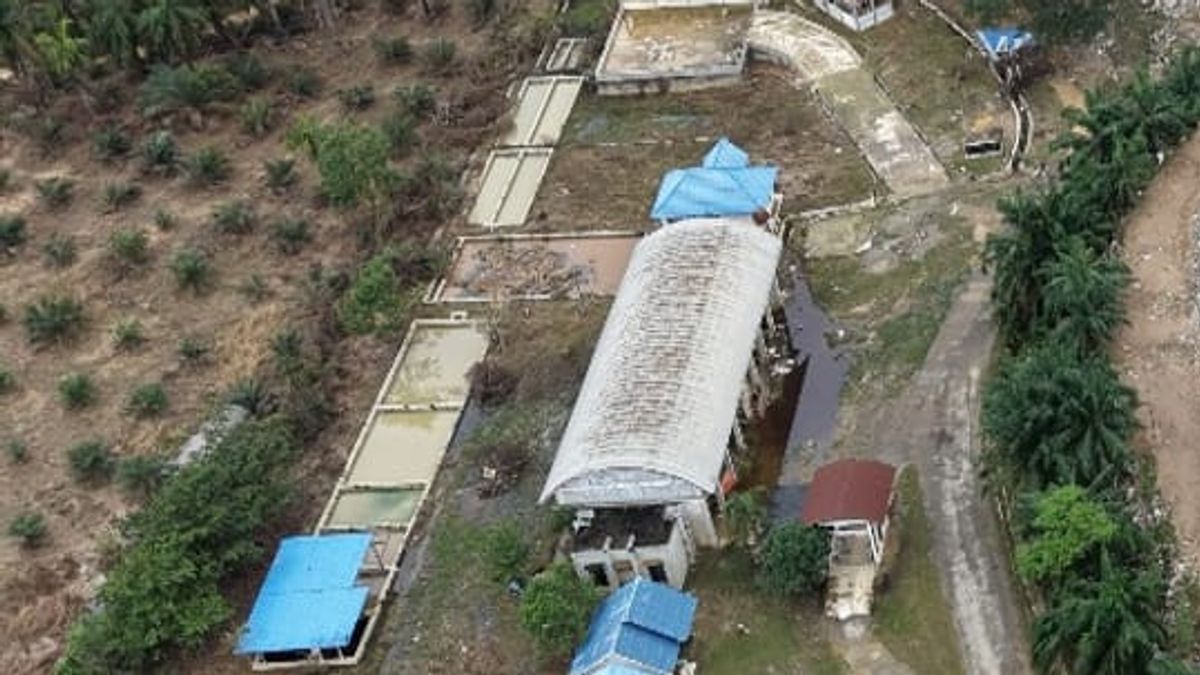


JAKARTA - The Ministry of Public Works (PU) has started rehabilitating the Rantau Final Treatment Plant (TPA) and Tinja Sludge Treatment Plant (IPLT) in Aceh Tamiang after the late November 2025 flood.
Currently, the PU Ministry is preparing to handle the Rantau Landfill in Aceh Tamiang Regency, including repairing the existing landfill cell, building a new landfill cell, repairing access roads, and procuring heavy equipment.
Until December 27, 2025, the progress that has been made includes transporting garbage and mud from hospitals, markets and residential areas to the disposal area, cleaning the access roads to the landfill until ordering geotextiles for landfill cell reinforcement.
In addition, the Ministry of PU also plans to restore sanitation infrastructure as well as improve sanitation management infrastructure so that the management system of domestic waste and wastewater can function normally and sustainably.
The steps include the procurement of a fecal truck, septic tank with bioactivator, and assistance in governance and the preparation of technical studies if necessary.
In the wastewater sector, the PU Ministry also handled the Aceh Tamiang Regency Sewage Sludge Treatment Facility, which includes repairing access roads, cleaning the existing IPLT, and rehabilitating the treatment tank unit, including anaerobic tanks, facultative tanks, maturation to wetlands.
As for the progress as of December 27, 2025, road cleaning access to IPLT and mud cleaning in the treatment tank as an initial step in restoring service functions have been carried out.
Not only that, the PU Ministry also proposed the application of environmentally friendly sanitation technology through the procurement of Net-Zero Toilet 5.0 as part of the innovation of improving sanitation services in the future.
Meanwhile, in the emergency response phase, the Aceh Building, Infrastructure and Area Arrangement Office (BPBPK) of the Ministry of PU's Cipta Karya Directorate General focuses on completing the remaining volume of post-disaster waste and materials that hinder access and have the potential to cause environmental health problems.
In addition, domestic wastewater and faecal waste services are provided by mobilizing portable toilets, mobile toilets, and knock down toilets to support the emergency sanitation needs of affected communities.
Minister PU Dody Hanggodo emphasized that adequate and equitable water and sanitation infrastructure is very important in disaster conditions such as in Sumatra.
"Because in a disaster situation it is not only about food fulfillment, water availability and infrastructure are also very important," he said in a written statement, Monday, December 29.
The English, Chinese, Japanese, Arabic, and French versions are automatically generated by the AI. So there may still be inaccuracies in translating, please always see Indonesian as our main language. (system supported by DigitalSiber.id)


