
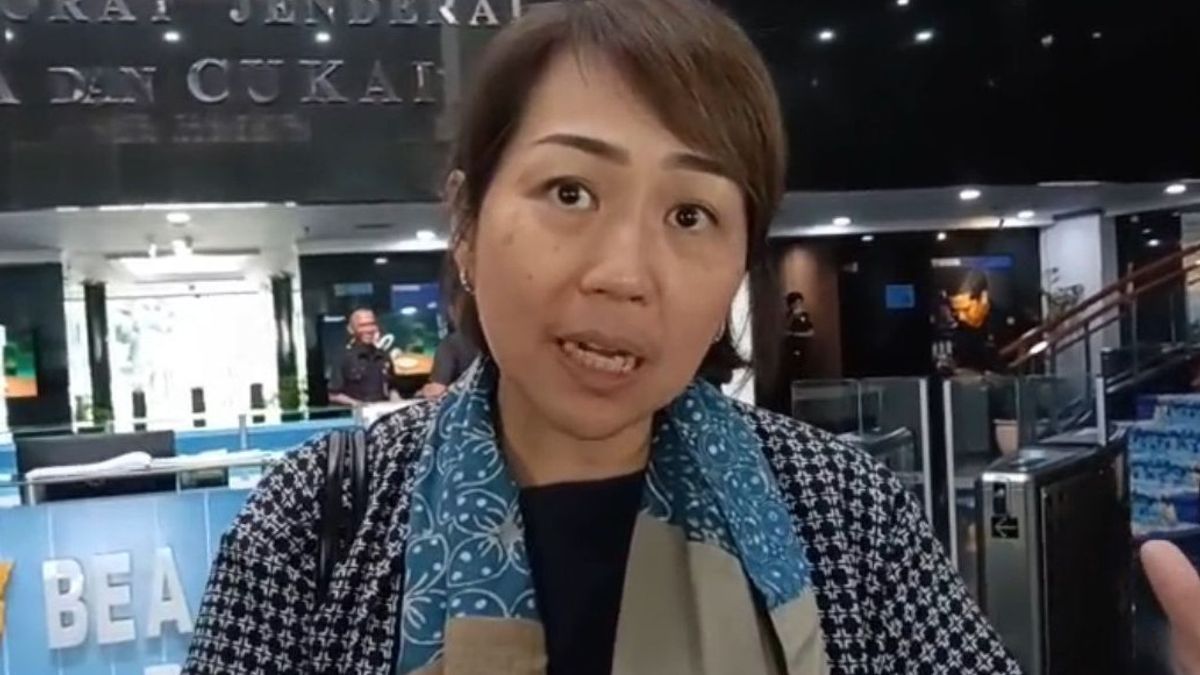


The Association of Indonesian Garments and Textiles (AGTI) held an audience with the ranks of the Directorate General of Customs and Excise to discuss a number of strategic issues related to strengthening the national textile industry ecosystem from upstream to downstream.
The General Chairperson of AGTI, Anne Patricia Sutanto, stated that Customs and Excise responded positively to the input submitted, including the smooth flow of raw materials for industry players.
According to Anne, Customs and Excise understands that the majority of companies in the tied area are obedient exporters and require easy regulatory support.
"Excise Customs is now much more progressive, transparent, open, and digital," he said, Wednesday, December 3.
Anne emphasized the importance of the role of Customs and Excise and related ministries in ensuring the availability of raw materials. He assessed that technical policies such as import recommendations and licensing must refer to real production capacity data, not installed capacity, so that there is no shortage of supply in labor-intensive industries such as garment and textiles.
Regarding the need for raw materials, Anne emphasized that imports are still needed, especially for commodities that are not produced domestically. Indonesia is not a cotton producer so imports cannot be avoided. The same applies to polyesters," he explained.
In addition to raw materials, AGTI also highlighted the issue of thrifting which is considered to have an impact on the domestic industry. Anne emphasized the need for cross-ministerial synergy so that the handling of this problem does not overlap and continues to open healthy import rooms.
SEE ALSO:

"We are not anti-imports, but we want to empower domestic producers to run while still opening up import space as needed," he said.
AGTI hopes that this audience will strengthen cross-ministerial coordination so that the policies born are more targeted, based on factual data, and support the creation of an independent, competitive, and globally competitive national textile and garment industry.
The English, Chinese, Japanese, Arabic, and French versions are automatically generated by the AI. So there may still be inaccuracies in translating, please always see Indonesian as our main language. (system supported by DigitalSiber.id)
Popular


