

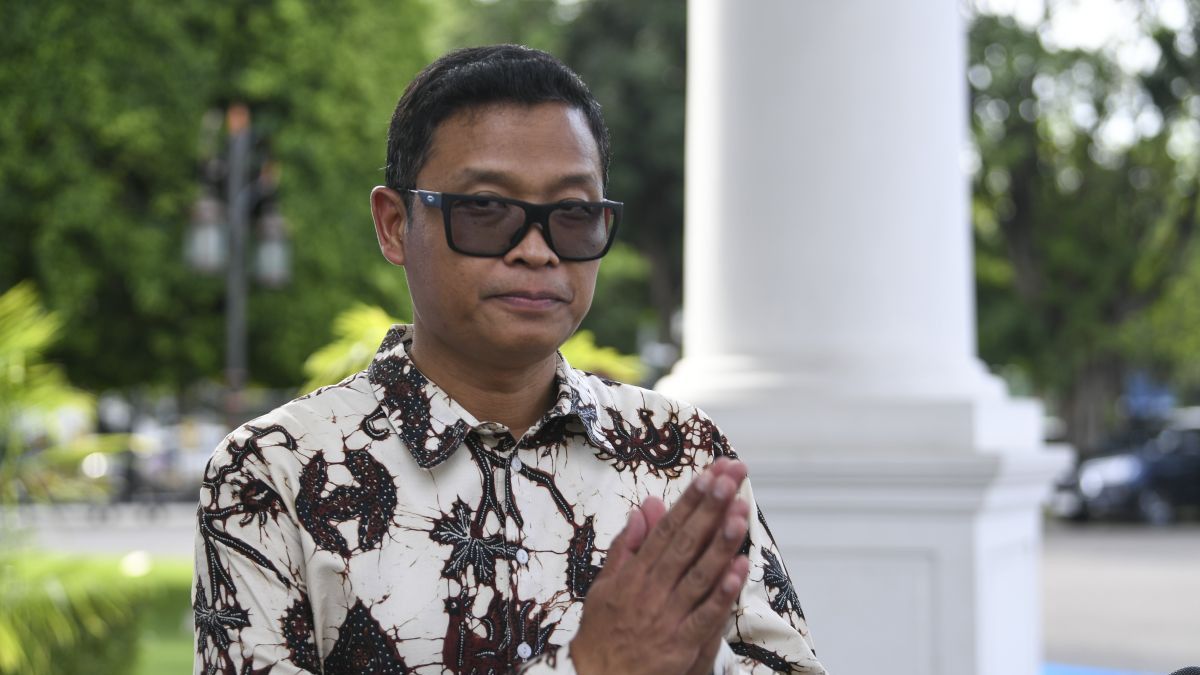


JAKARTA - The Director General of Taxes at the Ministry of Finance, Bimo Wijayanto, opened his voice regarding the fatwa of the Indonesian Ulema Council (MUI) which assessed that the government should not collect Land and Building Taxes (PBB) because it is considered to include basic needs of the community as well as basic necessities.
He emphasized that if what is meant is the Land Tax and Rural and Urban Buildings (PBB-P2) which are considered similar to basic necessities such as basic necessities, then this is not in the realm of collecting taxes from the central government.
"Indeed, if the goods around the basic needs of the community are never worn, such as VAT (Value Added Tax), it's 0 percent," he told the media crew, quoted on Tuesday, November 25.
He emphasized that the central government did not impose this type of tax because the tax was under the authority of the local government, which made residents' houses as tax objects.
"Then if the PBB, the UN actually has submitted the law to the regions. So, policies, tariffs, basic applications, impositions, everything in the regions," he explained.
According to Bimo, the UN, which is under the authority of the central government, is only related to land and buildings used by business actors in the mining, plantation, fisheries, and forestry sectors.
"We have also discussed with MUI before So later we will try to tabayun with MUI because actually what is being asked is the PBB P2 urban rural areas, the Settlement in the area in our area is only the PBB related to Maritime Affairs, Fisheries, and Mining Equivalent to Forestry. If to go to the area itself, there is," he said.
As is known, the fatwa regarding the PBB-P2 is the result of the XI MUI National Conference (Munas) which will be held on November 20, 2025.
Previously, the Head of the National Conference Fatwa Commission XI MUI Asrorun Ni 'am Sholeh, explained that the fatwa on Fair Tax emphasized that the earth and buildings occupied were not suitable for repeated taxation.
He added that this fatwa was issued in response to public unrest regarding the increase in the UN which was considered unfair.
"So that it is troubling the community. This fatwa is expected to be a solution for improving regulations," he said.
Furthermore, he emphasized that tax objects should only be imposed on assets that have productive potential or are included in the category of secondary and tertiary needs.
SEE ALSO:
-
 | EKONOMI
BPDP Targetkan Peremajaan 5.000 Hektare Perkebunan Kakao pada 2026
24 November 2025, 23:25

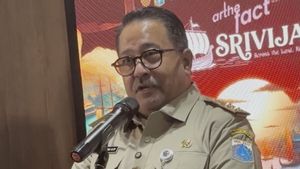
"So the tax collection on something that becomes a basic need, such as basic necessities, and the houses and earth that we live in, does not reflect the justice and purpose of taxes," he said.
He also explained that taxes are basically only applied to citizens who have financial capacity.
"In analogy to zakat obligations, the financial capacity is at least sharia equivalent to the nishab zakat mall, which is 85 grams of gold. This could be the PTKP limit," he said.
The English, Chinese, Japanese, Arabic, and French versions are automatically generated by the AI. So there may still be inaccuracies in translating, please always see Indonesian as our main language. (system supported by DigitalSiber.id)


