


JAKARTA - Danantara Indonesia stated that the main source of problems that suppressed the performance of PT Krakatau Steel (Persero) Tbk came from the blast furnace project which failed to operate optimally and eventually became a big financial burden for the company.
Krakatau Steel is included in the BUMN list which is currently undergoing a restructuring program under the operational holding of PT Danantara Asset Management (Persero).
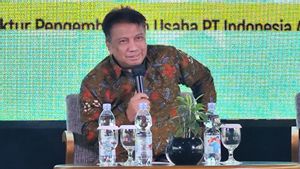
Managing Director of Danantara Asset Management, Febriany Eddy said the root of the Krakatau Steel problem started from a large investment in the blast furnace project which ended up not generating.
"The execution at this time is not good, so when the project is completed the factory will lose and inevitably close again. Finally, this decision leaves an extraordinary debt," he said in Jakarta, Friday, November 14.
Febriany explained that the blast furnace project was originally designed to strengthen Krakatau Steel's position in the national steel industry by going deeper into the upstream line. However, the failure to execute prevented the facility from going well.
For your information, blast furnace is a technology for processing iron sand with coal to produce semi-finished steel products in the form of billets, slabs, and beam blanks.
The blast furnace project began on July 9, 2012 and was carried out by a consortium of PT Krakatau Engineering and foreign companies Capital Engineering and Research Incorporate Limited (MCC-CERI).
The total contract value of the MCC-CERI alone reached US$334.9 million and Rp1.81 trillion for Krakatau Engineering.
Of the total investment, 28 percent was financed by KRAS' internal cash, while the rest was supported by bank loans.
Krakatau Steel's surge in debt was clearly evident in its financial statements as of September 2025.
The company bears long-term loans to banks recorded USD 1.91 billion or around IDR 19.91 trillion.
SEE ALSO:
-
 | EKONOMI
Kebutuhan Aluminium Nasional Masih Bergantung Impor, Inalum Beberkan Bukti Ini
14 November 2025, 23:14 -
 | EKONOMI
Bukan untuk Operasional, Danantara Buka Peluang PSO Difokuskan Biayai Infrastruktur Whoosh
14 November 2025, 22:42
Akibat tekanan utang, Febriany mengatakan Krakatau Steel kini kesulitan mendapatkan akses kredit, bahkan untuk kebutuhan modal kerja sekalipun.
Pembelian bahan baku harus dilakukan dengan skema pembiayaan berbunga tinggi.
Febriany bilang, situasi perusahaan turut diperburuk oleh insiden kebakaran fasilitas hot strip mill (HSM) dalam dua tahun terakhir yang memaksa penurunan tingkat produksi secara drastis.
“Akhirnya dengan segala keterbatasannya, saat ini mereka (Krakatau Steel) beroperasi hanya sepertiga dari kapasitasnya,” tutur Febriany.
SEE ALSO:
-
| EKONOMI
Kebutuhan Aluminium Nasional Masih Bergantung Impor, Inalum Beberkan Bukti Ini
14 November 2025, 23:14 -
| EKONOMI
Bukan untuk Operasional, Danantara Buka Peluang PSO Difokuskan Biayai Infrastruktur Whoosh
14 November 2025, 22:42
Due to debt pressure, Febriany said Krakatau Steel is now having difficulty getting credit access, even for working capital needs.
Purchase of raw materials must be carried out using a high-interest financing scheme.
Febriany said the company's situation was also exacerbated by the fire incident of the hot strip mill (HSM) facility in the last two years which forced a drastic reduction in production levels.
"Finally, with all their limitations, currently they (Krakkatau Steel) operate only one-third of their capacity," said Febriany.
The English, Chinese, Japanese, Arabic, and French versions are automatically generated by the AI. So there may still be inaccuracies in translating, please always see Indonesian as our main language. (system supported by DigitalSiber.id)


