

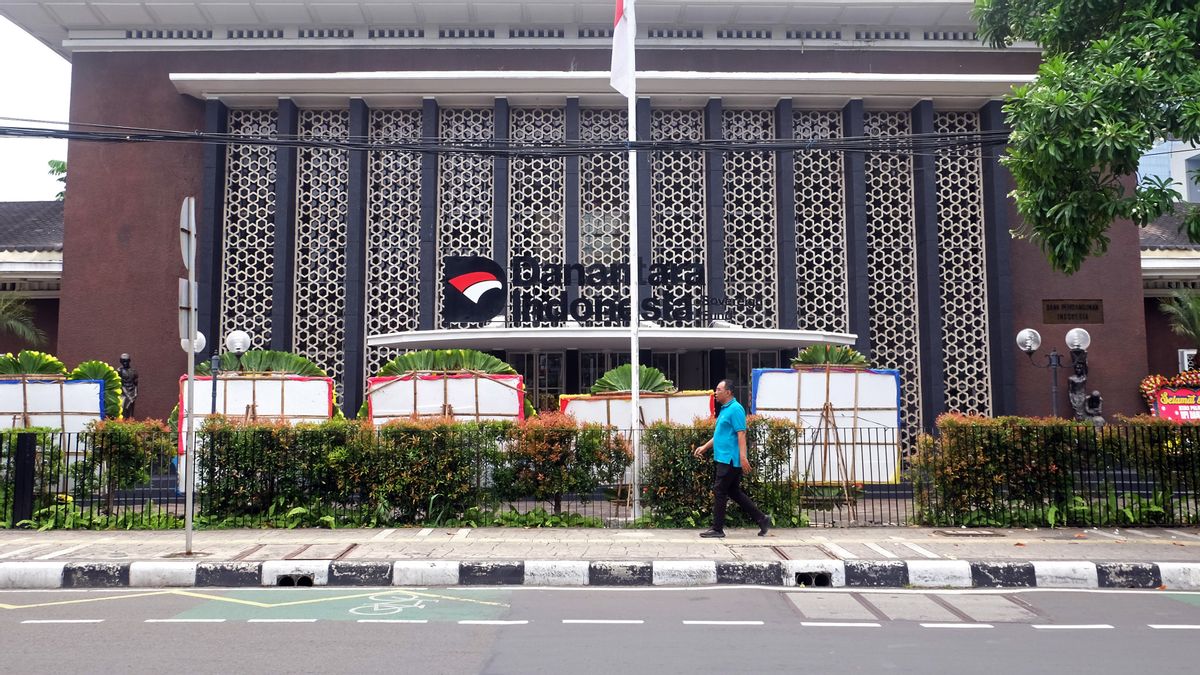


JAKARTA - Senior Director of Business Performance & Assets Optimization of PT Danantara Asset Management (Persero) Bhimo Aryanto wants the soda ash factory that will be built in Bontang, East Kalimantan (Kaltim), to become a new benchmark for Indonesia's green chemical industry.
"(The Benchmark in question is) a symbol that efficiency, profitability, and sustainability can go hand in hand," he said, quoting Antara.
The first soda ash factory in Indonesia began to be built by PT Pupuk Indonesia (Persero) through PT Pupuk Kaltim with an investment value of IDR 5 trillion from the company's funding and national banking. This factory is targeted for completion in March 2028.
According to Bhimo, this development is a major step towards the independence of the national chemical industry, and is part of Danantara's commitment to realizing the transformation of downstream industries in the country.
Furthermore, the presence of the soda ash factory is considered to have a very important strategic meaning for Indonesia. This commodity is the main raw material for the glass industry, determinants, textile pulp and paper, to battery driving.
So far, he said all national soda ash needs have been met through imports. For example, the government imports 801.67 thousand soda ash in 2024, while demand continues to increase from year to year.
Through the construction of the factory, Danantara together with PI and Pupuk Kaltim are said to have taken concrete steps to meet the needs of domestic soda ash, as well as support the downstream industry program and increase competitiveness and national economic growth.
With a significant production capacity, he continued, this factory is expected to be able to replace imports gradually, and pave the way for potential exports in the future.
Bhimo emphasized that the construction of the factory was part of efforts to support Asta Cita, especially the pillars of downstreaming the industry and national economic independence, in order to strengthen the value chain of the domestic industry to the provision of quality employment opportunities for the people of Indonesia.
Therefore, according to him, the project is an investment in the nation's future which brings the spirit of economic transformation to Indonesia Gold 2045.
As part of the Danantara, Pupuk Indonesia Group continues to innovate in industrial development that is efficient, low in emissions, and sustainable, where some of its raw materials utilize products from the existing production process in Pupuk Kaltim. Thus, we not only create new industries, but also optimize existing resources and reduce industrial waste significantly," he said.
The construction of the soda ash factory in Bontang is also stated to have a large multiplier effect on the regional economy.
During the construction stage, the project will absorb thousands of local workers, and once operational it creates hundreds of permanent jobs with high expertise.
Furthermore, Danantara through Pupuk Indonesia and Pupuk Kaltim are committed to developing a local industrial ecosystem through labor training, partnerships with Micro, Small and Medium Enterprises (MSMEs), and growth is responsible through sustainable social programs.
"We want this economic growth not only to be felt in factories, but also to be felt by the people of Bontang and East Kalimantan at large," said Senior Director of Business Performance & Assets Optimization of PT Danantara Asset Management (Persero).
Danantara believes that Bontang will become one of the centers of the sustainable chemical industry in Southeast Asia, and Pupuk Kaltim will be a pioneer in the innovation of the national green industry.
SEE ALSO:
-
 | EKONOMI
Danantara Sebut Proyek Sampah jadi Listrik Diminati Investor Lokal dan Asing
31 Oktober 2025, 22:06 -
 | EKONOMI
Danantara Lakukan Pembenahan di Tubuh Krakatau Steel: Banyak Utang, Tak Pernah Untung
31 Oktober 2025, 17:49
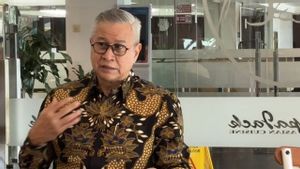
"We hope that this soda ash factory will be the beginning of the birth of a sustainable chemical industry chain in Indonesia. Starting from sodium carbonate to new and renewable energy supporting materials," he said.
Some of the goals of building this factory are reducing Indonesia's dependence on the import of soda ash and downstreaming of ammonia products by 105 thousand tons per year, then reducing carbon dioxide (CO2) emissions through the absorption of CO2 excesses as raw material for soda ash by 174 thousand tons per year.
Furthermore, it supports food security through the use of ammonium chloride as a direct fertilizer (source of nitrogen) or a mixture of raw materials for NPK (Nitrogen, Fosfor, Kalium), as well as increasing revenue through sales of soda ash and ammonium chloride (side products from the soda ash factory).
Given that Indonesia soda ash and amonium chloride still import 100 percent, it is hoped that the construction of the factory can become import substitutions of around 30 percent.
The production capacity of this factory for amonium chloride and soda ash is 300 thousand metric tons per year (MTPY) each with domestic and export market targets.
The English, Chinese, Japanese, Arabic, and French versions are automatically generated by the AI. So there may still be inaccuracies in translating, please always see Indonesian as our main language. (system supported by DigitalSiber.id)


