


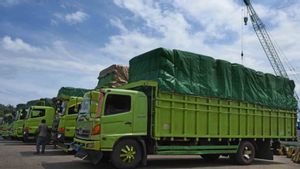
JAKARTA - Coordinating Minister for Regional Infrastructure and Development (IPK) Agus Harimurti Yudhoyono (AHY) revealed that around 35 percent of logistics companies are ready to normalize obese vehicles or over-dimensional and now over-loading (ODOL).
These results are based on studies or surveys conducted by the Central Statistics Agency (BPS).
According to AHY, the data shows an increase in awareness of business actors about the importance of transportation safety and support for government policies in realizing excessive control of vehicles.
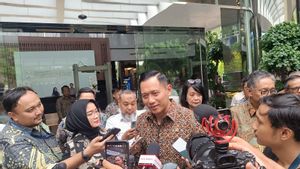
"And actually good, from the results of a survey or study conducted by BPS, as of today there are 35 percent of business owners who are ready to normalize their vehicles," said AHY at the Coordinating Ministry for IPK office, Jakarta, quoted Tuesday, October 7.
Even so, AHY did not specify how many companies were ready to follow the rules. However, he emphasized that the 35 percent readiness figure was a positive start towards implementing the Zero ODOL policy nationally.
AHY assessed that the readiness of goods transportation business entities to normalize vehicles is a positive opportunity for the national economy because it encourages new investments in the transportation sector of goods and the financial industry.
He emphasized that vehicle normalization is not just a dimensional adjustment, but also a step to strengthen national logistics governance to be more efficient, secure and support the competitiveness of domestic industry.
"From how many months we have worked, 35 percent have stated that they are ready or want to normalize (ODOL trucks). Are they returning to the initial conditions or investment in new vehicles," he said.
SEE ALSO:
-
 | EKONOMI
AHY: Penerapan Zero ODOL 2027 akan Didahului Serangkaian Uji Coba di Sejumlah Lokasi
06 Oktober 2025, 21:57
From upstream to downstream, said AHY, the entire logistics supply chain must be guarded so that vehicle control is not only carried out on the highway, but also at the departure and supervision stage.
With more and more companies ready to normalize vehicles, he is optimistic that Zero ODOL policies can be implemented effectively while presenting a safer and more competitive national logistics system.
"Therefore, of course we want to make sure that all of this must be escorted upstream to downstream. Not at the time of the accident on the highway, but who sent this," he said.
The English, Chinese, Japanese, Arabic, and French versions are automatically generated by the AI. So there may still be inaccuracies in translating, please always see Indonesian as our main language. (system supported by DigitalSiber.id)


