

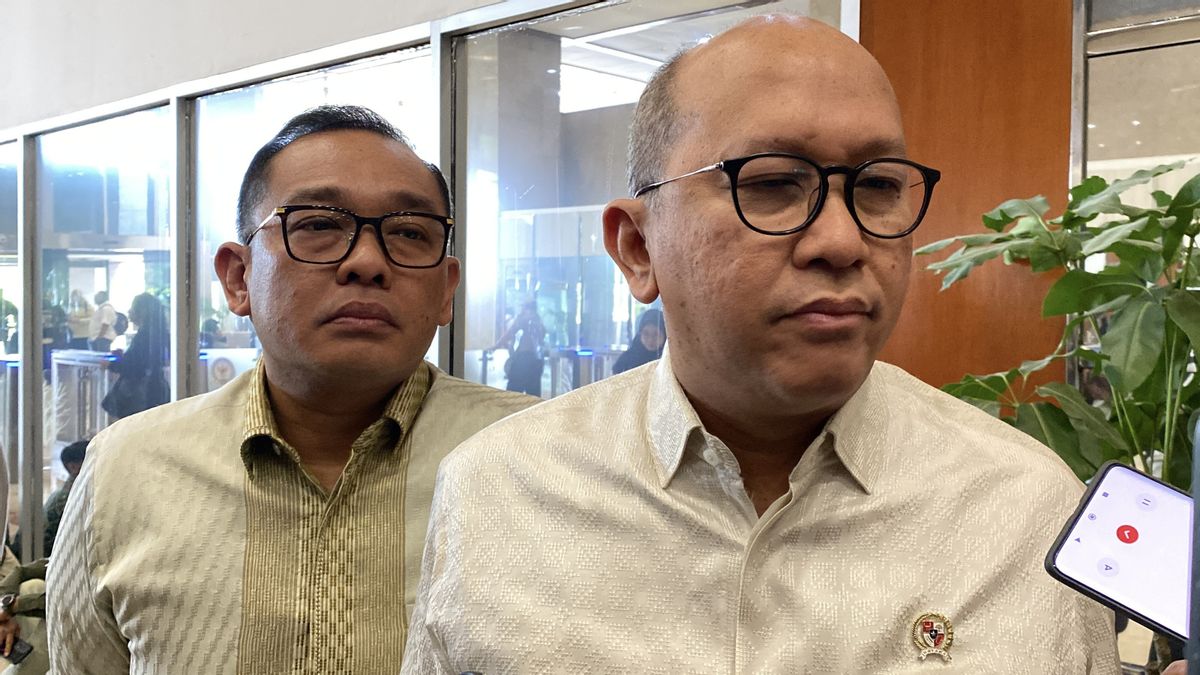


JAKARTA - CEO of the Anagata Nusantara Resources Investment Management Agency (BPI Danantara), Rosan Roeslani, revealed a number of benefits of waste to energy programs or waste processing into energy compared to waste Final Processing Sites (TPA).
Rosan said this program could reduce greenhouse gas (GHG) emissions by 50 to 80 percent.
The accumulation of waste in the TPA can produce approximately 2-3 percent of the haraona greenhouse gas emissions
"First, reducing glass gas emissions by 50-80 percent, producing renewable energy, and having 90 percent savings in land use," said Rosan, Tuesday, September 30.
He added that in this program, Danantara will act as a liaison between parties involved.
Rosan said that previously the local government had a budget for tipping fees or costs for sending waste to the TPA. With this program, the costs can be eliminated.
"So there is no longer a tipping fee burden developed for regional companies, but it will all be directly absorbed by PLN, which then PLN will create subsidies from the central government," he explained.
current discoveries, 1,000 tons of waste can generate 15 MW which will contribute more than 20,000 household electricity needs.
"If I go to Japan, to China, and also several countries too, to Germany. We have used a very, very large waste to energy. And indeed this is an alternative that is solely remembered not only from the energy produced," he concluded.
SEE ALSO:
-
 | EKONOMI
Zulhas Pastikan Kasus Udang Beku Tercemar Cs-137 Tak Ganggu Rantai Pasok Nasional
30 September 2025, 17:05 -
 | EKONOMI
Menkeu Purbaya Desak Pertamina Bangun Kilang Minyak Baru untuk Kurangi Impor
30 September 2025, 16:44

Lebih lanjut, Rosan menyebut, melalui program dirinya berharap agar pemerintah-pemerintah daerahdapat berpartisipasi aktif dalam pengendalian sampah di masing-masing daerah.
Berdasarkan penelitian yang dilakukan, sampah yang dibutuhkan untuk menghasilkan energi listrik adalah sebesar 1.000 ton untuk 15 MW listrik bagi 20.000 rumah tangga.
Untuk program ini, lanjut Rosan, dibutuhkan lahan seluas 4 hingga 5 hektar.
"Lahan untuk kami, kurang lebih 4-5 hektare untuk kapasitas seribu ton per hari," tandas Rosan.
SEE ALSO:
-
| EKONOMI
Zulhas Pastikan Kasus Udang Beku Tercemar Cs-137 Tak Ganggu Rantai Pasok Nasional
30 September 2025, 17:05 -
| EKONOMI
Menkeu Purbaya Desak Pertamina Bangun Kilang Minyak Baru untuk Kurangi Impor
30 September 2025, 16:44
Furthermore, Rosan said, through his program he hoped that local governments could actively participate in waste control in each region.
Based on research conducted, the waste needed to generate electrical energy is 1,000 tons for 15 MW of electricity for 20,000 households.
For this program, continued Rosan, 4 to 5 hectares of land is needed.
"The land for us is approximately 4-5 hectares for a thousand tons per day," said Rosan.
The English, Chinese, Japanese, Arabic, and French versions are automatically generated by the AI. So there may still be inaccuracies in translating, please always see Indonesian as our main language. (system supported by DigitalSiber.id)


