

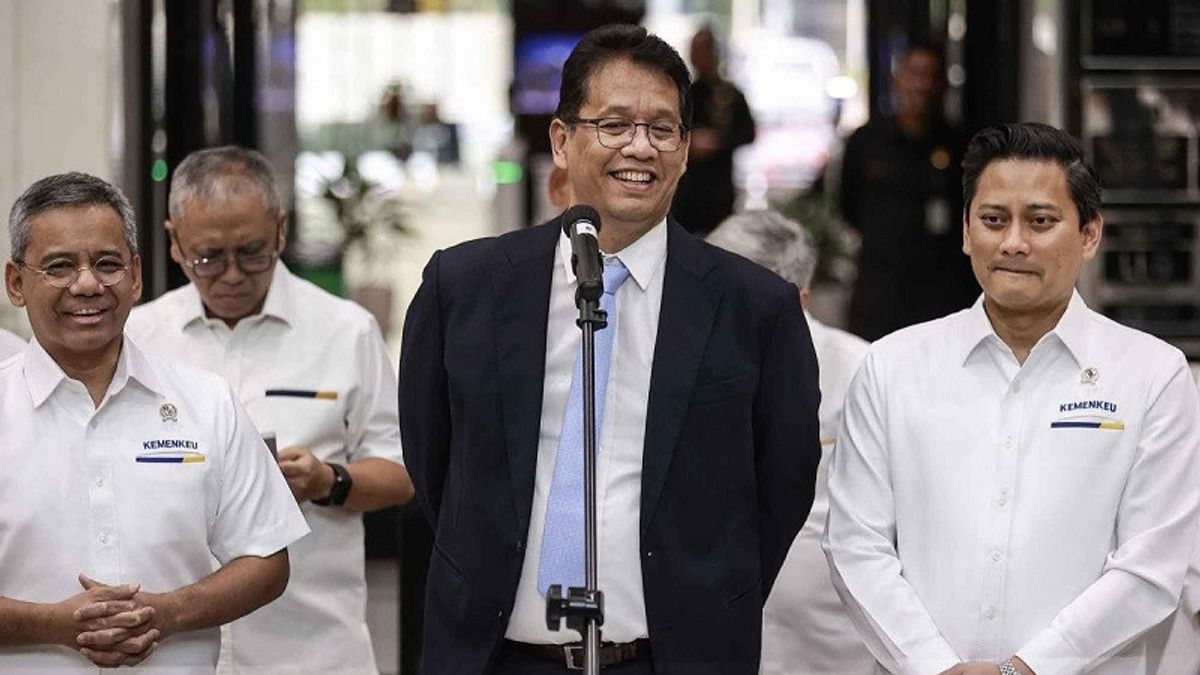


YOGYAKARTA - Recently, the public was shocked by the breakthrough by the new Minister of Finance, Purbaya Yudhi Sadive, who transferred Rp200 trillion from the Budget Balance (SAL) at Bank Indonesia to the banks of members of the Association of State-Owned Banks (Himbara). The policy aims to increase the amount of money in circulation and encourage economic growth.
As one of the important instruments in managing state finances, SAL is often used by the government when facing certain conditions. The use of SAL is carried out with the President's blessing and coordination with Bank Indonesia. In this way, funds that initially settled can be reused to support economic activity.
Namun, apa sebenarnya SAL itu? Mengapa keberadaannya begitu penting dalam sistem keuangan negara? Untuk memahami hal ini, kita perlu melihat pendeptaan, fungsi, serta regulasi yang mengatur pengelolaan SAL di Indonesia.
In simple terms, the More Budget Balance (SAL) is the accumulation of the remaining excess budget financing (SiLPA) and the remaining underfunded budget (SiKPA) in previous years. SAL is formed after a fiscal year is closed, with the addition or reduction of bookkeeping corrections. In other words, SAL is the remaining fund from the APBN whose designation has not been determined.
In practice, the Indonesian State Budget is designed to experience a deficit, namely state spending is greater than revenue. This deficit is limited by Law no. 17/2023 concerning State Finance, which should not exceed 3 percent of Gross Domestic Product (GDP). To close the deficit, the government can use various methods, one of which is utilizing SAL.
If the realization of budget financing is greater than the deficit needs, then SilPA will form so that SAL will increase. On the other hand, if the realization of financing is smaller than the deficit, then there will be SIKPA which will reduce SAL. Thus, the size of SAL depends on the realization of the budget at the end of the year.
The use of SAL has been regulated in the Minister of Finance Regulation (PMK) Number 147/PMK.05/2021 concerning the Management of more Budget Balance. In this regulation, SAL can only be used for three main things, namely meeting the needs of temporary cash, closing budget financing, and maintaining financial stability. This rule ensures that SAL is not used carelessly.
For temporary cash needs, SAL can be used as a bailout fund at the beginning of the year when state revenues are not optimal. For example, to pay for employee expenditures or transfers to the regions. This fund must be returned no later than two months after the end of the fiscal year.
In addition, SAL can be used to cover budget financing if the deficit exceeds the target or state revenue is smaller than expected. In fact, SAL can be used if there is state expenditure that has not yet been available in the APBN. With this flexibility, SAL functions like emergency funds for the state.
SEE ALSO:
-
 | EKONOMI
BUMN dan Pemerintah akan Optimalkan Operasional Kopdes Jeruju Besar
30 September 2025, 21:04

SAL management also takes into account budget needs until the end of the year and the beginning of the year. Therefore, part of SAL is placed in short-term financial instruments such as Government Securities (SBN), reserve repos, or deposits. Selected instruments must be liquid and at low risk so that funds can be disbursed immediately if needed.
The proceeds from the placement of SAL in the form of giro services, remuneration, profit sharing, or capital gains are then deposited into the State General Cash Account (RKUN) as non-tax state revenue. That way, the use of SAL not only maintains fiscal stability, but also still provides additional benefits for state revenue.
From the explanation above, it is clear that SAL has a strategic role in maintaining the balance of the state budget and national economic stability. Not only as a reserve fund, SAL is also an important instrument to ensure state finances remain healthy.
The English, Chinese, Japanese, Arabic, and French versions are automatically generated by the AI. So there may still be inaccuracies in translating, please always see Indonesian as our main language. (system supported by DigitalSiber.id)


