

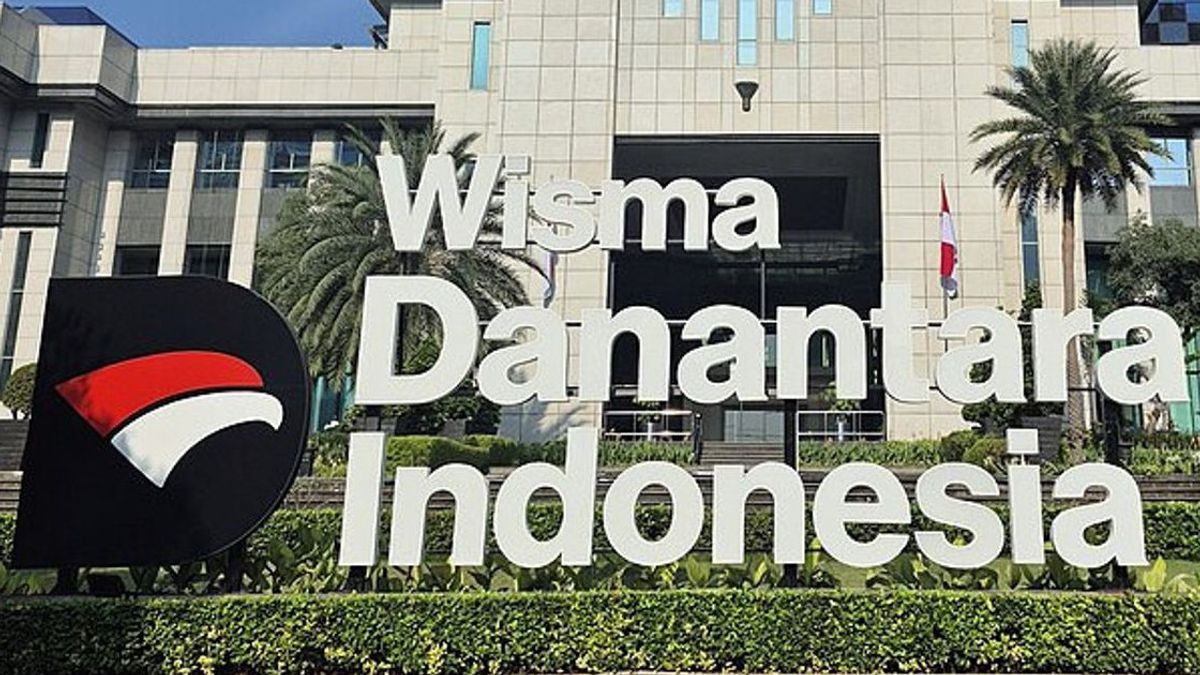


JAKARTA - The Center of Economic and Law Studies (Celios) revealed that the Draft Law (RUU) of the Danantara and Patriot Bond is a continuation of the Ministry of SOEs' liquidation agenda.
Although this bill has the potential to strengthen Danantara's position as a BUMN super holding and open access to new funding, the urgency and feasibility of submitting the two regulations still needs to be seriously criticized by the public.
In the Plenary Meeting of the DPR RI on Tuesday, September 23, the Prolegnas for the 2026 Priority Law, which, among other things, added the Danantara Bill and Patriot Bond Bill as priorities.
Executive Director of Celios Bhima Yudhistira emphasized the importance of resolving dualism between the Ministry of SOEs and BPI Danantara through a solid legal basis.
He also highlighted the unclear legality of Patriot Bond, including the assessment mechanism and transparency of the use of the instrument.
The process of making the Danantara Bill and Patriot Bond Bill needs to be carried out in a transparent and not in a hurry. Do not repeat the error of the revision of the BUMN Law in early 2025 which was minimal in public participation," Bhima said in his statement, Wednesday, September 24.
Previously in his statement to the media, Chairman of the Legislation Body (Baleg) Bob Hasan stated that the preparation of the Danantara Bill would refer to the updated draft of the previous academic manuscript. However, until now, public access to the document is still limited.
Bhima said that if it was not accompanied by adequate risk mitigation and public consultation, these two regulations could increase systemic vulnerability, and reduce accountability levels in state asset management and national fiscal stability.
He expressed the main concerns about the Danantara Bill covering the potential for overlapping authority with the Ministry of SOEs, the lack of transparency, and the hasty preparation process that risks weakening accountability.
As for the Patriot Bond Bill, Bhima explained that this instrument has unique characteristics because it is offered at a much lower coupon rate than other government bonds.
"Instead of using risk-based investment logic and returns, the purchase of this instrument by Indonesian conglomerates is driven by political tendencies. Patriot Bond is political insurance for conglomerates so that their businesses are not disrupted," he added.
Bhima said that both the discussion of the Danantara Bill and the Patriot Bond Bill need to be carried out carefully, openly, and access to Academic Scripts and bills must be shared with the public.
"Experts who are invited to provide input do not mess up pick-ups or only invite those that are in line with the government's wishes," said Bhima.
Similarly, Celios Researcher Tabita Diela also highlighted the potential problems of the merger of BPI Danantara and the Ministry of SOEs, especially in terms of supervision and investment implementation.
"Even though they have stated that they are not immune to the law, access to the Supreme Audit Agency (BPK) and the Corruption Eradication Commission (KPK) is limited to conducting proactive supervision and audits," he said.
SEE ALSO:
-
 | EKONOMI
Progresnya Sudah 66 Persen, Bendungan Manikin Bakal jadi Tulang Punggung Pertanian di NTT
24 September 2025, 12:25 -
 | EKONOMI
Pengelola Jalan Tol Tak Penuhi SPM akan Kena Sanksi, Aturan Terbit Desember 2025
24 September 2025, 13:35 -
 | EKONOMI
Perkuat Industri Pasar Modal, KSEI Gandeng Kustodian Sentral dari Kazakstan
24 September 2025, 13:19
Tabita menyampaikan meski dampaknya tidak bisa dipastikan terlebih setelah Menteri Keuangan Purbaya Yudhi Sadewa menyalurkan dana sebesar Rp200 triliun ke Himbara Patriot Bond tetap menyimpan risiko terhadap likuiditas perbankan.
Dia menyampaikan, potensi terjadinya crowding out sektoral cukup besar apabila dana yang terkumpul justru tidak masuk kembali ke sektor riil, atau jika pelaku usaha menunda investasi produktif demi membeli instrumen tersebut.
Pasalnya, pembangkit listrik tenaga sampah belum terbukti efektif dan biaya pemilahan sampah tidak kompetitif dibanding opsi teknologi EBT lain, seperti panel surya dan mikro-hidro.
“Sama seperti Danantara, Patriot Bond pun perlu due diligence dan peta jalan yang jelas. Meski dijanjikan untuk membiayai proyek waste-to-energy, hasil dari penjualan instrumen ini belum tentu betul-betul digunakan sebagaimana mestinya," ucapnya.
SEE ALSO:
-
| EKONOMI
Progresnya Sudah 66 Persen, Bendungan Manikin Bakal jadi Tulang Punggung Pertanian di NTT
24 September 2025, 12:25 -
| EKONOMI
Pengelola Jalan Tol Tak Penuhi SPM akan Kena Sanksi, Aturan Terbit Desember 2025
24 September 2025, 13:35 -
| EKONOMI
Perkuat Industri Pasar Modal, KSEI Gandeng Kustodian Sentral dari Kazakstan
24 September 2025, 13:19
Tabita said that although the impact could not be ascertained, especially after the Minister of Finance Purbaya Yudhi Sadive distributed Rp200 trillion to Himbara Patriot Bond, it still poses a risk to banking liquidity.
He conveyed that the potential for crowding out sectoral is quite large if the funds collected do not re-enter the real sector, or if business actors delay productive investment in order to buy the instrument.
This is because the waste power plant has not been proven effective and the cost of sorting waste is not competitive compared to other EBT technology options, such as solar and micro-hydro panels.
Just like Danantara, Patriot Bond also needs a due diligence and clear roadmap. Even though it was promised to finance waste-to-energy projects, the proceeds from the sale of this instrument are not necessarily used properly," he said.
The English, Chinese, Japanese, Arabic, and French versions are automatically generated by the AI. So there may still be inaccuracies in translating, please always see Indonesian as our main language. (system supported by DigitalSiber.id)


