


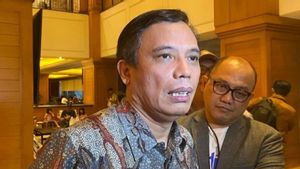
JAKARTA - Minister of Finance Purbaya Yudhi Sadewa emphasized the importance of understanding the causes of the 1998 monetary crisis so that similar mistakes do not repeat themselves, especially in the midst of the challenges of global economic uncertainty today.
According to him, the crisis has destroyed the foundations of the national economy, so learning from the past is important to maintain future economic stability.
"The state was already a mess at that time, right. In 2000 the growth was close to zero, it was low, right. After that we helped there, and at that time Pak SBY (President Susilo Bambang Yudhoyono) could increase growth by 6 percent, right, then it was changed to Pak Jokowi, the growth was slightly below 5 percent on average," said Purbaya during a working meeting with Commission XI of the DPR, Wednesday, September 10.
He explained that the Asian financial crisis which began in 1997 was initially in several countries such as Thailand and South Korea, but actually had the most severe impact in Indonesia, so it was necessary to explore the root cause.
Purbaya said he immediately compared the situation to the major economic crisis in the United States in the 1930s, which was widely studied by Nobel laureate economists. One of the important findings at the time was that even though interest rates had been lowered to zero, the economy was still sluggish because the basic money supply (base money) was insufficient.
In the context of Indonesia in 1997-1998, he said that monetary policy was actually running contradictively, where interest rates were sharply raised by up to 60 percent to maintain the rupiah exchange rate, but at the same time, the circulation of primary money was actually expanded massively so that inflationary pressures also occurred significantly.
"We made a fatal mistake, at that time BI increased interest by more than 60 percent to protect the rupiah, everyone thought we were implementing a strict money policy, wow, high interest rates, no one borrowed it," he said.
"But if we look behind it, what happens? We print the base money, it grows 100 percent, so the policy is chaotic, what do you want? Want to be tight or want to be loose?" he added.
SEE ALSO:
-
 | EKONOMI
Dorong Pertumbuhan Ekonomi, Purbaya Ungkap akan Suntik Rp200 Triliun ke Perbankan
10 September 2025, 17:28 -
 | EKONOMI
BTN Bidik Pertumbuhan Kredit 2025 Capai 9 Persen, Didorong Peningkatan Kuota KPR Subsidi
10 September 2025, 16:27 -
 | EKONOMI
Konflik Global dan Perang Dagang jadi Ancaman, Menkeu Purbaya: Harus Diantisipasi
10 September 2025, 14:10 -
 | EKONOMI
Purbaya Ungkap Konsumsi Rumah Tangga dan Investasi jadi Motor Ekonomi 2026
10 September 2025, 13:38
Dia menyebut, kekacauan kebijakan saat itu menjadi pemicu utama kehancuran ekonomi Indonesia, di mana sektor riil terpukul oleh suku bunga tinggi, sementara uang yang dicetak dalam jumlah besar justru digunakan untuk mempertahankan kurs, yang akhirnya memperburuk situasi.
"Kalau kita melahirkan kebijakan kacau yang keluar adalah setan-setannya dari kebijakan itu, bunga yang tinggi menghancurkan riil sektor, uang yang banyak dipakai untuk serang nilai tukar rupiah kita, jadi kita membiayai kehancuran ekonomi kita tanpa sadar," tuturnya.
Purbaya menegaskan, kesalahan tersebut bukan semata karena ketidakmampuan para ekonom saat itu, melainkan karena Indonesia belum memiliki pengalaman menghadapi krisis dengan karakteristik seperti The Great Depression di AS.
"Ini bukan karena ekonom-ekonom yang dulu bodoh atau bagaimana, tapi memang kita belum pernah mengalami keadaan seperti itu, jadi kita belum tahu seperti apa dan saya simpulkan kesalahan kita seperti itu, jadi waktu 2008 ada global financial meltdown, kebijakan kita ubah," imbuhnya.
SEE ALSO:
-
| EKONOMI
Dorong Pertumbuhan Ekonomi, Purbaya Ungkap akan Suntik Rp200 Triliun ke Perbankan
10 September 2025, 17:28 -
| EKONOMI
BTN Bidik Pertumbuhan Kredit 2025 Capai 9 Persen, Didorong Peningkatan Kuota KPR Subsidi
10 September 2025, 16:27 -
| EKONOMI
Konflik Global dan Perang Dagang jadi Ancaman, Menkeu Purbaya: Harus Diantisipasi
10 September 2025, 14:10 -
| EKONOMI
Purbaya Ungkap Konsumsi Rumah Tangga dan Investasi jadi Motor Ekonomi 2026
10 September 2025, 13:38
He said that the policy chaos at that time was the main trigger for Indonesia's economic collapse, where the real sector was hit hard by high interest rates, while large amounts of money were actually used to maintain the exchange rate, which ultimately exacerbated the situation.
"If we give birth to a chaotic policy that comes out are demons from that policy, high interest in destroying the real sector, money that is widely used to attack our rupiah exchange rate, so we finance our economic collapse without realizing it," he said.
Purbaya emphasized that the mistake was not solely due to the inability of economists at that time, but because Indonesia did not yet have experience in dealing with crises with characteristics such as The Great Depression in the US.
"This is not because the economists used to be stupid or something, but indeed we have never experienced such a situation, so we don't know what kind of situation and I conclude that our mistakes were like that, so when 2008 there was a global financial meltdown, our policies changed," he added.
The English, Chinese, Japanese, Arabic, and French versions are automatically generated by the AI. So there may still be inaccuracies in translating, please always see Indonesian as our main language. (system supported by DigitalSiber.id)


