


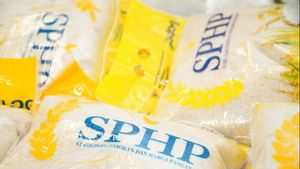
JAKARTA - An agricultural observer from the Indonesian Political Economy Association (AEPI), Khudori, sharply criticized the slow distribution of government rice reserves (CBP) by Bulog, especially for food assistance and stabilization programs for Food Supply and Prices (SPHP).
According to him, technical policies that are too strict actually hinder the main goal of the program, namely maintaining people's purchasing power and curbing inflation.
He considered that the distribution of SPHP rice this year was too bureaucratic and limited the distribution range. In fact, the government is targeting the distribution of 1.5 million tons of SPHP this year, higher than in previous years.
"In a situation like this, the supply of rice to the market depends on the flow of Bulog's stock. The problem is, with the distribution of the dragged SPHP, the authorities are looking for other schemes that allow smoother flow without leaving good governance. This demand is increasingly beneficial when the stock of rice in the market is getting thinner," he told VOI, Monday, July 28.
"With Bulog's rice stock of 4.2 million tons, the current government's focus should be on distributing, not absorbing. Don't let the pemepo appear if the distribution can be complicated, why make it easier," he continued.
Khudori also highlighted that Bulog's rice stock reached a record high of more than 4 million tons but most of it was not immediately distributed to the public. As of June 30, 2025, about 1.81 million tons or 43.5 percent of that stock was more than four months old, exceeding the ideal storage threshold.
SEE ALSO:
-
 | EKONOMI
Harga Beras Naik, Menko Pangan Minta Bulog Segara Lakukan Operasi Pasar
25 Juli 2025, 21:47 -
 | EKONOMI
Penyaluran Beras SPHP Belum Beri Dampak Signifikan Turunkan Harga Beras
25 Juli 2025, 18:26
"It's useless to have rice stocks in Bulog's warehouse of more than 4 million tons but cannot be accessed by residents. The stock managed to break the record highs throughout history. But is it a benefit for the wider public? People's stomach needs affordable rice prices, not records," he said.
Data from the Central Statistics Agency (BPS) shows that during the first semester of 2025, rice prices continued to rise at both milling, wholesale, and retail levels. Even since May, the price of premium rice has exceeded the Highest Retail Price (HET) in all zones of Indonesia.
Khudori also reminded that the increase in rice prices greatly affected poverty conditions. This condition is exacerbated by the lack of stock in the hands of mills and traders, who chose to stop operating because of the high price of unbiased grain with the set rice HET. This situation makes the supply of rice to the market very dependent on Bulog.
The English, Chinese, Japanese, Arabic, and French versions are automatically generated by the AI. So there may still be inaccuracies in translating, please always see Indonesian as our main language. (system supported by DigitalSiber.id)
Most Popular Tags
#Prabowo Subianto #donald trump #Febrie Adriansyah #8791 #giias 2026Popular


