


JAKARTA - Head of the National Food Agency (Bapanas), Arief Prasetyo Adi, appealed to the public to be more observant and careful in choosing rice before buying. This appeal was conveyed following the widespread findings of mixed rice in premium and medium rice packaging that did not meet quality standards.
"The way people see rice before buying can be done visually. If there are many broken grains, it is almost certain that it is a medium type of rice because it is a maximum of 25 percent. But if there are more whole grains, it is premium rice," explained Arief in his statement, Friday, July 18.
Arief explained that rice mixing is actually common to adjust quality standards. However, he stressed, mixing must be in accordance with the technical limits set by the government.
"If the rice is definitely mixed. Why is it mixed? Because there are whole grains and broken grains. If the premium rice is whole, the whole grain is mixed with broken grains of up to 15 percent. Not mixed with rotten rice, it continues to be stirred. This is because quality is quality. This must be maintained," he explained again.
Based on Bapanas Regulation No. 2 of 2023, premium rice must meet a number of quality criteria such as water levels of a maximum of 14 percent, a minimum score of 95 percent, and a broken grain of a maximum of 15 percent. This standard is also strengthened in SNI 6128:2020 for organic and non-organic premium rice.
Arief also straightened out the term "oplosan" which is often associated with negative. According to him, the term is appropriate to use when the material is mixed with a lower quality and sold at a higher price, such as the case in cooking oil. In rice, as long as the mixing is still within quality standards, it is allowed.
SEE ALSO:


Minister of Agriculture (Mentan) Andi Amran Sulaiman revealed the findings of rice quality examination in the national market. From the results of checking on 268 rice brands circulating in 10 provinces, it turns out that around 85 percent of rice is not in accordance with quality standards, both in packaging and content.
"Then this is 85 percent that is not in accordance with the standard. Some are uploaded, some are not uploaded, immediately change the packaging. So this is all bulk rice but the price is selling premium. The bulk rice is sold but the medium price is sold. Some reduce the size of 5 kilos but 4.5 kilos," he said in a working meeting with Commission IV DPR RI, Jakarta, Wednesday, July 16.
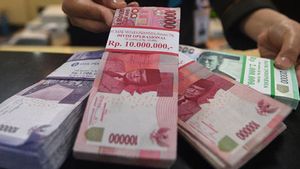
Amran estimates that the total value of losses from the circulation of rice that does not meet the quality of Rp. 99 trillion. "And this is the total value after we have multiplied the amount of rice in circulation, which is Rp. 99 trillion," he said.
The English, Chinese, Japanese, Arabic, and French versions are automatically generated by the AI. So there may still be inaccuracies in translating, please always see Indonesian as our main language. (system supported by DigitalSiber.id)
Most Popular Tags
#Prabowo Subianto #donald trump #2026 World Cup #Febrie Adriansyah #8791Popular


