

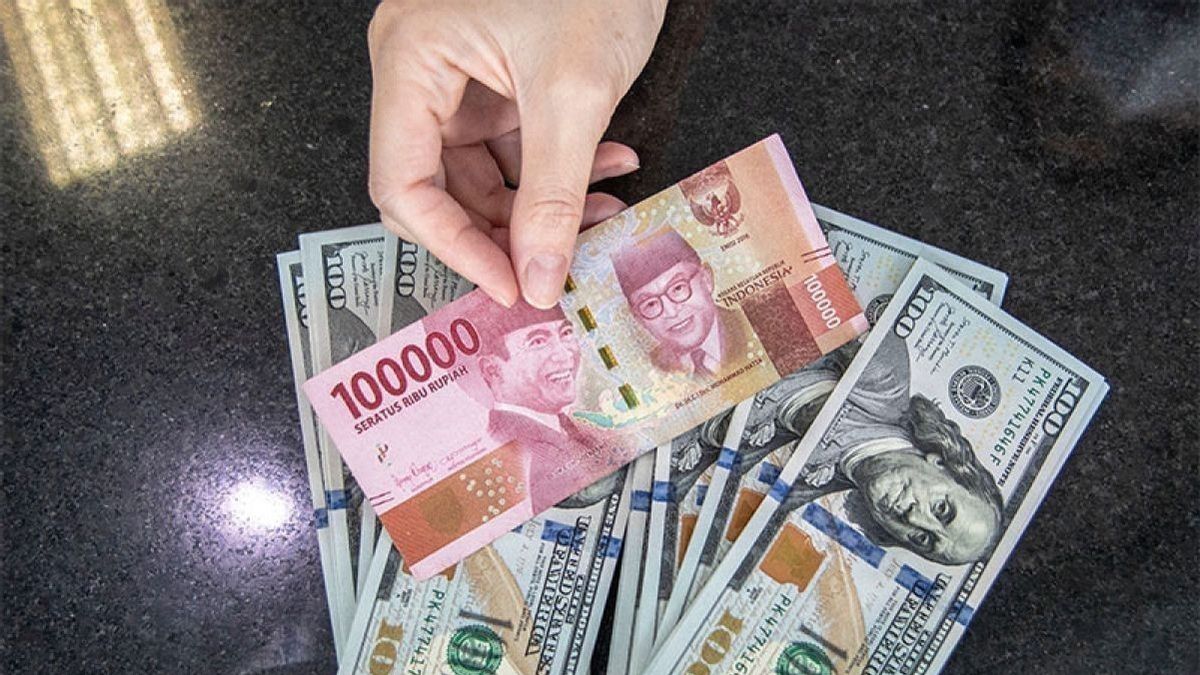


JAKARTA - The Indonesian Employers' Association (Apindo) appreciates the hard work and economic diplomacy efforts of the Government of Indonesia, from the ranks of technical ministries to President Prabowo Subianto who directly intervened in reaching an agreement with the Government of the United States.
Chairman of the Indonesian Employers' Association (Apindo) Shinta Kamdani said this achievement was also in line with Indonesia's strategic achievements and steps in finalizing the IEU 'CEPA Agreement with the European Union which opened up great opportunities for increasing exports to the European market.
Regarding the import rate of 19 percent of Indonesia's export products to the US market, According to him, this agreement is the result of much better negotiations than the initial tariff proposal of 32 percent and maybe there is still room to negotiate even lower.
"When compared to other Southeast Asian countries, with the current tariff update, Indonesia's position is relatively more competitive," he explained in his statement, Wednesday, July 16.
Shinta said Indonesia's current tariffs (19 percent) are lower than Thailand's (36 percent), Laos (40 percent), Malaysia (25 percent), and Vietnam (20 percent, with additional provisions for transactionation).
According to him, this shows that Indonesia still has room to maintain its export competitiveness, especially in our export products such as textiles, footwear, furniture, and fisheries which have a fairly high dependence on the United States market.
However, he said that a number of our competing countries in the region are currently still in the process of negotiating with the US government.
"Therefore, we need to continue to pay close attention to the final position of our competitors, which could change the constellation of regional competition in the near future," he said.
He added that in this agreement, Indonesia is committed to increasing imports of a number of strategic products from the United States, where a number of these commodities are indeed the products and commodities needed for the domestic industry.
Shinta added that as previously recommended to the government, namely encouraging the quality beneficial scenario through increasing imports of strategic commodities from the US, such as cotton, corn, dairy products, soybeans, and crude oil.
According to him, this step was designed as a reciprocal arrangement that answered US concerns about the trade deficit.
On the other hand, he sees that for the elimination of import rates by Indonesia on US products, in general most of these products currently already have a low tariff (zero to five percent), so it is necessary to see and re-investigate their impact by product from the results of existing negotiations.
Shinta said that in the near future, APINDO will consolidate export business actors in the field who are affected by conducting sectoral reviews of the impact of this tariff policy update.
He also conveyed that he was preparing various mitigation proposals to the government to ensure that the transition and adaptation of the industry were effective, including encouraging increased exports to non-traditional markets and accelerating the national deregulation agenda.
SEE ALSO:


"We also continue to communicate with the government which is currently still finalizing the technical details of the agreement. As is well known, the negotiation process with the US Government, particularly under the leadership of President Trump, demands high vigilance because policies can change rapidly and are strongly influenced by the dynamics of domestic politics. US," he added.
Shinta emphasized that diplomatic progress must be accompanied by comprehensive improvements in the country.
According to him, Indonesia's export competitiveness does not only depend on tariffs, but also on certainty and ease of doing business, logistics and energy efficiency, as well as regulatory quality and infrastructure that supports the industrial sector.
He added that structural reforms, especially for labor-intensive industries, are very crucial to ensure business resilience and job creation amid ongoing global pressure.
According to him, Indonesia's success in navigating US tariff pressures and taking advantage of the opportunity for the IEU'CEPA will depend heavily on cross-sectoral collaboration.
"In the spirit of Indonesia Incorporated, APINDO is committed to assisting business actors so that they are not only administratively prepared, but also competitively ready to face increasingly dynamic global challenges and markets," he said.
The English, Chinese, Japanese, Arabic, and French versions are automatically generated by the AI. So there may still be inaccuracies in translating, please always see Indonesian as our main language. (system supported by DigitalSiber.id)
Popular


