
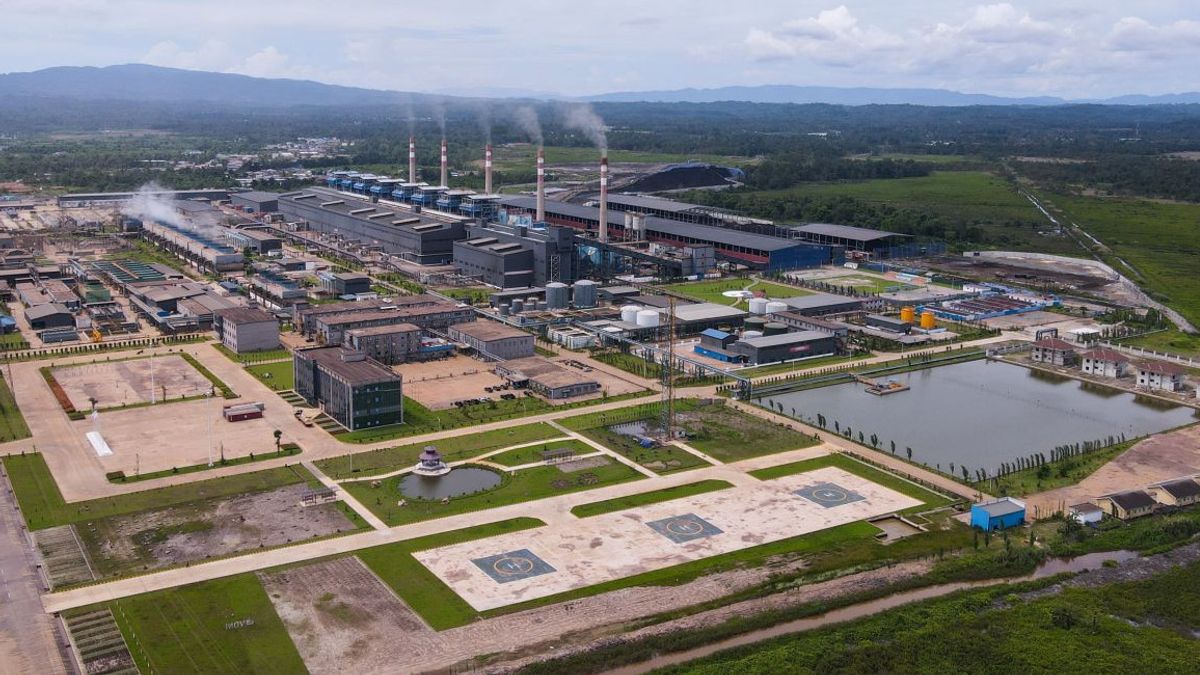


JAKARTA - The Indonesian government continues to encourage nickel downstream as the main strategy in strengthening national economic competitiveness and building an electric vehicle battery industry (EV) ecosystem. This step not only supports the transition to green energy, but also opens the way for status as a developed industrial country.
In line with Net Zero Emission 2060's commitment, the development of the battery and electric vehicle industry is an important part of Indonesia's energy transition. In addition to reducing dependence on fossil energy, this step also opens up opportunities for developing clean technology and encourages environmentally friendly infrastructure.
The nickel downstream program, which began during the administration of President Joko Widodo and was continued by President-elect Prabowo Subianto, is believed to be the driving force for Indonesia's economic transformation. If it is carried out thoroughly from upstream to downstream to producing final products such as batteries, this program will not only increase the competitiveness of the national industry but also pave the way for Indonesia to become a developed, clean energy-based country.
Energy economy observer from Gadjah Mada University (UGM), Fahmyxi, stated that downstreaming, followed by industrialization, would increase Indonesia's chances of taking a strategic role in the global market.
"So far, Indonesia has relied on consumption. If manufacturing has developed due to industrialization, then Indonesia is likely to become a developed country, an industry-based country," said Fahmy when contacted by the media, quoted on Friday, June 27.
Fahmy emphasized the importance of investment that does not stop only at the smelter construction stage, but continues into the final stages such as making batteries or even electric vehicles. He also highlighted the importance of technology transfer as part of a long-term strategy.
"For example, if our workforce has not met the requirements, then there must be an agreement on transfer of technology. At least five years is a process, now the second five years Indonesian workers have been able to produce electric batteries themselves," he said.
SEE ALSO:

Downstream nickel brings a number of strategic benefits, namely increasing domestic added value, attracting foreign investment, creating jobs, and strengthening Indonesia's position in the supply chain of the world battery industry. With abundant nickel reserves and other important minerals, Indonesia is in the ideal position to become a major player in global green energy.
Contacted separately, Economic Observer from the University of Indonesia (UI), Toto Pranoto said that the downstream nickel carried out starting from Jokowi's leadership contributed quite a lot to Indonesia.
"The disbursement of nickel clearly contributes positively to state revenue," said Toto.
However, he also reminded that the growth of this industry must be accompanied by good governance and attention to environmental impacts and benefits for the local economy. This needs to be done to ensure that no manipulation results in state losses.
The English, Chinese, Japanese, Arabic, and French versions are automatically generated by the AI. So there may still be inaccuracies in translating, please always see Indonesian as our main language. (system supported by DigitalSiber.id)


