


JAKARTA - The pace of the Indonesian manufacturing industry showed a slowdown in April 2025. Based on the S&P Global report, Purchasing Managers'Index (PMI) or the Indonesian manufacturing index was at the level of 46.7 (contraction phase).
This figure shows a decline in the health of the Indonesian manufacturing sector in the last five months. The April manufacturing PMI at the level of 46.7 also decreased compared to March 2025 which was at the level of 52.4.
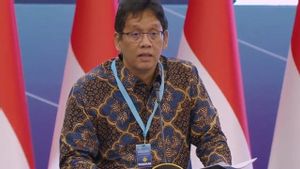
"This also indicates the optimism or confidence of domestic manufacturing industry players is decreasing amid the current uncertainty," said Spokesperson for the Ministry of Industry (Kemenperin) Febri Hendri Antoni Arif in a written statement, Friday, May 2.
Febri explained that the slowdown in Indonesia's Manufacturing PMI in April 2025 was in line with the results of the Industrial Trust Index (IKI) in April 2025 which was recorded to be at the level of 51.90.
Even though it is still in an expansive phase, the rate has decreased compared to March 2025 which was 52.98 or decreased by 1.08 points. Compared to the same period last year, the value of IKI April 2025 also experienced a correction of 0.40 points.
"This means that there is psychological pressure on the perception of business actors facing global tariff wars and flooding of imported products in the domestic market," he said.
According to Febri, a number of manufacturing industry players in Indonesia are still waiting for confirmation from the results of negotiations by representatives of the Government of the Republic of Indonesia who have met with the Government of the United States.
Because, with legal certainty through policies from the government, industry players will be able to be confident in running their business, so they are not in a state of wait and see as they are today.
"Our industry players are not only worried because of the enactment of the reciprocal tariff by President Trump, but they are more worried about the attacks on products from a number of countries affected by Trump's tariffs, because they can make Indonesia an alternative market. So, we will get the overflow or vomit of imported goods," he said.
He added that many industry players or associations have spoken out in the media or have also reported various complaints to the Ministry of Industry regarding the current condition of uncertainty.
SEE ALSO:
-
 | EKONOMI
Angka PHK Naik 5 Kali Lipat Capai 18.610, Kemnaker Sebut Didominasi Manufaktur
10 April 2025, 17:01 -
 | EKONOMI
Industri Peralatan Listrik Minta Pemerintah Nego Tarif Impor dengan Amerika
05 April 2025, 10:18
"They are waiting for strategic policies from the government in providing protection to domestic industries to be competitive in the domestic market or host their own country," explained Febri.
The decline in Indonesia's manufacturing PMI is the deepest compared to peer countries. In Southeast Asia (ASEAN), for example, the Philippine manufacturing PMI is still in an expansive phase, because Trump's tariff policy is less burdensome for them than other countries. In addition, the domestic market protection policy in the Philippines is quite affirmative.
Based on the S&P Global report, the manufacturing PMI contracted in April 2025, including Thailand (49.5); Malaysia (48.6); Japan (48.5); Germany (48.0); Taiwan (47.8); South Korea (47.5); Myanmar (45.4); and the UK (44.0).
Although China's manufacturing PMI is in an expansive (50,4) phase, it has slowed down compared to the previous month.
The English, Chinese, Japanese, Arabic, and French versions are automatically generated by the AI. So there may still be inaccuracies in translating, please always see Indonesian as our main language. (system supported by DigitalSiber.id)
Most Popular Tags
#Prabowo Subianto #donald trump #firearm #8791 #giias 2026Popular


