
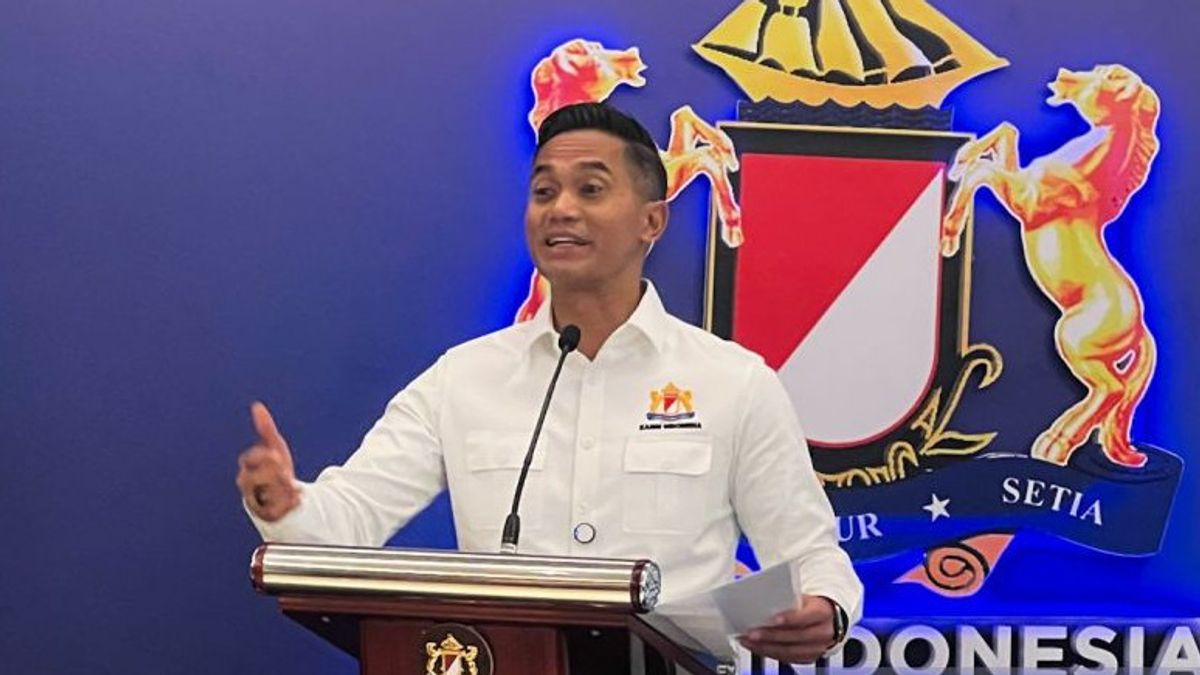


Chairman of the Indonesian Chamber of Commerce and Industry (Kadin) invites all stakeholders in the logistics sector, including the Indonesian Logistics and Forwarder Association (ALFI), to strengthen the national logistics business ecosystem. This step is considered crucial in responding to the reciprocal tariff policy imposed by the President of the United States Donald Trump against a number of countries, including Indonesia.
"ALFI is an integral part of the supply chain," said Chairman of the Indonesian Chamber of Commerce and Industry (Kadin) Anindya Bakrie in Halal Bihalal and group discussion forum organized by the Indonesian Logistics and Forwarders Association (ALFI) at the Kadin Tower Jakarta, Friday, as reported by ANTARA, Saturday, April 26.
According to him, ALFI has an important role and is integrated into the supply chain, namely a coordinated system that regulates the flow of goods, information, and services from producers to final consumers.
He emphasized the importance of support for industries that are currently transitioning, in order to be able to improve skills, strengthen endurance, and continue to grow in the scenario of economic transition in the next one and a half years.
According to him, the forum is very important to analyze the disrupted national supply chain and find loopholes to make Indonesia the winner in the midst of a tight competition in the ASEAN region.
"ALFI can really get complete data and because the part that is inseparable from Indonesia's supply chain, we can analyze how we at Trump 2.0 are the winners," he said.
SEE ALSO:
-
 | EKONOMI
Mendag Budi Ajak Pelaku Bisnis Waralaba Ikut Program Business Matching
25 April 2025, 21:36 -
 | EKONOMI
KAI Dukung Rencana Pemerintah Provinsi Jawa Barat untuk Reaktivasi Jalur KA
25 April 2025, 21:49
Anindya said that US interest in products such as cotton, wheat, and oil and gas shows great opportunities for Indonesia through a reduction in tariffs of up to zero percent for garment products.
He also underlined the need to be able to pick up export balls, avoid the dominance of neighboring countries such as Vietnam, and maximize local potential such as kelor leaves and fisheries directly from East Nusa Tenggara.
He considered the relocation of lobster exports without transiting to Vietnam as a concrete strategy to strengthen Indonesia's position in the global value chain while attracting direct packaging sector investment from the US.
Anindya also stated that Kadin supports the oil and gas import relocation strategy of 49 billion US dollars as a step to balance the surplus of 18 billion US dollars and pave the way for more equal trade diplomacy.
He emphasized that Indonesia was able to become a winner, creating economic growth by creating jobs through exports and strong and adaptive supply chains.
"I'm sure we Indonesia can be winners, we can do a lot, 5 percent growth is good, but if we can gradually reach 8 percent, we can create more jobs," said Anindya.
The English, Chinese, Japanese, Arabic, and French versions are automatically generated by the AI. So there may still be inaccuracies in translating, please always see Indonesian as our main language. (system supported by DigitalSiber.id)
