

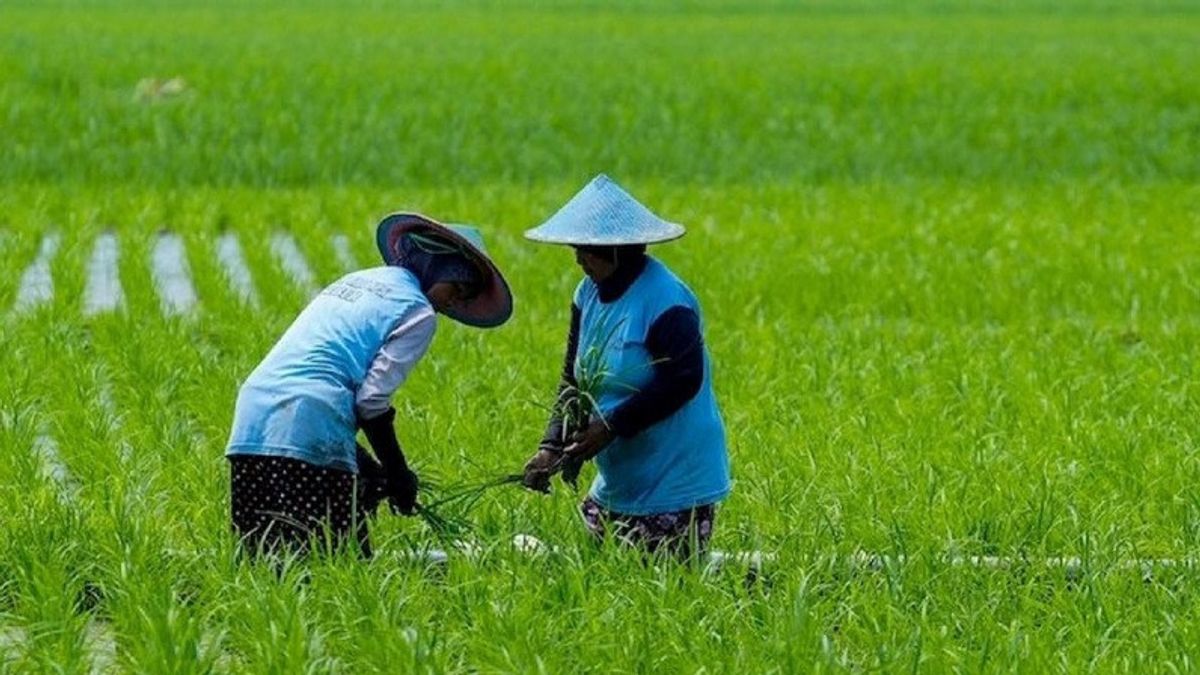


JAKARTA - The Government of Lebak Regency, Banten, recorded that Palawija production in the area from January to March 2025 reached 2,167 tons.
Head of the Production Division of the Lebak Regency Agriculture Service, Deni Iskandar, said the production value of 2,167 tons is estimated at billions of rupiah.
Palawija production in the period January to March 2025 reached as much as 2,167 tons divided into 573 tons of corn, 124 tons of peanuts, 1 tonne of green beans, 925 tons of cassava and 193 tons of sweet potatoes.
Most farmers develop these plants on land, both owned by themselves, land owned by BUMN and on land for private companies owned by housing developers, including in Maja and Curugbitung sub-districts.
Palawija agriculture in the area utilizes unproductive land because it has not been utilized by housing developers.
Farmers work on land owned by SOEs and private companies by collaborating and their systems are leased and distributed.
Palawija plants developed by farmers have commodities, namely corn, peanuts, green beans, cassava and sweet potatoes.
So far, he said, palawija production has become the mainstay of Lebak Regency farmers, apart from rice food farming, and can even overcome poverty.
This is because the production of the palawija is up to thousands of tons and supplied to Rangkasbitung Market and other traditional markets in Lebak Regency are also supplied outside the region, such as Tangerang and DKI Jakarta.
"We ask farmers to continue to develop crops to meet market demand that tends to increase, including the Tanah Tinggi Tangerang Main Market," he said.
Deni said that so far, palawija production has been able to grow micro, small and medium enterprises (MSMEs) by producing various snack food crafts, such as banana chips, cassava chips, sweet potato chips, crisis, crackers, bolu and others.
SEE ALSO:
-
 | EKONOMI
Dukung Swasembada Pangan, Dua Bendungan Ini Siap Diresmikan Prabowo
22 Januari 2025, 11:05 -
 | EKONOMI
Telan Biaya Rp1,7 Triliun, Bendungan Rukoh Garapan Waskita Karya Segera Diresmikan
11 Januari 2025, 12:20 -
 | BERITA
Pemkab Rejang Lebong Siap Pasok Kebutuhan Program Makan Bergizi Gratis Prabowo Subianto
14 Desember 2024, 06:40
In addition, palawija production can be used as an alternative food that has a variety of flavors and variations so that it can replace dependence on rice.
"We hope that farmers can increase production so that they are able to realize their welfare," he said.
Meanwhile, Jajang (55), a farmer from Maja District, Lebak Regency, admitted that he had harvested a cassava on an area of two hectares with a production of 30 tons at a price of Rp. 4,000/kilogram, so that it could generate revenue of Rp. 120 million.
Cassava agriculture can be harvested for about 12 months at a cost of IDR 15 million per hectare and supplied to Jakarta.
"We have been in the family's economy for five years, helped from the agricultural products of wood sweet potatoes," he said.
The English, Chinese, Japanese, Arabic, and French versions are automatically generated by the AI. So there may still be inaccuracies in translating, please always see Indonesian as our main language. (system supported by DigitalSiber.id)


