


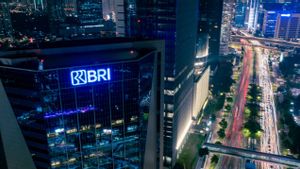
JAKARTA - PT Bank Rakyat Indonesia (Persero) Tbk. or BRI continues to emphasize its commitment to implementing Environmental, Social, and Governance (ESG) principles as part of the Company's business strategy. This is in line with the increasing attention of investors to sustainability aspects.
BRI President Director, Sunarso, emphasized that ESG is not just a trend, but is a fundamental strategic direction for businesses at the global level. Meanwhile, BRI has formed a strong structure, from committees to special divisions, which ensures that all sustainability initiatives are carried out properly.
"In implementing this ESG, BRI's business and operational processes have been aligned with applicable standards, both domestically and globally. Then, in its implementation, we have compiled a sustainability strategy that focuses on three main pillars, namely Environmental, Social, and Governance (ESG)," said Sunarso at the Kompas 100 Outlook event: Sustainable Investment in the Global Business Ecosystem in mid-February 2025.
First, in the implementation of the Environmental pillar, BRI has taken concrete steps to support the transition to a low-carbon economy. One of the main priorities is the implementation of climate change risk management, which is followed by Green Network and Green Banking initiatives.
Second, in terms of Social, BRI is also trying to increase financial inclusion and literacy. This commitment is in line with BRI's role as a driving force for the people's economy, where until the end of 2024 the total loans disbursed by BRI reached Rp1,354.64 trillion, growing 6.97% on an annual basis (yoy), with the dominance of MSME loans reaching 81.97% of total credit, or equivalent to Rp1,110.37 trillion.
SEE ALSO:
-
 | EKONOMI
Kerugian Ekonomi Capai Rp11,9 Triliun Imbas Penundaan Pengangkatan CPNS
11 Maret 2025, 14:26 -
 | EKONOMI
Sidak di Pasar Solo, Mentan Kembali Temukan Minyakita Tak Sesuai Takaran
11 Maret 2025, 13:41

In the management of labor, the company implements Human Capital Management. Meanwhile, in relation to the community, BRI runs the Social and Environmental Responsibility (TJSL) program as a form of contribution to sustainable social and environmental development.
Third, in the pillars of Governance, BRI also consistently strengthens Governance while continuing to align its business practices with global ethical standards to avoid greenwashing practices and increase ESG-related risk management, including cyber risks in the digital era.
As a real effort to support sustainable finance, BRI has distributed sustainability finance, aka sustainable financing in the form of Green Loans and Social Loans. As of December 2024, BRI has distributed financing to sustainable business activities, namely Green Loan of IDR 86.6 trillion. Meanwhile, the distribution of Social Loans reached IDR 698.7 trillion, which is focused on supporting MSME growth as the backbone of the national economy.
In terms of liabilities, BRI has carried out sustainable funding activities through the issuance of Green Bond with a total value of IDR 13.5 trillion, consisting of several stages since 2022. The issuance of Green Bond phase 1 is worth IDR 5 trillion on July 21, 2022. Sunarso said BRI green bonds have always been oversubscribed, reflecting the high market interest in sustainable financial instruments.
After being successful in the first phase, BRI resumed the issuance of Green Bond phase 2 worth IDR 6 trillion in October 2023 and Green Bond stage 3 worth IDR 2.5 trillion on March 20, 2024.
On the same occasion, Director of Indonesia Stock Exchange Development (IDX), Jeffrey Hendrik, emphasized that the implementation of ESG is not just an obligation, but has become an integral part of a business strategy that can increase the value of companies in the eyes of investors and stakeholders.
"In the current Indonesian capital market, sustainable investment shows significant growth, as reflected in the increase in the value of assets managed by passive investment products with the theme ESG," he said.
The English, Chinese, Japanese, Arabic, and French versions are automatically generated by the AI. So there may still be inaccuracies in translating, please always see Indonesian as our main language. (system supported by DigitalSiber.id)
Most Popular Tags
#Prabowo Subianto #donald trump #2026 World Cup #venezuela #konflik timur tengahPopular


