

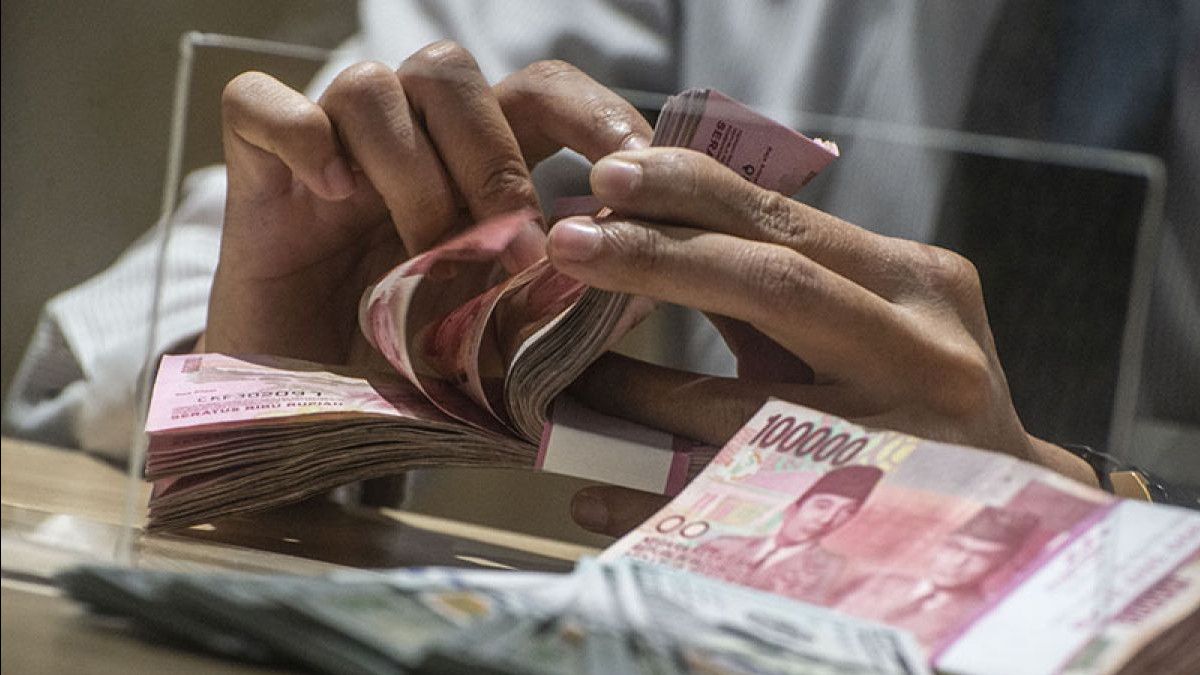


JAKARTA - Indonesia's trade balance again recorded a surplus of US$3.45 billion in January 2025 or higher than the surplus in the previous month and the same month in 2024.
Meanwhile, this value extends Indonesia's trade balance surplus achievements for 57 consecutive months since May 2020.
Head of the Fiscal Policy Agency, Ministry of Finance, Febrio Kacaribu said Indonesia's trade balance still shows its resilience while still recording a surplus in the midst of global trade which is still experiencing weakness.
"This surplus is driven, among other things, by efforts to increase the added value of products and trade diversification, as seen in the contribution of the manufacturing, agriculture and plantation sectors that have increased to the trade balance," he said in his statement, quoted on Tuesday, February 18.
Indonesia's exports in January 2025 were recorded at 21.45 billion US dollars, an increase of 4.68 percent (yoy) in exports was driven by an increase in non-oil and gas exports amid the contraction in oil and gas exports.
Secara sektoral, ekspor sektor agricultural dan sektor industri pengolahan tercatat tumbuh masing-masing sebesar 45,46 persen (yoy) dan 14,02 persen (yoy).
Meanwhile, the export performance of three main commodities, namely CPO, Coal, and Iron and Steel, was recorded to have contracted.
Meanwhile, in terms of export destination countries, China is still Indonesia's main non-oil and gas export market destination with a share of 22.40 percent, followed by the United States (11.48 percent) and India (6.02 percent), while exports to ASEAN and the European Union each reached 20.07 percent and 6.42 percent.
SEE ALSO:
-
 | EKONOMI
Neraca Dagang Indonesia Tercatat Surplus dengan AS, Sementara Defisit dengan China
17 Februari 2025, 15:20 -
 | EKONOMI
BPS Catat Neraca Perdagangan Indonesia Surplus Capai 3,45 Miliar Dolar AS
17 Februari 2025, 12:35

Meanwhile, Indonesia's imports in January 2025 were recorded at 18.00 billion US dollars, contracting 2.67 percent (yoy). The decline in imports was caused by contractions in oil and gas and gas imports.
Meanwhile, in terms of use, imports of capital goods were recorded to have grown, but imports of consumer goods and imports of auxiliary raw materials were recorded to have contracted.
Meanwhile, in terms of import countries, China, Japan, and the United States dominate with contributions of 40.86 percent, 7.42 percent, and 4.92 percent, while imports from ASEAN share 15.41 percent and from the European Union at 5.60 percent.
"The government will continue to monitor the impact of the global slowdown on national exports, as well as prepare anticipatory steps through impetus to the sustainability of natural resource downstreaming, increasing the competitiveness of national export products, and diversifying key trading partners," closed Febrio.
The English, Chinese, Japanese, Arabic, and French versions are automatically generated by the AI. So there may still be inaccuracies in translating, please always see Indonesian as our main language. (system supported by DigitalSiber.id)
Most Popular Tags
#Prabowo Subianto #donald trump #Febrie Adriansyah #8791 #giias 2026Popular


