


JAKARTA - The Ministry of Maritime Affairs and Fisheries (KKP) is determined to improve the quality of fish cultivation to ensure safe, healthy, and nutritious product products for the community.
"KKP seeks to maintain the quality of fish cultivated to be of high quality. Quality products ensure consumers get fish that are safe, healthy, and nutritious," said Deputy Minister of Marine Affairs and Fisheries, Didit Herdiawan, in a statement as quoted by ANTARA.
Didit explained that the environment where fish are cultivated has a significant impact on the quality of the results. Factors such as water conditions, temperature, and habitat cleanliness play a major role in determining the freshness, taste, and nutritional content of fish.
Therefore, maintaining the cleanliness of the cultivation environment is a top priority in the fisheries industry.
"Cleanliness of the habitat is very important. Fish that are maintained in a clean environment free from pollution or hazardous chemicals will produce better quality. We continue to encourage this improvement of cleanliness," he said.
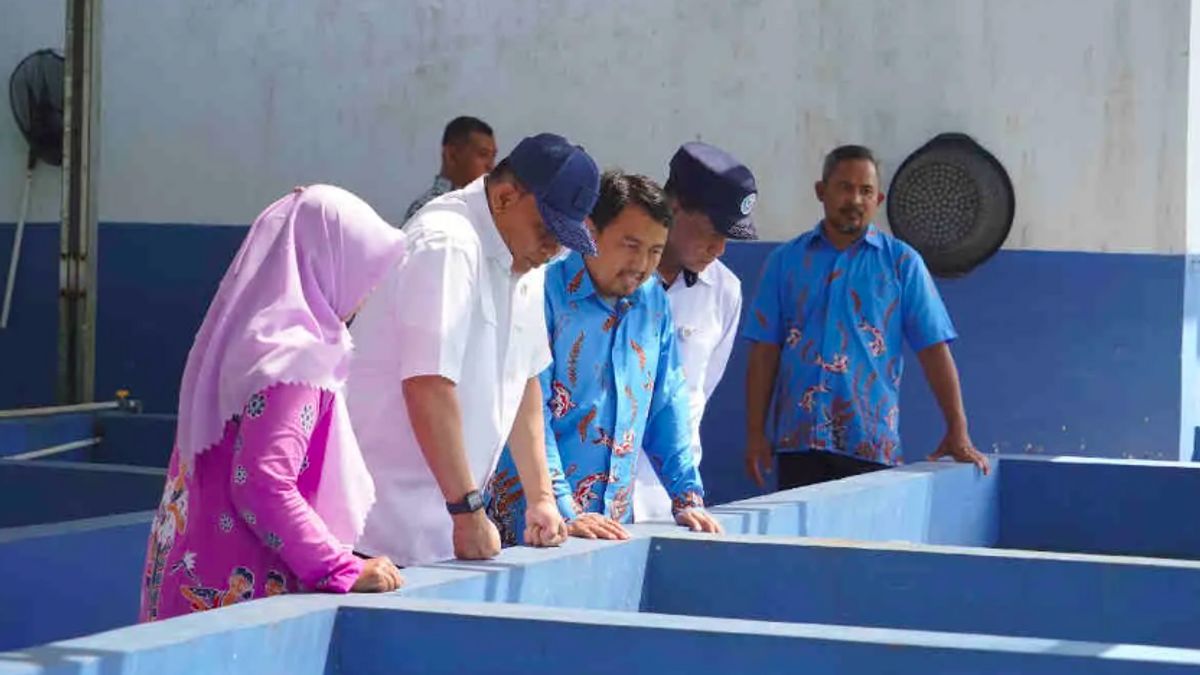
Didit also said that he had made a visit to the Selabintana Air Tawar Fisheries Center (BBPBAT) in Sukabumi, West Java.
During his visit, he highlighted several strategies that can be applied to improve the quality of cultivation, such as the application of intensive technology, good water quality management, development of standard operating procedures (SOP), training and education for labor, and environmentally friendly waste management.
As one of the innovations, the KKP has introduced a copy tilapia cultivation model in Karawang, West Java. The location is equipped with various facilities, including Waste Water Management Installation (IPAL), water entry and exit channels, shelter ponds, and laboratories. This cultivation also uses modern technology such as automatic feed delivery machines to increase efficiency.
"Taking tilapia cultivation in Karawang can be a good model. In addition to increasing production to realize food self-sufficiency, fish quality must also be maintained," added Didit.
SEE ALSO:
-
 | EKONOMI
Celios: PPN jadi 12 Persen Bakal Berdampak pada Kinerja E-commerce
19 Desember 2024, 20:44 -
 | EKONOMI
Pengusaha Beberkan Sejumlah Penghambat Pertumbuhan Ekonomi Indonesia
19 Desember 2024, 20:33

BBPBAT Selabintana, which is located in Sukabumi, has an area of 25.6 hectares with various facilities, including cultivation ponds, rice fields, gardens, offices, laboratories, and guest guest guest homes.
This center has the main task of developing aquaculture, implementing coaching technology, managing fish health, and preserving freshwater cultivation.
"BBPBB plays an important role in efforts to increase the production of freshwater cultivation fisheries in Indonesia," closed Didit.
The English, Chinese, Japanese, Arabic, and French versions are automatically generated by the AI. So there may still be inaccuracies in translating, please always see Indonesian as our main language. (system supported by DigitalSiber.id)
Popular


