



JAKARTA - Efforts to find alternative energy sources to replace imported fossil fuels are beginning to lead to the palm oil plantation sector.
The National Research and Innovation Agency (BRIN) together with PTPN III Sub Holding (Persero), PTPN IV PalmCo is finalizing the development study of Bio-Compressed Biomethane Gas (Bio-CBG), a biomethana gas based on palm waste whose quality is claimed to be equivalent to compressed natural gas or compressed natural gas (CNG).
The energy from the processing of palm oil waste is projected to be a substitute for imported LPG while strengthening the national renewable energy mix.
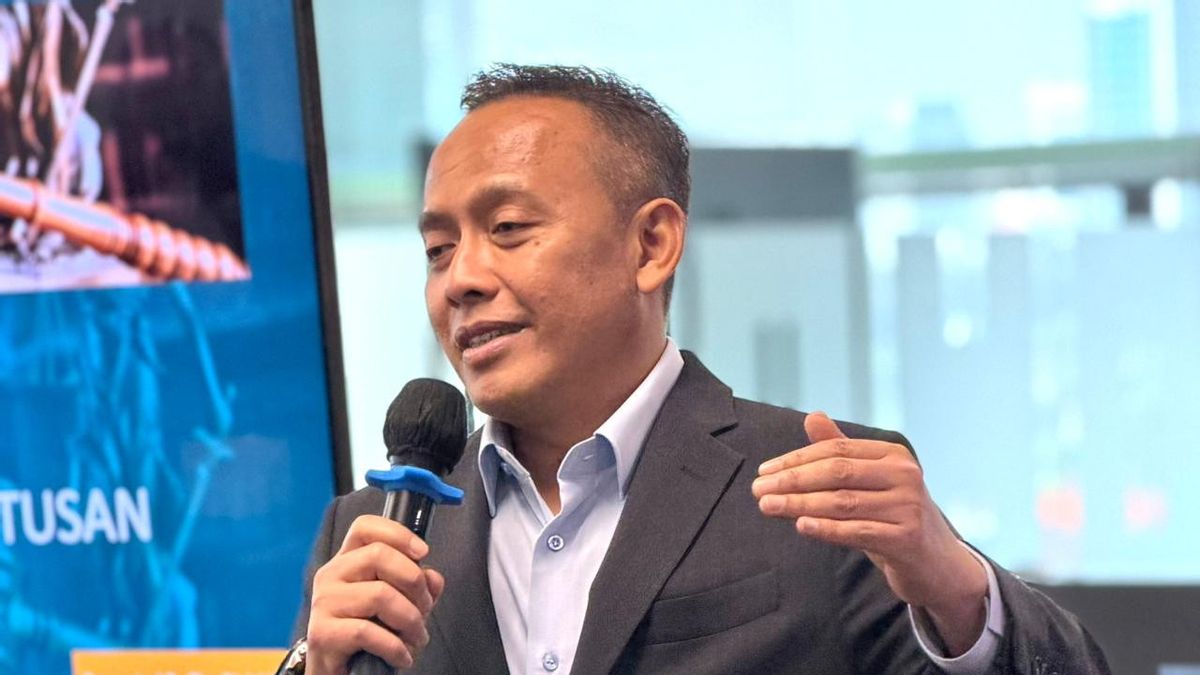
PTPN IV PalmCo President Director Jatmiko K Santosa said the development of Bio-CBG is part of the company's long-term strategy in optimizing palm waste into high-value added energy.
"So far, palm waste is synonymous with environmental problems. Now the approach is changing. Waste can actually become a new source of energy with economic value while supporting national energy security," said Jatmiko in Jakarta, Tuesday, May 26.
According to him, the joint project with BRIN is focused on processing palm oil mill effluent (POME) and empty bunch biomass into high-rate biomethana. The gas is then purified to have specifications similar to natural gas.
"Bio-CBG is basically a 'green twin' of CNG. Its function is the same and can be used as an alternative to LPG and other fossil fuels," said Jatmiko.
This step is considered in line with the government's policy direction which is currently pressing the dependence on energy imports.
The Ministry of Energy and Mineral Resources (ESDM) previously stated that the utilization of domestic gas is one of the strategies to reduce the burden of LPG imports which are still quite high every year. Minister of Energy and Mineral Resources Bahlil Lahadalia said that the use of domestically based gas energy is more competitive because the resources and industries are available in Indonesia.
PalmCo is currently drafting a roadmap for the development of palm-based green energy. One of the projects underway is the construction of a Bio-CBG facility at the Tinjowan Palm Plant (PKS), North Sumatra.
In collaboration with partner companies, the Company targets the construction of 17 Bio-CBG installations by 2029. Meanwhile, this year, PalmCo plans to lay the first stone or groundbreaking for 8 new projects.
"We are doing this gradually. Hopefully, the palm oil waste processing facility will not only generate electricity, but also ready-to-use gas that can be used by the industrial and transportation sectors," said Jatmiko.
In the midst of increasing national energy needs, the development of biomethana is considered a new opportunity for the palm oil industry. Indonesia as the world's largest producer of palm oil produces large amounts of liquid waste and biomass every year.
In the natural process, palm oil liquid waste releases methane gas which has a greater emission impact than carbon dioxide. Therefore, the capture of methane to be processed into energy is seen as being able to reduce emissions while creating an alternative energy source.
In terms of technology, BRIN conducted an energy audit and technical evaluation at a number of PalmCo facilities, including the Palm Oil Plant and the Sei Pagar Biogas Power Plant (PTBg), Riau. Head of the BRIN Process Technology Research Center, Hens Putra, said that the palm oil sector has great potential to support the national energy transition agenda if its waste can be optimally utilized.
"Energy is a national priority. This study is not only calculating energy potential, but also increasing efficiency so that palm waste processing is more optimal and sustainable," said Hens.
According to him, the development of palm-based Bio-CBG is in line with the agenda of low-carbon development because it is able to reduce methane emissions and produce other derivative products with added value. BRIN also sees opportunities for the development of an innovation area based on palm industry or technopark which integrates research, waste processing, and the development of renewable energy.
"We hope that this model can later be replicated nationally and become an example of the development of palm oil-based energy in Indonesia," he said.
Meanwhile, BRIN Energy Researcher Samuel Pati Senda explained that the results of the field audit at the Sei Pagar cofiring PTBg facility showed an increase in methane gas production efficiency. Methane production was recorded as increasing from an average of 36,706 normal cubic meters (Nm3) per month in 2025 to around 46,683 Nm3 per month in the 2026 test period.
"The data shows that palm waste processing technology for energy is mature enough and is worth replicating on a larger scale," said Samuel.
According to him, the utilization of palm waste into Bio-CBG is not merely related to the provision of alternative energy, but also part of the implementation of a circular economy in the plantation industry. "Waste that was previously a source of emissions can now be converted into clean energy. So there are environmental benefits as well as economic benefits," he said.
The development of palm-based biomethana is also considered to strengthen the government's target of achieving a renewable energy mix of 23 percent. In the midst of energy transition challenges and high LPG imports, the processing of palm waste into a "green twin" of natural gas is beginning to be seen as one of the realistic solutions from the national agro-industrial sector.
The English, Chinese, Japanese, Arabic, and French versions are automatically generated by the AI. So there may still be inaccuracies in translating, please always see Indonesian as our main language. (system supported by DigitalSiber.id)


