

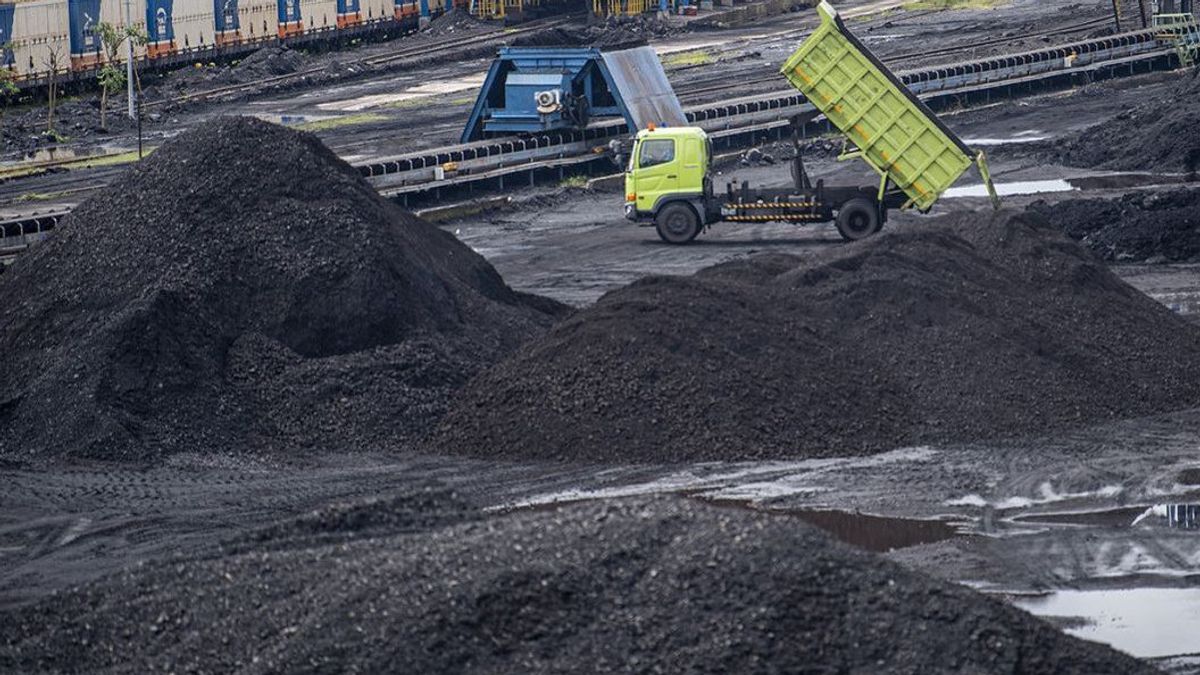


JAKARTA - The energy crisis due to the US-Israel war against Iran has encouraged many Asian countries to use coal again. When the supply of liquefied natural gas or LNG is disrupted, the government chooses the fastest and cheapest energy source, even though the impact is the dirtiest for the environment.
The Guardian quoted Wednesday, April 1, reported that from Bangladesh to South Korea, Asian countries are closing the gap on imported energy that has come from the Middle East. South Korea is delaying the closure of coal-fired power plants and lifting the limit on electricity production from coal. Thailand has increased the output of its largest coal plant. The Philippines, which has declared a "national energy emergency", is also preparing to increase the operation of coal-fired plants.
In South Asia, India asked coal plants to operate at full capacity and delayed planned shutdowns. Bangladesh also increased its coal-fired electricity generation as well as coal imports in March.
The question is in LNG. Many Asian countries rely on this gas for electricity and industry, including fertilizer. However, LNG supplies have been disrupted after the Strait of Hormuz was practically closed, even though one-fifth of the world's LNG shipments pass through that route. Attacks on major LNG export facilities in Qatar are also said to exacerbate shortages.
The managing director of Eurasia Group's energy and resources, Henning Gloystein, as reported by The Guardian, said that almost 30 billion cubic meters of LNG were lost from the global supply chain, and more than 80 percent of them disappeared in the Indo-Pacific region. "The global market in four weeks has changed from a fairly healthy oversupply condition to a very severe deficit," he said. According to him, this condition not only triggers a price spike, but also a real fuel shortage.
The choice to return to coal triggered harsh criticism from climate experts. Pauline Heinrichs from King's College London, still from The Guardian, said the impact of coal on the climate and health has been proven to be damaging for decades. According to him, this crisis should be a turning point to accelerate renewable energy, not revive dependence on fossil fuels.
A similar tone was conveyed by Dinita Setyawati, senior energy analyst for Asia at Jakarta-based Ember. "It is unsustainable to continue to rely on coal," he said, quoted from The Guardian. According to Dinita, domestic renewable energy is the way to strengthen the country's energy security and resilience.
Amid the pressure, Asian countries are also starting to save energy consumption. The Philippines and Sri Lanka are implementing a four-day work week for many government employees. Vietnam is encouraging work from home. Bangladesh is advancing the Eid al-Fitr holiday and adding planned blackouts. Pakistan is moving schools to online learning.
The English, Chinese, Japanese, Arabic, and French versions are automatically generated by the AI. So there may still be inaccuracies in translating, please always see Indonesian as our main language. (system supported by DigitalSiber.id)


