

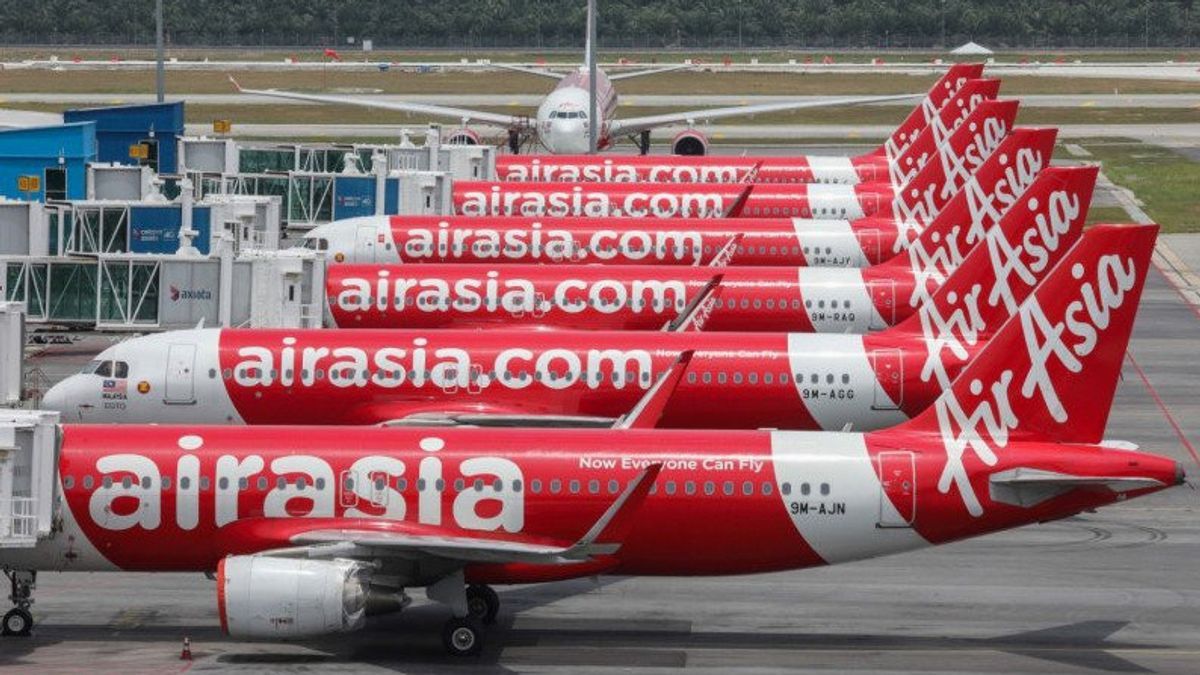


JAKARTA - The low fares that have been the mainstay of low-cost airlines in Asia are starting to be difficult to maintain. The price of avtur rose, the route was disrupted, while their room to hold costs was getting narrower.
A CNBC report cited Tuesday, March 31, showed that the pressure is now hitting the main business model of low-cost airlines, which live from low fares and large passenger volumes. As fuel costs rise and important flight routes are affected by the Middle East conflict, airlines have no choice but to adjust fares, cut costs, and change routes.
Airline executives speaking at the Aviation Festival Asia conference in Singapore acknowledged the situation was not easy. AirAsia Cambodia CEO Vissoth Nam said airlines had to adjust fares, but still keep demand. If prices were raised too much, passengers could be lost.
SpiceJet is also feeling the pressure. The Indian airline said the Middle East conflict had a real impact on its operations due to high air traffic between India and the region. To CNBC, SpiceJet Chief Customer Officer Kamal Hingorani said Dubai alone served 77 flights per week from India, and that dealt a big blow to routes and revenue.
The problem does not stop there. Airline fuel prices are set each month and could rise again in April. India's rating agency on March 26 reportedly changed the outlook for the country's aviation sector from stable to negative. The reason is that the rupee weakened against the US dollar and fuel prices rose. In March, fuel prices were 5.4 percent higher than a year earlier.
Hingorani, admitted that airlines might have to bear some of the costs if fuel prices rise to a level that is difficult to control. Because, too high fuel costs could hit demand.
However, the pressure is not the same for all airlines. Zipair Tokyo is said to be relatively more resistant because its route does not pass through the Middle East. This airline also received a boost from the cherry blossom season in Japan. CNBC reports, aviation analyst Brendan Sobie said in a crisis like this there are routes that are strengthening, there are weakening, and long-distance routes so far are still quite strong.
Still, fuel prices directly hit operating costs. CNBC quoted Zipair's prospective CEO Yasuhiro Fukada as saying that the pressure was felt more heavily because Zipair did not charge extra fuel costs. Its parent company, Japan Airlines, has even imposed a surcharge on international flights since February 27.
As the space gets narrower, low-cost airlines are starting to look for innovation through technology. Zipair installed Starlink satellite internet so that passenger entertainment could be streamed to personal devices without a heavier aircraft entertainment system. SpiceJet through SpiceTech also cut almost 80 percent of technology vendors. In this situation, efficiency for low-cost airlines is no longer an additional option, but a way to survive.
The English, Chinese, Japanese, Arabic, and French versions are automatically generated by the AI. So there may still be inaccuracies in translating, please always see Indonesian as our main language. (system supported by DigitalSiber.id)
Most Popular Tags
#Prabowo Subianto #donald trump #2026 World Cup #Febrie Adriansyah #8791Popular


