



JAKARTA - The Indonesian government needs to strengthen global diplomatic steps to minimize the impact of the European Union Deforestation Regulation (EUDR) policy on national export performance.
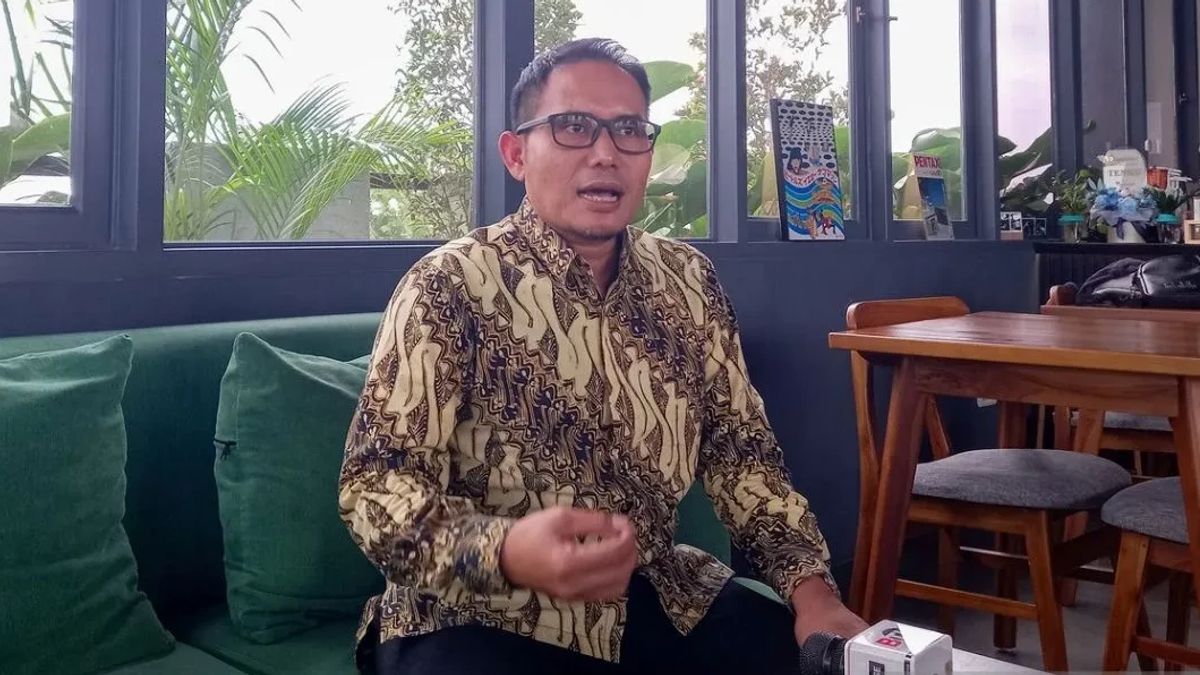
The Executive Director of the Center of Reform on Economics (CORE) Indonesia, Mohammad Faisal, said the Indonesian government must ensure that the interests of national exports are still protected from the pressure of EUDR through a measured diplomatic approach. The EUDR policy is a form of non-tariff barrier for plantation commodities to enter the EU market.
In the context of the world vegetable oil market, EUDR is only applied to palm oil and soybean oil.
Meanwhile, EUDR does not apply to rapeseed oil and sunflower oil or other vegetable oils produced by the European Union. This discrimination can be assessed as a tool for the European Union to control or exploit palm oil producers such as Indonesia.
Faisal explained that the momentum of the Indonesia-European Union Comprehensive Economic Partnership Agreement (IEU-CEPA) negotiations could be optimized to bridge the interests of Indonesian exporters, including ensuring the readiness of upstream sectors such as plantations and agriculture in meeting EUDR standards.
"The Indonesian government needs to work to ensure that the implementation of this EUDR has a minimum impact on our exports," he said in Jakarta, Thursday (19/3/2026).
If it is not handled well, non-tariff barriers will have a negative impact on the performance of national exports to the disruption of export revenues that support various programs of the Plantation Fund Management Agency (BPDP).
Faisal explained that one of the main challenges in the implementation of EUDR is the aspect of traceability or traceability of the supply chain. To meet these requirements, technical support from the European Union as a trading partner is needed. He emphasized that cooperation between Indonesia and the European Union within the framework of IEU-CEPA must be mutually beneficial for both parties.
"If the European Union wants to ensure that commodities entering the region are legal and not related to deforestation activities, they must help developing countries such as Indonesia to be able to meet these standards," he said.
Faisal added that the EUDR policy can be a momentum for Indonesia to improve the governance of the plantation sector, especially in the application of the principle of sustainability. He emphasized that the increase in commodity production should no longer rely on land expansion, but rather through intensification strategies.
He emphasized that strong trade diplomacy and governance reform of the plantation sector could be the key for Indonesia to be able to maintain export competitiveness amid increasing demands for global sustainability standards.
"We need to increase the productivity of plantation commodities and to increase productivity there needs to be alternative programs or alternative strategies, namely by intensification, including rejuvenation," he said.
One of the strategic programs related to the rejuvenation of the plantation sector owned by Indonesia is the People's Palm Oil Rejuvenation (PSR) which is run by BPDP. The PSR program aims to increase the productivity of people's oil palm plantations while maintaining the sustainability of the national palm oil industry. In 2026, BPDP targets an acceleration in the distribution of PSR with an area of up to 50,000 hectares.
The acceleration of the PSR program is a strategic step to answer various challenges in managing national palm oil, ranging from sustainability, land legality, productivity improvement, to global regulatory dynamics such as EUDR.
The English, Chinese, Japanese, Arabic, and French versions are automatically generated by the AI. So there may still be inaccuracies in translating, please always see Indonesian as our main language. (system supported by DigitalSiber.id)


