

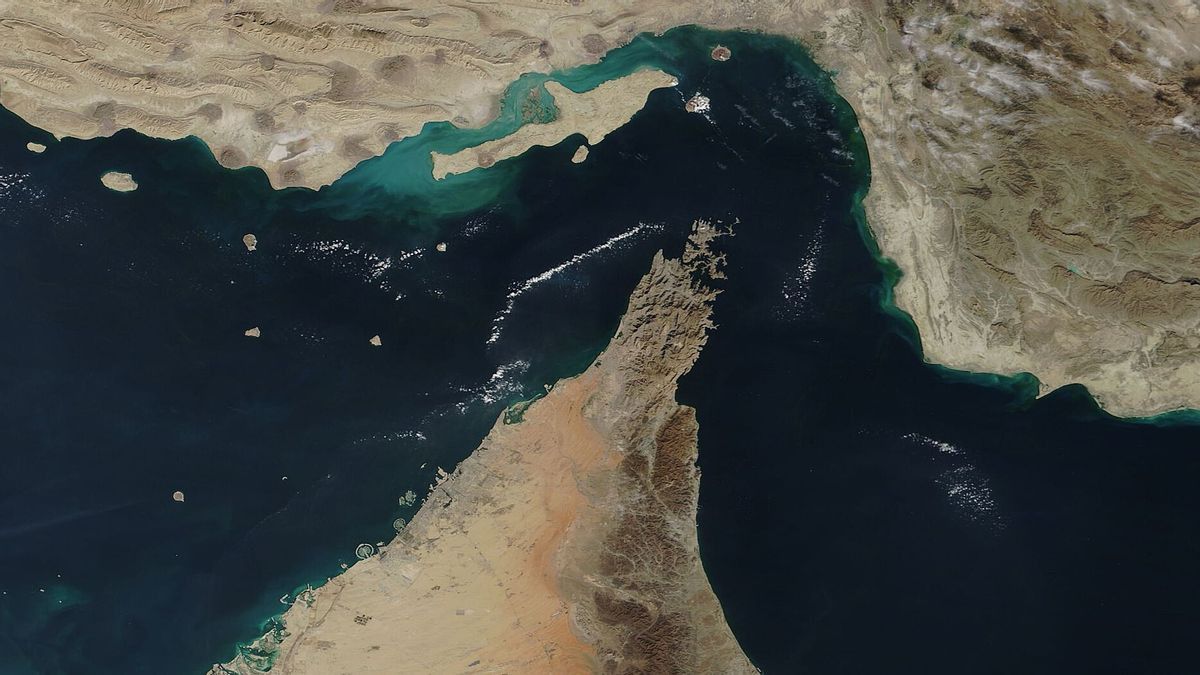


JAKARTA - The turmoil in world oil prices has not subsided. The Strait of Hormuz is still a vulnerable point that makes the market anxious amid the war between Iran and the United States and Israel. At the same time, the plan to release emergency oil reserves is considered not strong enough to withstand the threat of supply disruptions from the Gulf region.
After weakening, oil prices rose again on Wednesday, March 11. Reuters reported that Brent rose 0.7 percent to 88.39 US dollars per barrel, while West Texas Intermediate (WTI) rose 1.2 percent to 84.43 US dollars per barrel.
A day earlier, the price movement was much more wild. According to NBC News, WTI had dropped as low as 19 percent to below 77 US dollars per barrel before turning back up to the 89 US dollars range. Brent also fell 17 percent to below 80 US dollars per barrel, then rose back above 90 US dollars.
Market jitters were triggered by conflicting reports on the safety of shipping in the Strait of Hormuz. NBC News reported that the upload of US Energy Minister Chris Wright, who said the US Navy had escorted oil tankers, had put pressure on prices. However, the statement was later deleted and denied by the White House. The US government confirmed that there was no ship escort, although the option remained open.
Market doubts do not stop there. Reuters quoted Goldman Sachs which estimated that the release of a large amount of oil reserves was only enough to cover the Gulf export disruption for 12 days. Meanwhile, NBC News quoted JPMorgan which assessed that the impact of the policy would remain limited as long as the safe lane in the Strait of Hormuz had not been completely secured.
Supply pressures are also growing. Reuters reported that ADNOC shut down the Ruwais refinery after a fire due to a drone attack. Saudi Arabia began to increase supplies via the Red Sea, but the volume is still not enough to cover the decline in flows from the Strait of Hormuz. Wood Mackenzie, still quoted by Reuters, estimates that the war has cut oil and oil product supplies from the Gulf region by around 15 million barrels per day. If the crisis worsens, oil prices could soar to US$150 per barrel.
The impact is starting to be felt. NBC News reported that retail gasoline prices in the United States have risen 50 cents since the war broke out. Meanwhile, Wall Street's stock exchange closed with varying results after a volatile trading session.
The English, Chinese, Japanese, Arabic, and French versions are automatically generated by the AI. So there may still be inaccuracies in translating, please always see Indonesian as our main language. (system supported by DigitalSiber.id)
Most Popular Tags
#Prabowo Subianto #donald trump #Febrie Adriansyah #8791 #giias 2026Popular


