
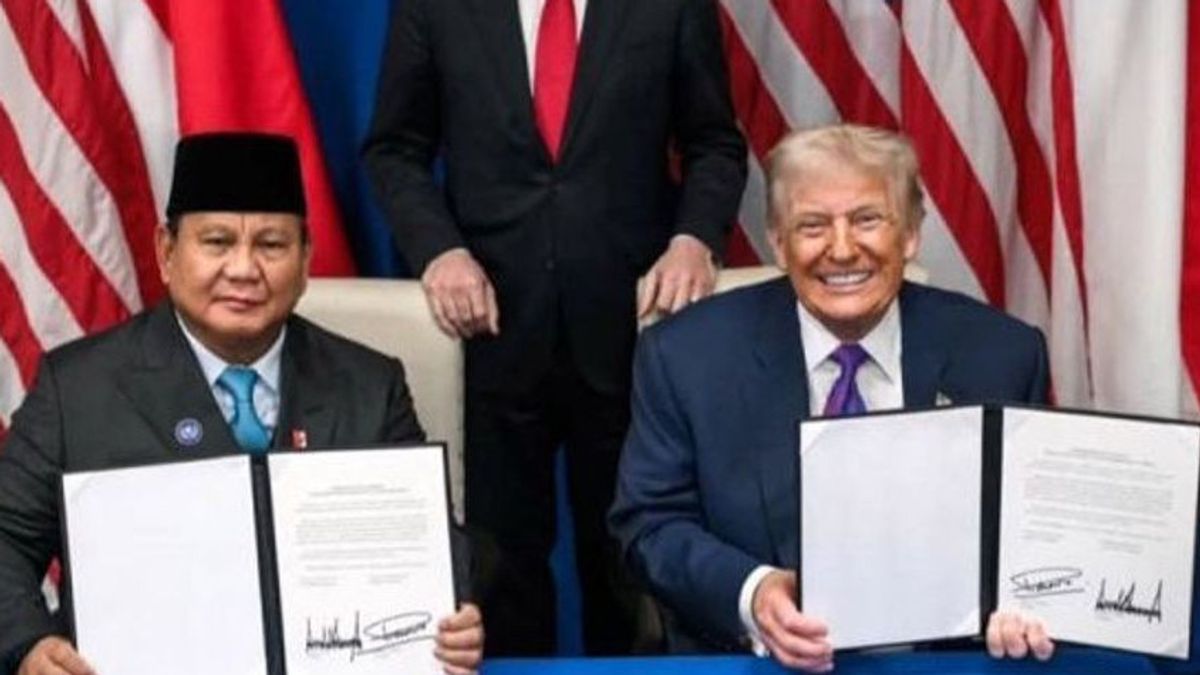


JAKARTA - The latest decision of the United States Supreme Court to overturn Donald Trump's reciprocal tariff policy brings a breath of fresh air to Indonesia's bargaining position. Executive Director of the Center of Economic and Law Studies (CELIOS), Bhima Yudhistira, emphasized that the Indonesian government now has no urgency to ratify the Agreement on Reciprocal Trade (ART) agreement.
Threat of Tariff Drop, Indonesia Can Collect the Difference
Bhima explained that the cancellation of the policy automatically eliminated the threat of tariffs that had long overshadowed national exporters.
"The threat of reciprocal tariffs no longer applies. In fact, Indonesian companies actually have a legal position to collect the difference in import duties that have been paid to the United States," Bhima said when contacted on Saturday, February 21.
He added that all the negotiation efforts made by the Indonesian team in Washington DC should be considered null and void. The pressure for Indonesia to join the Board of Peace - which was previously imposed through tariff instruments - no longer has a strong foundation.
7 Points of Danger of the ART Agreement for the National Economy
Bhima suggested that the DPR RI immediately remove the agenda for the ratification of the ART from the list of legislation for discussion. According to CELIOS' records, there are seven crucial points in the agreement that have the potential to cripple the national economy:
Balance of Payments Deficit: The risk of flooding food, technology, and energy imports that can suppress the rupiah exchange rate. Poison Pill Clause: Limiting space for Indonesia to cooperate freely with other trading partners. Threat of Deindustrialization: The elimination of the TKDN (Domestic Component Level) rule that is fatal to local industries. Foreign Dominance in Mining: Absolute ownership rules of foreign companies without divestment obligations. Geopolitical Ties: Indonesia is forced to follow the standards of US trade sanctions against other countries. Closure of Transhipment Opportunities: Blocking Indonesia's logistics and transit trade routes. Data Sovereignty: Threat to the digital ecosystem due to rules for transferring personal data abroad."We have the momentum to break free from this economic trap and begin to open ourselves up fairly to cooperation with other countries without unilateral pressure," concluded Bhima.
The English, Chinese, Japanese, Arabic, and French versions are automatically generated by the AI. So there may still be inaccuracies in translating, please always see Indonesian as our main language. (system supported by DigitalSiber.id)


