



JAKARTA - The built environment is still the main contributor to energy consumption and greenhouse gas emissions, especially in rapidly growing hot and humid cities, due to building density, lack of natural ventilation, the dominance of heat-absorbing materials, and limited green space and water bodies.
This condition triggers the phenomenon of urban heat islands, where the temperature of urban areas remains higher than the surrounding areas, especially at night when the stored heat is slowly released.
In tropical cities such as Indonesia, the combination of high temperatures, extreme humidity, weak winds, and intense solar radiation significantly reduces outdoor thermal comfort and increases the risk of heat stress, especially for vulnerable groups such as the elderly and children.
As climate change projections exacerbate these conditions, experts emphasize the need for an integrated, energy-efficient, and nature-based approach to urban cooling through the strengthening of green and blue networks, the use of reflective and permeable materials, passive ventilation, city morphology arrangements, and building designs that are responsive to the climate to reduce heat loads while reducing energy consumption.
Chairman of the Indonesian Modular House Association (ARMI) Nicolas Kesuma said that the modular house construction method can create a conducive business environment and facilitate economic growth. This method is also able to ensure sustainability as well as social and environmental responsibility.
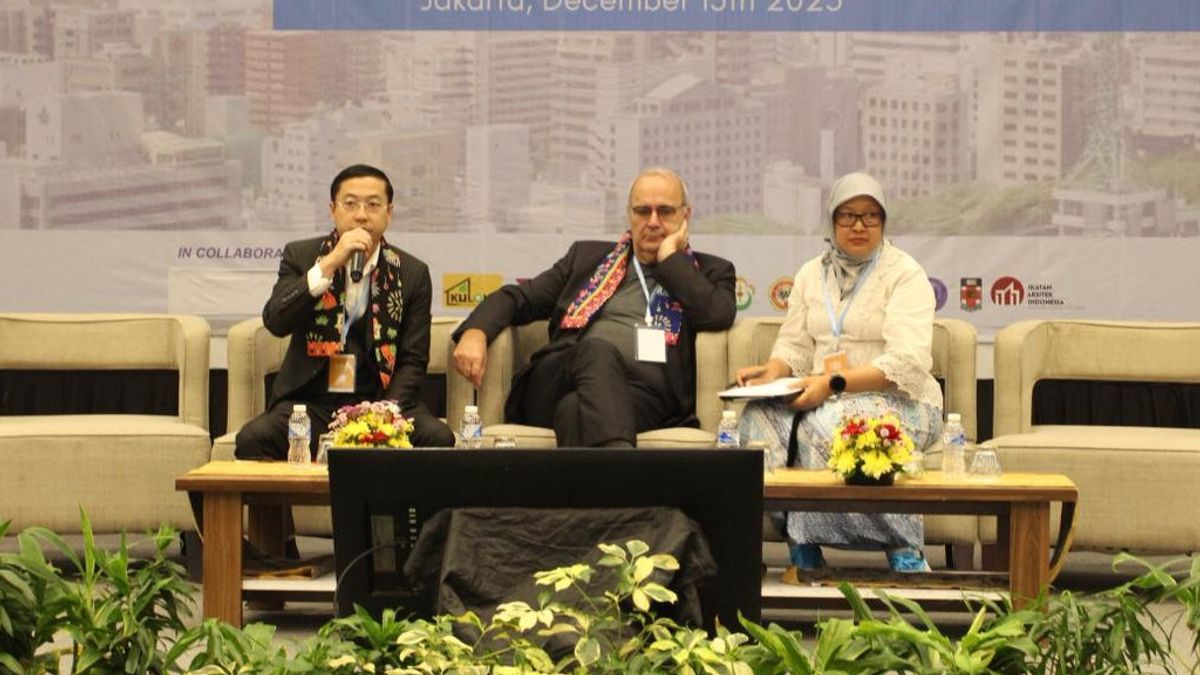
"This method adopts cleaner and environmentally friendly production technologies including the use of renewable energy, better waste management and emission reduction. Thus, it can reduce the negative impact of industry on the environment," said Nicolas, in the International Symposium and Workshop on Sustainable Buildings, Cities, and Communities (SBCC) 2025 in Jakarta, Monday, December 15. 225.
According to him, the assembly of building types from parts (modules) also does not have any impact on the environment. Because, after being produced in the factory, it is then transported to the construction site to be installed into a complete building.
"Currently, modular housing is the best solution because it has five construction characteristics that the industry needs in accordance with global demands. The five characters are faster construction work, guaranteed building quality control, more flexible design, cost savings, and environmentally friendly," said Nicolas.
SBCC 2025 is held as a forum for exchanging knowledge, research, and innovative practices in responding to global and local climate challenges.
SBCC 2025 is part of the ongoing commitment of the University of Education Indonesia through the University Center of Excellence for Low Carbon Building Materials and Energy (PUU MEB) in encouraging cross-sector collaboration to realize a low-carbon, resilient, and livable built environment.
This activity was held by the PUU MEB in collaboration with BeCool Indonesia and TataLogam Group, Inc, involving academics, professional organizations, government agencies, industry players, and leading architects, including developers of cool roof technology and cool houses.
In addition to encouraging policy discourse and design innovation, SBCC 2025 also contributes to the achievement of university academic performance through Scopus-indexed scientific publications. This year, SBCC 2025 carries the theme "A Sustainable Cooling for Cities: Designing for Hot and Humid Climates", which emphasizes the urgency of transforming city planning and design in tropical regions.
The English, Chinese, Japanese, Arabic, and French versions are automatically generated by the AI. So there may still be inaccuracies in translating, please always see Indonesian as our main language. (system supported by DigitalSiber.id)


