

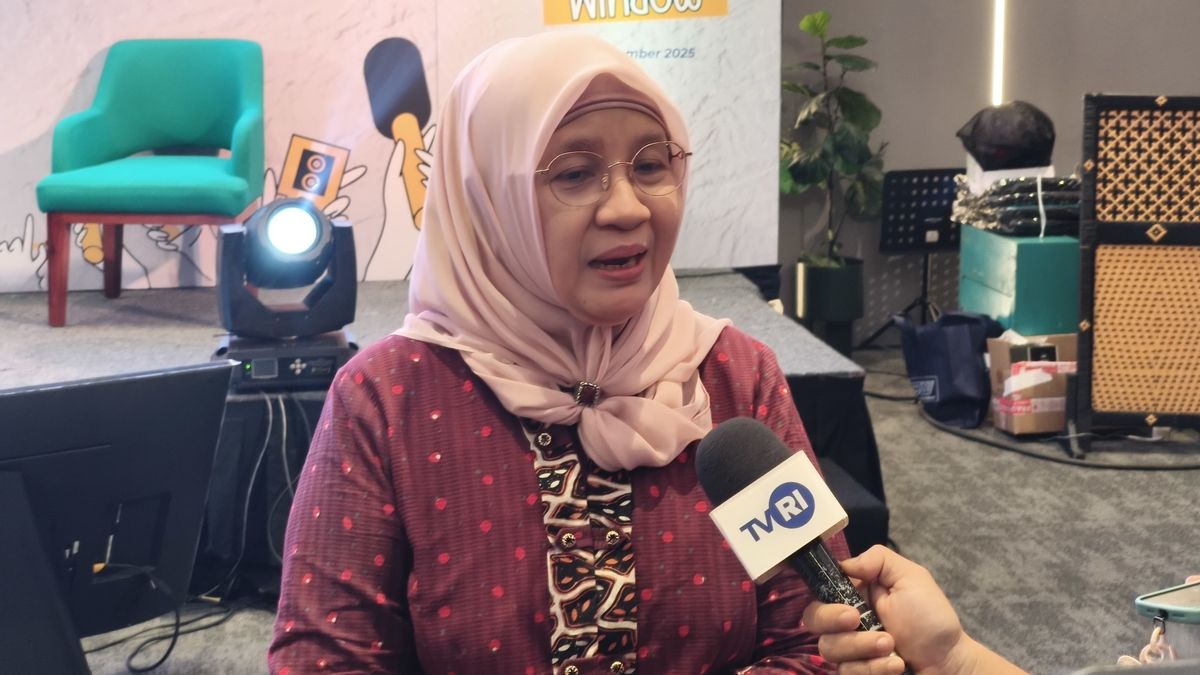


JAKARTA The National Single Window Institute (LNSW) ensures that copper, gold, and palm oil commodities will soon enter the Mineral and Coal Information System (Simbara) ecosystem.
Head of LNSW Oza Olavia stated that this step aims to strengthen supervision of state revenues and encourage compliance in the commodity downstream process.
Oza explained that the integration of data and systems for copper commodities is almost complete and is targeted to be completed by the end of this year.
"We are in the process of finalizing this. Hopefully the 15th (December 2025) will be completed so that we can carry out the addition of one new commodity, namely copper," he said in a media briefing, Thursday, December 4.
He added that Simbara is now the backbone of digitalizing mineral and coal trading because it is able to connect various ministries and institutions in an integrated system.
"This can make it easier for us to know the trading system related to minerals and coal itself and also related to how the process is," he said.
After copper, the government planned the integration of gold commodities into Simbara by 2026.
Oza emphasized that the goal of gold integration is to increase transparency and compliance, not to regulate market prices.
He conveyed that the addition of commodities to Simbara always depends on the readiness of related units, both in terms of regulation and integration of systems and business procedures.
According to him, for gold, this process has not been carried out because the previous focus was more on monitoring coal and other minerals that were considered priorities.
"So the addition of commodities usually depends on the readiness of the units that will be integrated. So it's not just the rules, the integration in the system as well as the process must also be conveyed," he said.
Even so, Oza stressed that surveillance through Simbara will not affect the price of gold, which is completely determined by the global market.
According to him, this system actually aims to ensure that the administration and fiscal obligations such as PNBP, domestic taxes, and exit duties are fulfilled by business actors.
In addition, LNSW is coordinating with various ministries/agencies to include palm oil into Simbara.
Oza explained that Presidential Regulation No. 94/2025 which regulates Simbara opens up opportunities to integrate non-mineral and non-coal commodities such as palm oil.
"In integrating, there must be a document, there is a data superset [from the related K/L] that must be connected. Is this there yet? This really depends on the K/L. Now we are coordinating with the relevant K/L-K/L," he explained.
With the entry of copper, gold, and palm oil, Simbara's coverage is now wider after previously covering coal, nickel, bauxite, and tin.
Oza emphasized that this expansion is important because the three commodities have high economic value and have contributed greatly to state revenue.
He conveyed that the integration of copper allows the government to monitor supply chains ranging from mining, transportation, downstreaming, to exports.
"So with Simbara we can monitor it. If he reports that he wants to export, for example 1,000 tons, but he has not paid the PNBP, the export cannot continue. The system will lock it," he said.
SEE ALSO:
-
 | EKONOMI
Airlangga: Dampak Bencana di Aceh dan Sumatera Baru Dihitung Usai Tanggap Darurat
04 Desember 2025, 21:34 -
 | EKONOMI
KKP Ungkap Ada Dua Sentra Garam Rusak imbas Banjir Bandang di Sumatera
04 Desember 2025, 21:21
Menurutnya, mekanisme ini mendorong pelaku usaha melunasi kewajiban sebelum barang keluar pelabuhan dan memastikan validasi dokumen antar-lembaga berjalan terintegrasi.
Oza mengakui tantangan utama dalam perluasan Simbara adalah menyelaraskan proses bisnis antar instansi dan LNSW akan terus memperkuat koordinasi dengan 29 kementerian/lembaga terkait.
"Memulai sebuah sistem pasti dimulai dengan penyamaan proses bisnisnya. LNSW tidak bisa berdiri sendiri, kita didukung oleh 29 kementerian/lembaga," pungkasnya.
SEE ALSO:
-
| EKONOMI
Airlangga: Dampak Bencana di Aceh dan Sumatera Baru Dihitung Usai Tanggap Darurat
04 Desember 2025, 21:34 -
| EKONOMI
KKP Ungkap Ada Dua Sentra Garam Rusak imbas Banjir Bandang di Sumatera
04 Desember 2025, 21:21
According to him, this mechanism encourages business actors to pay off obligations before goods leave the port and ensure the validation of inter-institutional documents is integrated.
Oza admits the main challenge in Simbara's expansion is that aligning business processes between agencies and LNSW will continue to strengthen coordination with 29 related ministries/agencies.
"Starting a system must start with the name of the business process. LNSW cannot stand alone, we are supported by 29 ministries/agencies," he concluded.
The English, Chinese, Japanese, Arabic, and French versions are automatically generated by the AI. So there may still be inaccuracies in translating, please always see Indonesian as our main language. (system supported by DigitalSiber.id)
Popular


