

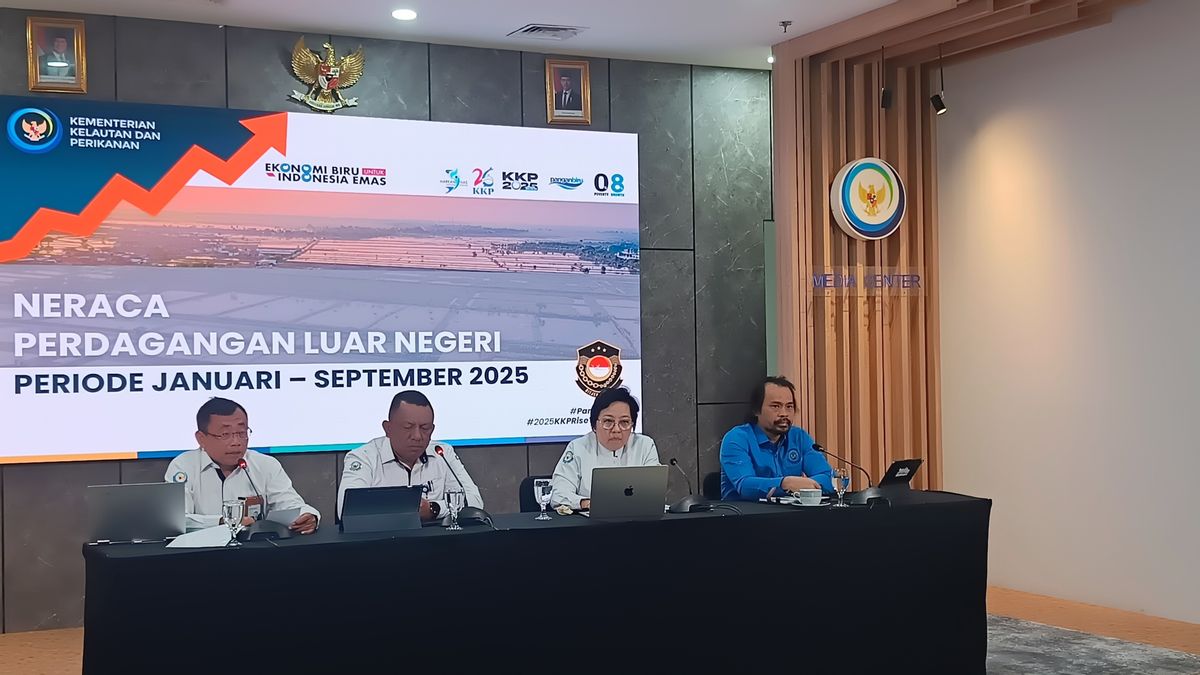


JAKARTA - The Ministry of Maritime Affairs and Fisheries (KKP) will develop radioactive detection laboratories in four strategic locations to strengthen the marine food safety testing capacity, especially for shrimp products.
This step is a response to the case of Cesium-137 contamination which had disrupted Indonesia's shrimp exports some time ago.
Head of the Marine and Fishery Product Quality Control and Supervision Agency (BPPMHKP) Ishartini revealed that his party is currently waiting for tools to detect radioactive material.
"Regarding the lab, the lab will be in Cilangkap. Now there is a KKP lab, but there is no tool for radioactiveity. We have ordered, hopefully by the end of this year it can be operational," said Ishartini at a press conference at the KKP office, Jakarta, Thursday, November 6.
Ishartini explained that the radioactive detection laboratory will later be developed in several cities, such as Surabaya, Makassar and Medan, in the coming year.
SEE ALSO:
-
 | EKONOMI
Udang RI Sudah Kembali Diterima AS, KKP Targetkan Kirim 200 Kontainer Bulan Ini
06 November 2025, 15:05 -
 | EKONOMI
KKP Ungkap Kronologis Penanganan Produk Udang RI Terpapar Cs-137 di AS
06 November 2025, 11:38
"We will develop it for laboratories in Surabaya, then for other labs we will also develop it in Makassar and the following year in Medan," he said.
The development of the laboratory infrastructure is supported by a budget that has been prepared and trained human resources.
"The budget is available, we just have to run it. Our lab building already has it, it's just a tool. We have trained the person. As soon as the tool arrives, we will accredit it briefly," he said.
With the operation of the radioactive detection laboratory, it is hoped that cases of rejection of the export of Indonesian fishery products to the international market, especially the United States (US) will no longer occur while strengthening the national food quality and safety insurance system.
The English, Chinese, Japanese, Arabic, and French versions are automatically generated by the AI. So there may still be inaccuracies in translating, please always see Indonesian as our main language. (system supported by DigitalSiber.id)


