

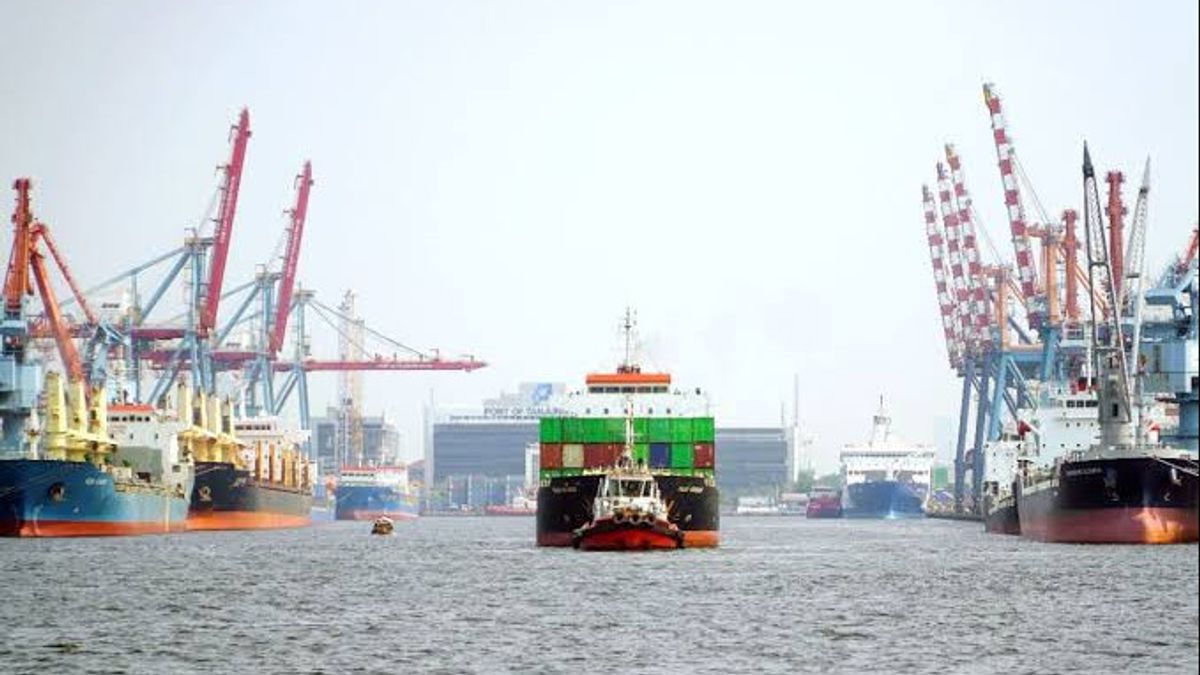


JAKARTA - The United States has decided to continue to apply the import rate of 32 percent to all products from Indonesia starting August 1, 2025.
Economist and Public Policy Expert from UPN Veteran Jakarta Achmad Nur Hidayat conveyed that the decision emphasized one thing, namely that Indonesia failed to maintain national interests through economic diplomacy.
According to him, this failure shows the weak strategy and leadership of the government's economic team, especially Airlangga Hartarto and Sri Mulyani Indrawati, in fact, neighboring countries such as Thailand and Cambodia managed to reduce their export rates to the US from 36 percent and 49 percent to only 10 percent.
"The government's claim that negotiations took place intensively has no meaning when the final result was nil. Indonesia is still subject to high tariffs, while neighboring countries such as Thailand and Cambodia managed to reduce their tariff burden from 36 percent initially and 49 percent to 10 percent. This is not just a technical failure, but the failure of Airlangga Hartarto and Sri Mulyani Indrawati Cs' leadership in defending the strategic interests of the Indonesian people," he said in his statement, Tuesday, July 8.
Achmad said that this failure is a strong indicator that Indonesia needs a new economic team that has global negotiating capacity and courage to defend its national interests.
He said economic diplomacy cannot rely solely on theory or beautiful reports on paper, but it requires the ability to read global dynamics and act strategically.
"Airlangga and Sri Mulyani Cs must be responsible for this failure. They cannot take cover behind the pretext of a global situation because at a time when global conditions are not friendly, economic leadership capabilities are tested," he explained.
He said that the 32 percent tariff is an expensive price that must be paid by the people due to the absence of strategic leadership in the economic sector and if this pattern of negotiations continues, the future of the national industry will continue to lag behind.
According to him, Indonesia will be a spectator in global competitions that can produce, but cannot compete, so what is needed is a new economic leader who is smart, tough, and dares to diplomacy to defend the interests of the people.
"In global competitions, only countries with smart leadership and strong negotiation strategies will win the race. Indonesia must choose a fresh reliable economic team that will be the winner or forever behind," he said.
Achmad added that countries such as Cambodia, Thailand managed to reduce tariffs to 10 percent and Malaysia remained at 25 percent, showing that Indonesia's failure was not because Trump was too harsh, but because Indonesia's strategy was too weak.
"Negara-neighbor negara mampu membaca dinynamika kebijakan Trump dan menyusun strategi negosiasi yang cektif, sementara Indonesia hanya menjadi penonton dalam pertarungan tarif global. Gagalan ini juga mengunjukkan keweaknya kepemimpinan Airlangga dan Sri Mulyani dalam mengelola diplomasi ekonomi dan memahami dynamics politik internasional," tuturnya.
He added that Trump since his first term of government had used tariffs as political and economic weapons and China had been forced to negotiate strongly and eventually prepared a policy concession package to reach an agreement.
"Indonesia is not actually preparing a win-win proposal. Our government seems to hope that Trump will change his mind without any substantive and strategic negotiation efforts. This is not economic diplomacy, but diplomacy in surrender which endangers the national interest," he added.
According to him, the Indonesian negotiator team does not have a strategy based on national interests and does not understand Trump's typical transactional approach, instead of drafting concrete counter-offers, the government actually looks passive, waiting for US mercy.
He added that the Government only relied on the intensity of formal meetings without drafting a trade diplomacy roadmap based on national interests and Trump's policy preferences.
Achmad said Trump's official letter clearly states that tariffs can change if Indonesia adjusts trade policies and opens national markets for American products, this is transactional diplomacy, a common negotiation strategy in global trade relations.
"The Indonesian government does not seem to have prepared a viable counter-offer. They are just waiting for the mercy of the US without offering reciprocal policies that provide strategic value for Indonesia," he explained.
According to him, the biggest failure was the absence of the potential for nickel downstream where Indonesia holds 34 percent of global reserves to become a power of negotiation where the US desperately needs nickel for the electric and military vehicle industry, but Indonesia does not offer concessions or concrete cooperation to take advantage of this opportunity.
"Ironically, the Indonesian team was unable to formulate concrete offers, such as downstream investment or technical concessions related to critical minerals that would encourage the US to lower tariffs because nickel raw materials were needed for the electric and military vehicle industry. Furthermore, domestic regulatory issues, especially the slow bureaucracy, legal uncertainty, and barriers. Domestic Component Level is also a burden that makes the US hesitate to lower tariffs," he said.
He also added that in addition to the weak negotiation strategy, internal problems such as slow bureaucracy, legal uncertainty, and complicated non-tariff policies exacerbated Indonesia's position, where inter-ministerial negotiations also took place without clear coordination.
"The negotiations carried out yesterday did not have a thorough orchestration and coordination of Airlangga, the leadership of other Ministries such as the Ministry of Trade, the Ministry of Industry and the Ministry of Foreign Affairs were also not provided with sufficient information on what was negotiated, let alone the public," he said.
SEE ALSO:
-
 | EKONOMI
Amerika Serikat Tetap Terapkan Tarif Impor 32 Persen untuk Produk Indonesia
08 Juli 2025, 10:43
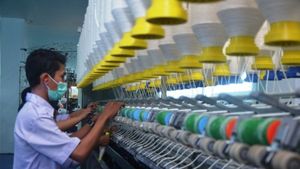
Achmad added that Indonesia's superior products such as textiles, footwear, furniture, and agro-manufacturing will lose competitiveness in the US market because in international trade, the profit margin of as small as 5 percent can determine purchase decisions, especially with such a difference in tariffs that can transfer purchase contracts to other countries.
"Especially if the difference in tariffs reaches 32 percent. This is like an athlete who has to run against another runner with a backpack full of stones on his back. No matter how strong or fast he trains, that burden will knock him out before the finish line," he said.
The English, Chinese, Japanese, Arabic, and French versions are automatically generated by the AI. So there may still be inaccuracies in translating, please always see Indonesian as our main language. (system supported by DigitalSiber.id)
Popular


