


JAKARTA The World Bank announced that the international extreme poverty line standard was raised from USD 2.15 to USD 3 per capita per day, making more than 15 million Indonesians now categorized as extreme poor.
"In an instant, more than 15 million Indonesians who were previously not included in the extreme poor count are now classified into it. That figure is equivalent to 5.5 percent of the population," said Economist and Public Policy Expert from UPN Veteran Jakarta Achmad Nur Hidayat in his statement, Wednesday, June 11.
Achmad explained that this change in standards sparked debate over the accuracy of Indonesia's way of measuring poverty, as well as justice in the formulation of national socio-economic policies.
According to him, the revision of these standards is not just adjusting numbers and statistics but a reflection of social justice issues to assess the extent to which the government really sides with vulnerable groups.
"This is not just a statistical problem. This is a matter of justice. When the poverty standard changes, the most affected are those who live closest to the boundaries of those who daily struggle with uncertainty," he stressed.
"So, the question shouldn't be just how many poor people today? But are we honest and fair enough to measure and deal with poverty?," he added.
According to him, the increase in the poverty line to 3 US dollars per day actually brings closer to realistic measurements of basic human needs such as nutritious food, clean water, access to health, education, and proper housing.
He added that this condition revealed that many Indonesian households that were previously considered to have come out of poverty were still living in high economic vulnerability, such as rising prices, losing jobs, or sick family members.
"Changes in this line are like shifting the camera so that we can see more clearly the shadow of injustice that has been vague. It doesn't mean the world is getting worse; but our glasses are now clearer. And that is the beginning of a more favorable policy," he added.
Achmad explained that so far the Indonesian government claims to have reduced the poverty rate to below 9 percent, with various social assistance programs such as basic food cards, PKH, and JKN.
SEE ALSO:
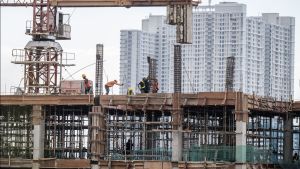
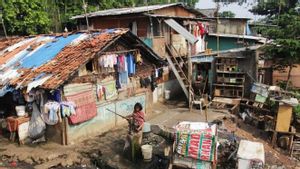
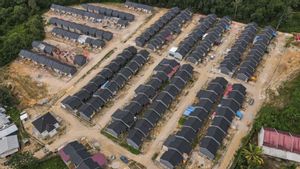
However, he explained that with the new standards from the World Bank, as many as 5.5 percent of Indonesia's population who were previously not classified as extreme poor are now included in the group.
"When the international line was raised, it was revealed that many of those who were considered no longer poor were still far from prosperous. They were not out of poverty, but were standing fragile on the edge of a ravine. With the new standard, more than 15 million people were again recorded as extreme poor. This is a fair evaluation tool that it turns out that the government's program in the last 10 years failed, and in 2025 a new challenge emerged, namely the reality of living expenses is increasing," he said.
On the other hand, he conveyed that the government of President Prabowo, who has just served, is considered to have the opportunity to fix the poverty reduction approach through a new institution, the Agency for the Elimination of Extreme Poverty (BP2K).
Achmad emphasized that Indonesia's challenges in the future will not only increase and distribute social assistance, but also change the perspective on poverty from just the distribution of aid to make anti-poor policies a way to build social justice.
The English, Chinese, Japanese, Arabic, and French versions are automatically generated by the AI. So there may still be inaccuracies in translating, please always see Indonesian as our main language. (system supported by DigitalSiber.id)
Most Popular Tags
#Prabowo Subianto #donald trump #Febrie Adriansyah #8791 #giias 2026Popular


