

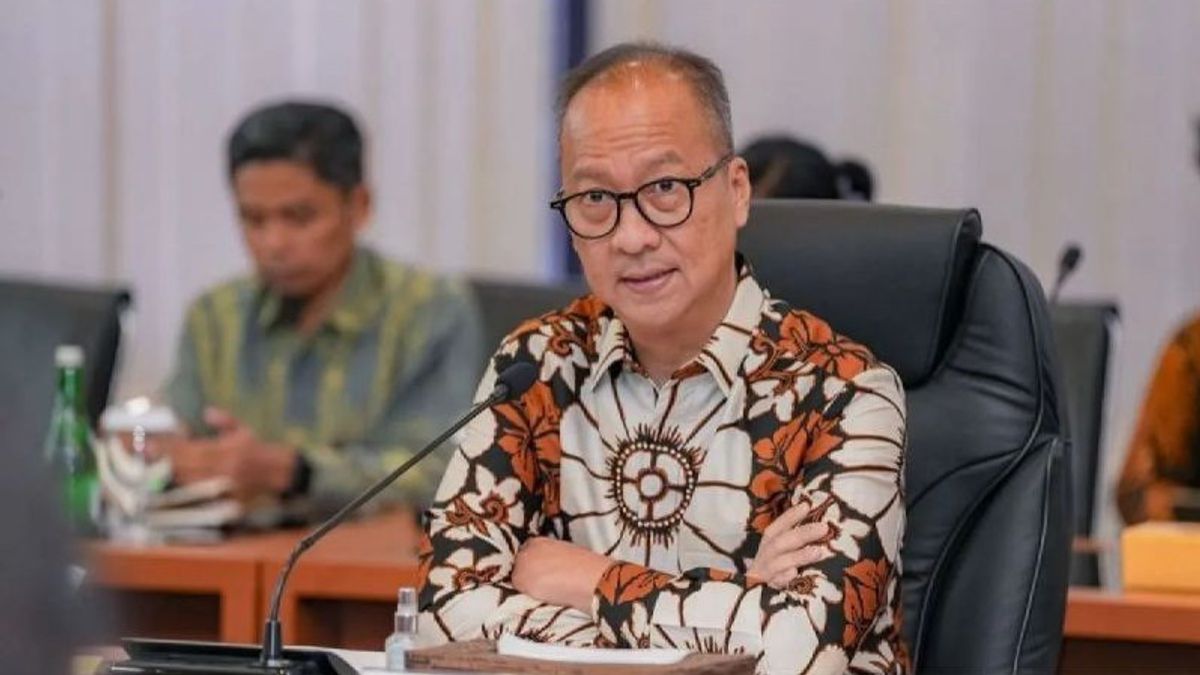


The Minister of Industry emphasized that the resignation of LG Energy Solution from the investment in electric vehicle projects (EV) in Indonesia is nothing to worry about excessively.
"In a large-scale business consortium or project, change of investors is common. This does not interfere with the target of EV development programs in Indonesia," said Industry Minister Agus Gumiwang Kartasasmita as reported by ANTARA, Monday, April 28.
According to him, the acceleration of development for the electric vehicle ecosystem in Indonesia will continue to run according to planning and targets, especially since some have produced in the country.
Hingga kini sudah terdapat dua perusahaan yang sudah menjalani produksi baterai untuk motor listrik.
The company, namely PT Industri Ion Energisindo, has a production capacity of 10,000 pcs of batteries per year and an investment of Rp. 18 billion, and PT Energi Selalu Baru with a production capacity of 12,000 pcs of batteries per year with an investment value of Rp. 15 billion.
As for the four-wheeled sector, in Indonesia, there are already two companies, namely PT HLI Green Power, which is a consortium between Hyundai Group and LG as a battery cell manufacturer, with a capacity of the first phase of 10 GWh with a total investment value of 1.1 billion US dollars.
The battery cell industry will supply 150,000 to 170,000 units of electric motorized vehicles through PT Hyundai Energy Indonesia as the battery pack industry which has a production capacity of 120,000 packs of electric motorized vehicle batteries with a total investment of IDR 674 billion.
The development of the green vehicle ecosystem in the country shows a graph that continues to increase from year to year.
Thus, he added that by 2024 he had reached 207,000 units, an increase of 78 percent compared to 2023 which amounted to 116,000 units.
The development of the electric vehicle ecosystem in Indonesia is growing, with a capacity that far exceeds market developments.
"This is also driven by various strategic policies from the government, including providing certainty and ease of business, preparation of roadmaps, and optimizing the level of domestic components (TKDN)," he said.
His party is still consistent in placing the production target of electric vehicles in 2030, which will be 9 million units for the two and three wheels segments, as well as 600,000 units for the car and bus segments.
This target is expected to contribute to reducing fuel consumption (BBM) by 21.65 million barrels or the equivalent of reducing CO2 emissions by 7.9 million tons in total.
In Indonesia, 63 companies have registered that entrust their motorcycles to be produced in Indonesia, with a production capacity of 2.28 million units per year.
SEE ALSO:



Then, there are nine companies that produce electric cars with a production capacity of 70,060 units per year and an investment of IDR 4.12 trillion.
In addition, there are also seven companies that have produced electric buses, with a total production capacity of 3,100 units per year and a total investment of IDR 0.38 trillion.
"So, the total investment is IDR 5.63 trillion. This investment is what we need to protect, because it brings a multiplier effect to our economy, including an increase in the number of workers in Indonesia," concluded Agus.
The English, Chinese, Japanese, Arabic, and French versions are automatically generated by the AI. So there may still be inaccuracies in translating, please always see Indonesian as our main language. (system supported by DigitalSiber.id)
Popular


