


Deputy Minister of Public Works (PU) Diana Kusumastuti laid the first stone or groundbreaking for the construction of the Low Carbon Low Rental Simple Flats (Rusunawa) in Tegal City, Central Java, today.
Diana said this was the Indonesian government's commitment to reduce greenhouse gas emissions in the building sector, which accounts for a third of total greenhouse gas emissions.
"The low-carbon rusunawa prototype that we will build is designed as a solution to these challenges, by combining innovative technology and sustainability concepts to create comfortable, healthy and energy-efficient housing and minimize negative impacts on the environment," Diana said in a written statement, Friday, January 17.
This prototype of the Low Carbon Rusunawa is the second prototype that was built as a result of a collaboration between the Ministry of Public Works and the Japan International Cooperation Agency (JICA) through Science and Technology Research Partnership for Sustainable Development Program (SATREPS) with the City Government of Tegal as a strategic partner.
The main advantage of this prototype is the use of a hybrid system that uses the concept of sustainable housing buildings with a combination of concrete and processed wood.
The design of the building optimizes the principles of sustainable buildings, such as building orientation, natural ventilation, high-insulating materials and spatial planning that supports air flow. Thus, maintaining the comfort of the building without conventional air conditioning.
SEE ALSO:
-
 | EKONOMI
Menteri Ara Sebut 7 Konglomerat RI Bantu Garap Proyek 3 Juta Rumah, Ini Rinciannya
28 November 2024, 19:05 -
 | EKONOMI
Menteri Ara Bakal Relokasi Warga Kolong Jembatan Jakarta ke Rusun Sabtu Pekan Ini
28 November 2024, 16:49
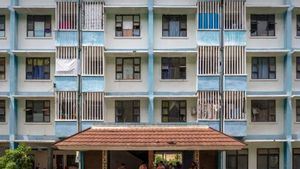
This approach not only reduces carbon emissions, but also reduces operational costs. Thus, it can realize energy-efficient housing that can improve the quality of life of its residents and reduce carbon footprint.
"I hope that this prototype can be applied in a larger and wider scope throughout Indonesia to support the government's commitment to reducing greenhouse gas emissions in accordance with the Enhanced Nationally Determined Contribution (ENDC) target," he said.
In the future, Diana said, the construction of housing and building buildings will not only focus on fulfilling standard habitability, but must also contribute to climate change impact mitigation efforts.
"Hopefully this project will not only be a solution for the housing needs of the community, but also an inspiration for sustainable infrastructure development in Indonesia," he added.
The English, Chinese, Japanese, Arabic, and French versions are automatically generated by the AI. So there may still be inaccuracies in translating, please always see Indonesian as our main language. (system supported by DigitalSiber.id)
Popular


