



JAKARTA - The Ministry of Trade (Kemendag) emphasized the tightening of exports of sub-district oil (Used Cooking Oil/UCO) in accordance with the Regulation of the Minister of Trade (Permendag) number 2/2025 Amendments to the Regulation of the Minister of Trade Number 26 of 2024 concerning Export Provisions for Palm Oil Derivative Products.
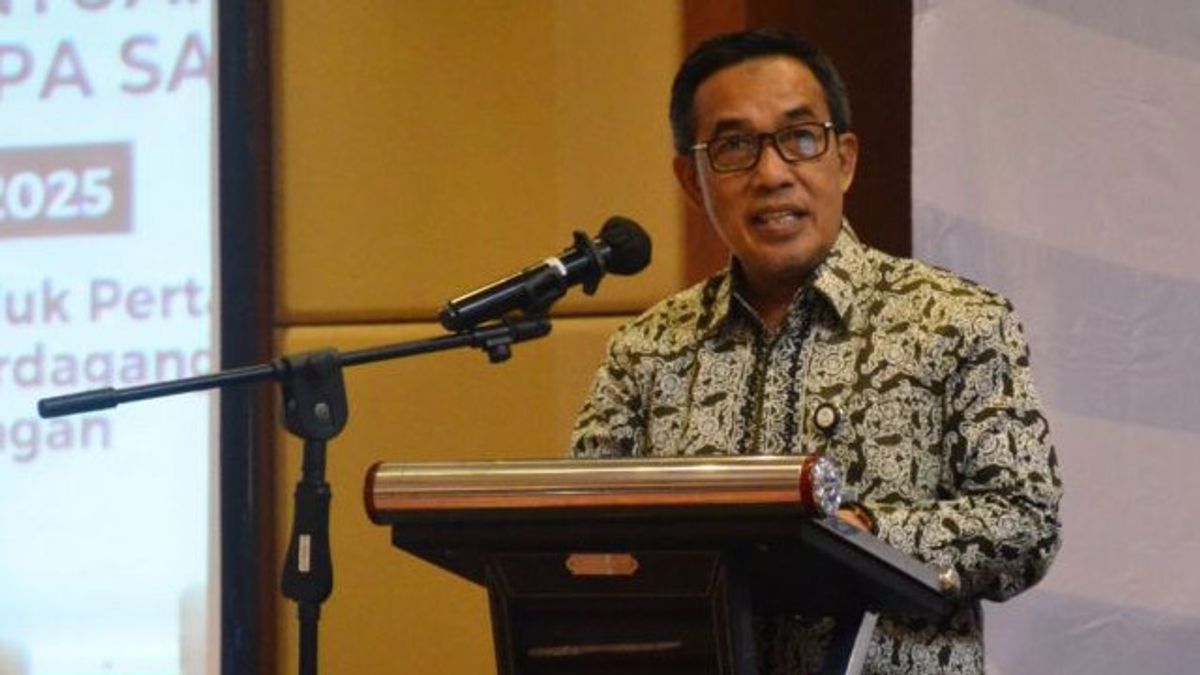
This was conveyed by the Director General of Foreign Trade (Dirjen Daglu) Isy Karim in the socialization of Permendag 2/2025.
He said the regulation not only tightened UCO exports, but also palm oil mill waste (Palm Oil Mill Effluent/POME), and residues of high acid palm oil (High Acid Palm Oil Residue/HAPOR).
Isy emphasized again that the Minister of Trade Budi Santoso's statement that Permendag 2/2025 was taken to ensure the availability of raw materials for the cooking oil industry in the implementation of the people's cooking oil program.
In addition, it is also to support the implementation of biodiesel-based palm oil by 40 percent (B40).
"The UCO export and residual policies were discussed and agreed in a coordination meeting (rakor) chaired by the Coordinating Ministry for Food Affairs. The discussion at this coordination meeting included the existence of export allocations which became a requirement to obtain Export Approval (PE)," said Isy as quoted by ANTARA, Thursday, January 16.
According to Isy, the consideration of making a deal in the coordination meeting to be able to export UCO and residue is based on several things, including other policies that limit UCO exports and residues such as the imposition of issued duties that will be enforced and the adjustment of the export rights conversion figures from the Domestic Market Obligation (DMO).
Furthermore, another consideration is the domestic production and consumption figures from UCO and residues, as well as UCO export rights and residues owned by exporters.
"Besides that, exporters who have PE UCO and a Residual PE that has been issued based on the previous Permendag can still carry out exports. The PE is still valid until the validity period ends," he said.
Meanwhile, the Director of Export for Agricultural and Forestry Products at the Ministry of Trade Farid Amir said that the issuance of Permendag 2/2025 was also based on growing demand for POME, HAPOR, and UCO due to the implementation of the Carbon Offsetting and Reduction Scheme for International Aviation (CORSIA) policy by the International Civil Aviation Organization (ICAO).
Another reason is that the Permendag is also based on the rampant mode of mixing CPO with the original POME and HAPOR, as well as the practice of processing fruit from the Fresh Fruit Tandan (FFB) which is rotted directly into POME and HAPOR.
"The change in the Permendag includes changes to the terms and procedures for obtaining the UCO PE and residue. Based on the Permendag 2/2025, the PE is issued with the obligation to complete the allocation requirements if agreed in the coordination meeting," said Farid.
He hopes that the cooperation between exporters and associations will convey data that supports the export policies of CPO products and their derivatives. The data includes the amount of production, supply, consumption, and demand.
The English, Chinese, Japanese, Arabic, and French versions are automatically generated by the AI. So there may still be inaccuracies in translating, please always see Indonesian as our main language. (system supported by DigitalSiber.id)
Most Popular Tags
#Prabowo Subianto #donald trump #2026 World Cup #venezuela #konflik timur tengahPopular


