
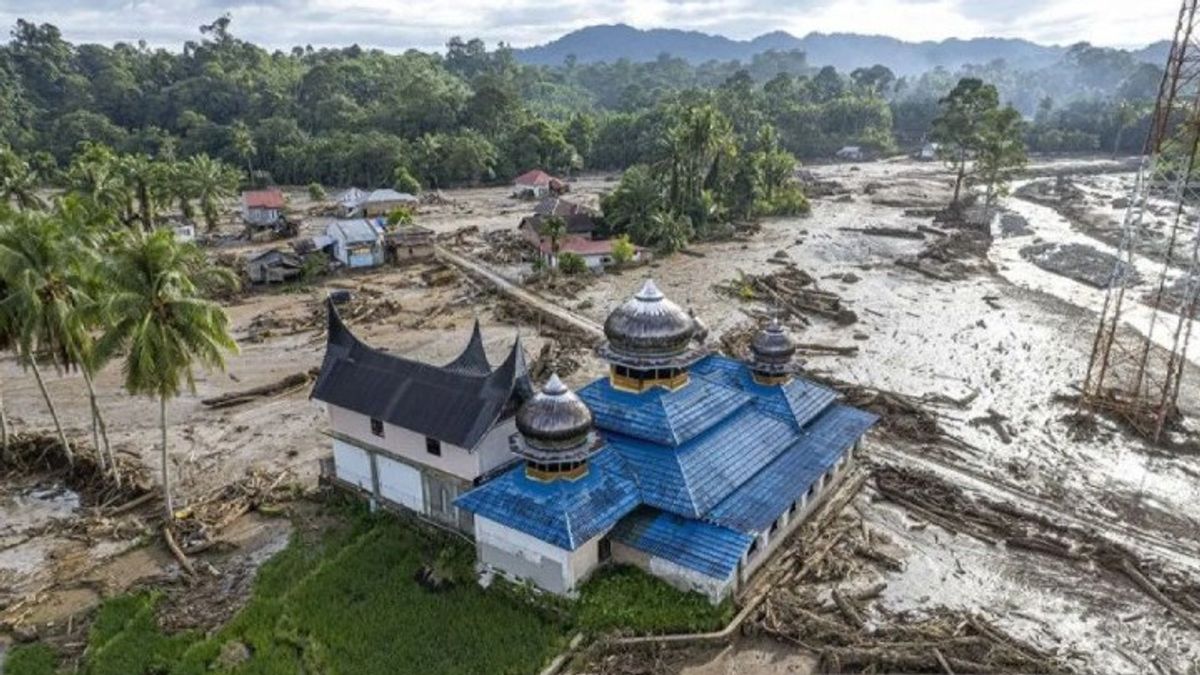


JAKARTA - The Indonesian government has never set a national disaster status following a series of natural disasters in Sumatra. In fact, according to the picture on social media, the situation in North Sumatra, West Sumatra, and Aceh was destroyed by flash floods and landslides.
Unpleasant views have occurred on Indonesian social media in recent days. This heartbreaking story came from North Sumatra, West Sumatra, and Aceh which was hit by natural disasters of flash floods and landslides.
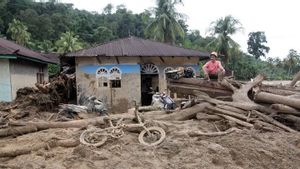
As a result of the disaster, road and communication access was cut off, as well as electricity that went out. Several isolated areas, survivors experienced hunger because aid never came. In fact, according to the latest news, some residents were forced to loot minimarkets to survive.
However, until now the government has not set a national disaster status.
Head of the National Disaster Management Agency (BNPB) Lt. Gen. Suharyanto said the tense conditions were indeed seen on social media, but the current conditions on the ground were not so far. He explained that so far the disasters in Indonesia that have been designated as national disasters are the COVID-19 pandemic and the 2004 Aceh Tsunami.
"We don't need to have a long discussion, yes, what is meant by the status of the national disaster that has been set by Indonesia is COVID-19 and the 2004 Tsunami. Only those two are national disasters. Meanwhile, after that, there were many disasters in Palu, the NTB earthquake and then the Cianjur earthquake were not national disasters," said Suharyanto at a press conference.
According to a BNPB report on Sunday (30/11/2025), 166 people died in North Sumatra Province. In addition, 143 other people are still missing. The list of areas affected by the largest disaster in North Sumatra are Central Tapanuli, South Tapanuli, and Sibolga City.
Meanwhile, in Aceh, the death toll based on the BNPB report was 47 people. A total of 51 residents were declared missing and eight were injured. The number of refugees in Aceh reached 48,887 with the location of the evacuation in North Aceh, Bener Meriah, Central Aceh, and Aceh Singkil.
In West Sumatra Province, BNPB recorded 90 deaths and 85 other residents still missing, while 10 were injured. Most of the victims came from Agam Regency. Meanwhile, the number of refugees in West Sumatra is 11,820 heads of families or around 77,918 people.
The location of the evacuation is in Padang City and Pesisir Selatan Regency. The Regional Disaster Management Agency (BPBD) of Agam Regency, West Sumatra, noted that 4,000 people had fled in its area.
In the midst of this situation, the public began to question whether the government needed to establish a national disaster emergency status. This question arose with the wide impact of the Sumatra disaster which damaged dozens of infrastructures, disrupted logistics chains, thousands of people had to evacuate.
Based on the BNPB document entitled 'Disaster Emergency Status Determination Guidelines', there are three levels of disaster emergency status, namely district/city disasters, provincial disasters, and national disasters.
The status of a national disaster is a condition set by the central government when a disaster is considered to have a very broad impact and exceeds the ability of local governments to handle it.
In other words, not all disasters that occur in Indonesia have national disaster status. The status of a national disaster is the authority of the President of the Republic of Indonesia, based on the recommendations of BNPBB and related ministries/agencies.
Until now, the government continues to intensify the distribution of aid for victims of floods and landslides in Aceh, West Sumatra, and North Sumatra. The distribution of aid is carried out using various modes of transportation.
Cabinet Secretary Teddy Indra Wijaya, in a written statement, said the government had sent 28 helicopters to the disaster sites in the three provinces.
In addition to sending aid, search and rescue operations are still being carried out in disaster-affected areas. However, the assistance sent by the government is considered insufficient.
Researcher from the Center for Constitutional Studies (Pusako) of the Faculty of Law, Andalas University, Beni Kurnia Illagani urged President Prabowo Subianto to establish national disaster status in Aceh, North Sumatra, and West Sumatra. Through this status, the government can ensure the availability of an allocation of the State Revenue and Expenditure Budget for disaster management fairly and evenly.
Beni emphasized that the determination of national disaster status could represent the presence of the state in the midst of various central government policies that marginalize local governments in many ways.
Some of the things that Beni meant included the takeover of almost all strategic sector permits in the regions and the transfer of various tax authorities from the regions to the center. In addition, transfer to the regions (TKD) was also cut by almost Rp700 trillion this year, most of which is mandatory expenditure (mandatory spending) to mobilize basic community services.
"The nearly 15 percent cuts in the 2025 national disaster management budget which is also a mandatory spending show that national policy priorities are not in line with the increasing risk of disasters in Indonesia," said Beni.
Sumatra, said Beni, accounts for about 25 percent of Indonesia's total gross domestic product (GDP). That's why if the president does not set a national disaster status, the central government's alignment with the regions will be increasingly questioned.
"In the context of the constitution, the state has an obligation and responsibility for all of Indonesia's bloodshed. Natural disasters are a humanitarian issue, not just an administrative matter. Therefore, the state should carry out extraordinary authority quickly and proportionally," Beni explained.
Meanwhile, a public policy observer from Trisakti University Trubus Rahadiansyah also commented on the absence of a national disaster emergency status in Sumatra. According to him, each local government is still able to deal with disasters in its area.
If referring to the criteria for national emergency status, according to Trubus, an area must be declared paralyzed before the central government sets this status. When the government from districts/cities stated that they were unable to face disasters, they handed over the handling to the provinces.
"The province that is studying, is it really not like that? If the province says it can't be done at all, the entire Sumatra region is completely paralyzed. Well, he handed it over to the central government, proposing," said Trubus.
SEE ALSO:
-
 | BERNAS
Kematian Tragis Irene Sokoy adalah Bukti Kegagalan Sistemik Pelayanan Kesehatan di Papua
25 November 2025, 13:00


"If it doesn't exist, it's a matter for the local government. In the past, in Yogyakarta and Palu it was the same. In Yogyakarta, the disaster was in districts/cities, in Bantul, Sleman, but the one who handled it was Sleman and Bantul Regencies. Then if someone can't afford it, then the province will work together," he added.
Trubus also emphasized that the national disaster emergency status was not determined based on the number of victims, but whether a government was paralyzed or not.
"This is not a matter of the number of victims. Yogyakarta used to have up to 6,000 deaths, but it was not set nationally. Because the DIY Provincial Government is still in charge. The task of the central government is to facilitate assistance. Assistance from the TNI and Polri, the community also helps all," concluded Trubus.
The English, Chinese, Japanese, Arabic, and French versions are automatically generated by the AI. So there may still be inaccuracies in translating, please always see Indonesian as our main language. (system supported by DigitalSiber.id)
Most Popular Tags
#Prabowo Subianto #donald trump #firearm #8791 #giias 2026Popular


