


JAKARTA The government has again prepared steps to redenominate or simplify the rupiah digit, but economists ask the government to be careful in imposing this redenomination.
The redenomination plan or simplification of the rupiah currency surfaced again after the Minister of Finance, Purbaya Yushi Sadewa, set a Strategic Plan for the Ministry of Finance for 2025-2029 in the Regulation of the Minister of Finance (PMK) Number 70 of 2025.
Redenomination is a simplification of the nominal writing of a currency by using a new scale without reducing this value to the price of goods or services.
Head of the Communication Department of Bank Indonesia, Denny Prakoso, said that redenomination was carried out as a strategic step to increase transaction efficiency, strengthen rupiah credibility, and support the modernization of the national payment system. Meanwhile, the reason for Minister of Finance Purbaya to redenominate the rupiah is economic efficiency.
The redenomination plan actually started in 2010, until finally the Minister of Finance Agus Martowardjo proposed a Bill on Changes in Rupiah Prices aka redenomination to the DPR, and was included in the 2013 priority national legislation program or prolegnas.
If so, the rupiah is not the first currency to be redenominated. In Africa, Zimbabwe and Mozambique have long redenominated or cut the amount to zero from the currency. The reason was that at that time because inflation was out of control.
Zimbabwe Gold, or ZiG, was introduced in April 2024 to replace Zimbabwe's fourth dollar. Used since 1980, Zimbabwe's dollar continues to decline.
Throughout time, hyperinflation in Zimbabwe made their dollar value the lowest-value currency unit in the world. As a result, the currency was redenominated three times, namely in 2006, 2008, and 2009, with the denomination until the 100 trillion currency was issued.
Based on a report on November 3, 2025, Reuters said Zimbabwe inflation was continuing to be cut. The use of the new currency, zig, is said to have contributed to reducing inflation.
Mozambique, a neighboring country with Zimbabwe, also implements redenomination. The Mozambique government cut three zeros from their eyes, metical, on July 1, 2006. That way, 1,000 old methicals are equivalent to 1 new methical.
Redenomination also occurred in the Americas, one of which was the Argentine peso. Argentina's reasons for redenominating are also the same as other countries, namely that high inflation is out of control.
Another country that has also redenominated due to high inflation for more than 30 years is Turkey. The exchange rate reached 1.3 million lires per 1 US dollar in the early 2000s. In 2005, the government fulfilled six zeros of its currency and introduced a new lira.
This redenomination step is considered successful in restoring monetary stability even though in recent years inflation has increased again.
Although some countries are considered successful, the Executive Director of the Center of Economic and Law Studies (CELIOS) Bhima Yudhistira emphasized that the government must be extra careful in redenominating. He gave an example of Brazil and Ghana who actually experienced hyperinflation after implementing a similar policy.
According to him, it will take quite a long time, around eight to 10 years to implement redenomination. So, the target of two to three years, which is said to be Minister of Finance Purbaya according to Bhima, is not appropriate.
"It takes a transition period for the preparation period for new money, to the exchange of old money in BI and bank branches. If the discussion of the bill is completed in 2027, it is too short. So it is not the right time," said Bhima when contacted by VOI.
There are a number of risks that need to be anticipated if the government redenominates rupiah, including the tendency to round up prices. For example, goods that were previously Rp. 9,000 have the potential to be rounded up to Rp. 10, not Rp. 9.
Sellers, said Bhima, tend to increase rounding prices to the top nominal, or called opportunistic rounding in economic terms. The upward rounding is done so that sellers can maintain margins during redenomination. As a result, too high inflation due to redenomination can weaken people's purchasing power.
"Even though household consumption is the main motor of growth. Can growth reach eight percent, you can use redenomination? I don't think you can," said Bhima.
Instead of redenominating, the government should focus on improving the fundamental economy if it wants to strengthen the value of the rupiah. Among them is improving the performance of non-commodity exports, reducing logistics costs, competitiveness, especially human resources and innovation, as well as pro-middle class tax policies.
If the redenomination is properly carried out, the government is obliged to carry out massive socialization. The elimination of zero in rupiah currency may not be a big problem for residents in big cities such as Jakarta, Bandung, or Surabaya. But not with other residents.
SEE ALSO:
-
 | BERNAS
Ledakan di SMAN 72 Jakarta: Tindakan Radikal Tak Selalu Dipicu Amarah Korban Perundungan
11 November 2025, 13:00 -
 | BERNAS
Soeharto Pahlawan, Reformasi Gagal: Indonesia Masih Mengagungkan Pemerintahan Otoriter
07 November 2025, 12:00
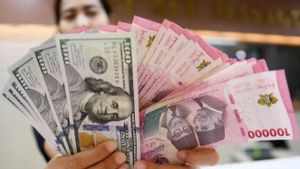


Bhima said more than 90 percent of transactions in Indonesia still use cash, although the use of QRIS and digital transactions has increased.
"Gapsocialization can cause administrative confusion, especially in retail business actors because thousands of types of goods need to be adjusted according to their books. Exchange of cash with new nominal is also complex, how many are queuing at the bank?" he concluded.
The English, Chinese, Japanese, Arabic, and French versions are automatically generated by the AI. So there may still be inaccuracies in translating, please always see Indonesian as our main language. (system supported by DigitalSiber.id)
Most Popular Tags
#Prabowo Subianto #donald trump #firearm #8791 #giias 2026Popular


