


JAKARTA Ubaid Matraji's education observer did not see any urgency to add Portuguese lessons in schools in Indonesia
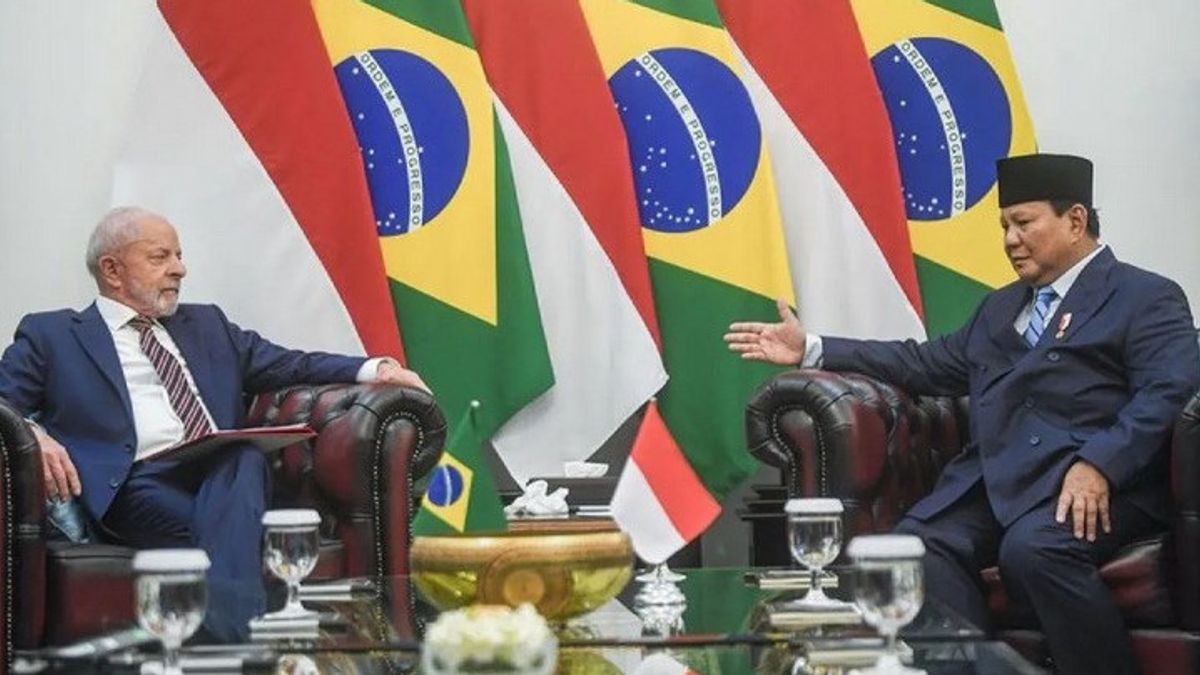
Portuguese is being discussed among the public after President Prabowo Subianto expressed his idea to make the Brazilian national language a priority in Indonesian education.
The idea came after a meeting between the head of state and the President of Brazil, Luiz Inacio Lula da Siva at the Merdeka Palace, Jakarta, Thursday (23/10/2025).
"And because of the importance of this relationship, I have decided that Portuguese is a priority language in our education because we want this relationship to be better," said Prabowo.
However, Prabowo's idea led to pros and contracts among the community. The National Coordinator of the Indonesian Education Monitoring Network (JPPI) questioned the urgency of Portuguese lessons in Indonesian education.
Ubaid Matraji assessed that President Prabowo did not need to rush into implementing this proposal. Disputing ideas in the field of education, he said, must be realistic between expectations and conditions in the field or school. Wrongly, children and parents can become victims of this policy.
"The president should not be in a hurry. The policies that are carried out in a hurry will be a mess. It must be considered first who wants to learn, who will teach, and which school is ready. So far it's not clear," said Ubaid.
Before the Portuguese discourse emerged, the Ministry of Elementary and Secondary Education (Kemendikdasmen) required English lessons starting from the 2027/2028 school year, while Vice President Gibran Rakabuming Raka wanted to include coding and artificial intelligence (AI) in the curriculum.
Ubaid is worried that too many lessons included in the curriculum actually make students burdened. "How do students master competence?" he said.
"The government, he said, must first do a mapping whether when it starts, Portuguese is required from the tertiary level (PT), or whether from the kindergarten level to PT. We have not found a side of the urgency why it must be mandatory, or must master Portuguese, he said.
Another education observer, Ina Liem, assessed that President Prabowo Subianto's statement regarding Portuguese language lessons in schools was more a symbol of bilateral relations, and not something that needed to be followed up into the curriculum.
SEE ALSO:
-
 | BERNAS
Kenaikan Tarif Transjakarta Harus Sepadan dengan Peningkatan Kualitas
28 Oktober 2025, 14:00



Encouraging students to have many choices of foreign language extracurricular activities is a good thing, so that insight into the world opens up. However, that doesn't mean every new trend must automatically become a compulsory subject.
"In fact, if every new issue is always responded to by adding more subjects, that's a sign that we are still stuck in a content-based and linear mindset," explained Ina Liem.
"Even though the spirit of the Merdeka Curriculum is actually project-based and interdisciplinary, it does not add content, but relates knowledge across fields and trains students to think critically through meaningful projects," he continued.
So far, there is no certainty whether the Portuguese language will really be included in the education curriculum in Indonesia. If the head of state wishes are still carried out, Ina emphasizes the important role of the Minister of Education and Culture in making decisions later.
"If the minister understands that the Merdeka Curriculum is a project-based and interdisciplinary, it should not be used as a mandatory subject for Portuguese. But if the ministers themselves are still thinking content-based, every time a new idea is immediately added to be a subject, it's dangerous. It takes time for the children to have 50 subjects," said Ina.
He emphasized that education policies should not only be used to please superiors or the origin of happy (ABS), but must be based on curriculum principles and philosophy and not just spontaneous reactions to trends or diplomatic relations.
"If the spirit is still 'as long as it complies with orders', our education will be even more undirected," he continued.
Similarly, education observer Bukik Setiawan said, all good things, including Portuguese, are both taught in schools. However, in education, the most important thing is not just what is good, but what is most necessary and most impactful.
"Because student learning time is limited, we need to consider priorities, what is most needed for their future, according to the Indonesian context today," said Bukik.
Furthermore, he suggested that Portuguese should only be an option for regions, schools, or students who do have relevant needs or potentials if they are actually included in the curriculum.
Portuguese lessons may be applied in areas that have links to Muslim countries or Portuguese-speaking people such as Portugal, Timor Leste, Brazil, or Mozambique.
"So, entering Portuguese can be a good idea, as long as it remains based on the principles of autonomy and relevance: let schools and regions determine what means the most to their students," he said.
The English, Chinese, Japanese, Arabic, and French versions are automatically generated by the AI. So there may still be inaccuracies in translating, please always see Indonesian as our main language. (system supported by DigitalSiber.id)


