


JAKARTA – Nepal's Gen Z is back in the news after holding a digital "general election" via Discord. Will a similar phenomenon occur in Indonesia?
A week after Nepalese Prime Minister KP Sharma Oli resigned and several of his ministers left office, the Nepalese government is in a vacuum. However, activists comprising Generation Z are using the Discord platform to plan their next steps, as reported by the Independent.
Serious discussions ensued, proposals were submitted, votes were taken, and consensus was reached. This led to the agreement to appoint Sushila Karki, the former Chief Justice of the Supreme Court, as interim prime minister. She is widely praised for her integrity and is known for her firm stance against corruption.
"Nepal's current parliament is Discord," said Sid Ghimri, a content creator from Kathmandu, as quoted by the New York Times.
The actions of Gen Z raise a big question: could Indonesia, a country with a large Gen Z population, do something similar to elect its leader?

Virtual Poll
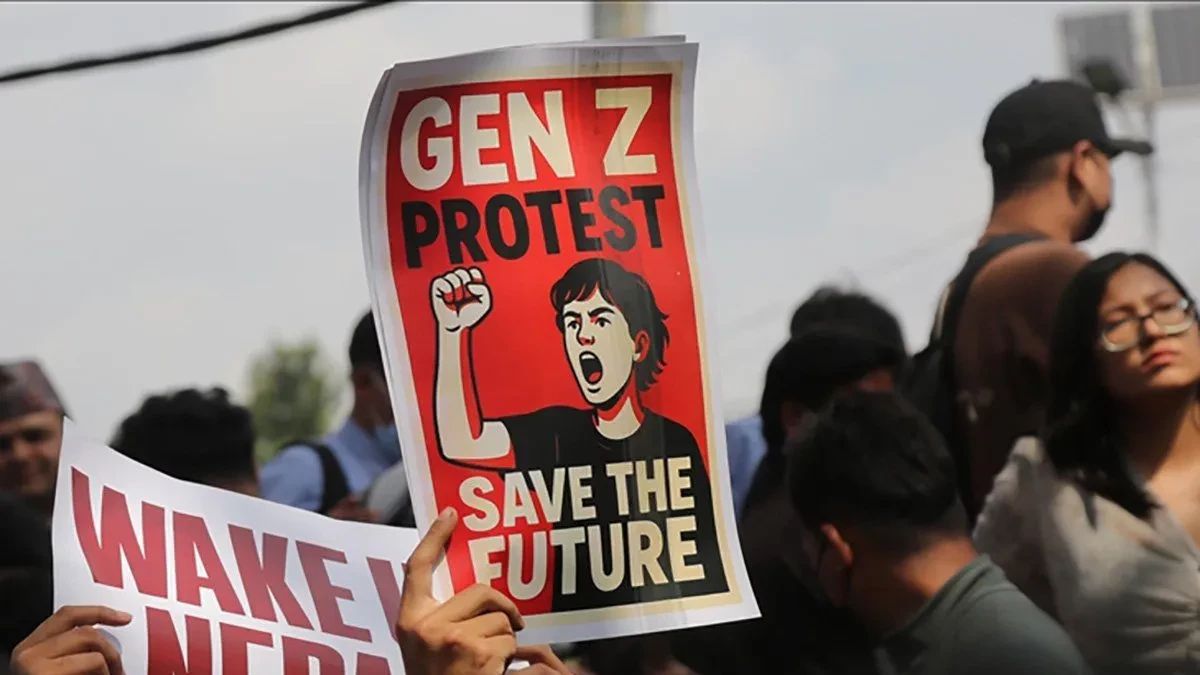
Nepal was rocked by bloody protests on September 8, 2025. The protests were sparked by the Gen Z group, who opposed the government's decision to block most social media platforms. At the time, social media was a tool for campaigning against corruption and opposing the lavish lifestyles of officials and their families.
In the protests, which left at least 72 people dead and thousands injured, Home Minister Ramesh Lekhak, Prime Minister Khadga Prasad Sharma Oli, and President Ram Chandra Poudel resigned, leaving Nepal in a vacuum.
The country was supposed to hold elections on March 5, 2026, to determine the next prime minister. But amid the vacuum, Nepal's Gen Z made a breakthrough. The app Discord, a communication or chat platform popular among gamers, became Nepal's impromptu parliament.
Nepal's Gen Z faith in the country's political system also waned as unrest broke out in several areas. They wanted to elect a leader capable of steering the country of 30 million people out of chaos and taking decisive action to eradicate corruption and nepotism.

And Nepal's Gen Z did it differently than other countries. They chose their country's leader in a way unprecedented in any electoral democracy: through a virtual Discord poll.
The online election was organized by Hami Nepal, a Gen Z group with over 160,000 members. Hami Nepal runs a channel on the platform called "Youth Against Corruption," where a heated debate about the country's future brings together over 10,000 people, including those from the Nepali diaspora.
The virtual poll, held on mobile screens, allowed all participants to nominate their interim leader directly, ahead of the election next March. This marked a radical experiment in digital democracy.
Pranaya Rana, a Nepali journalist, said using Discord makes sense for a Gen Z-led movement. However, it also presents challenges.
"It's much more egalitarian than physical forums, which many people might not have access to. Because it's virtual and anonymous, people can also say what they want without fear of retribution," he told Al Jazeera.
"However, the challenge is that anyone can easily manipulate users through infiltration and use multiple accounts to influence opinions and voices," he added.
Discord as Political Tool
Kholid Harras, an observer of education, politics, and language at the Indonesian University of Education (UPI), wrote in his opinion piece in Kompas that what Gen Z Nepal is doing is not simply a spontaneous response to a political vacuum, but also a manifestation of democratic transformation in the digital age.
Within the framework of the theory of deliberative democracy proposed by Jürgen Habermas, the ideal public sphere is a place where citizens discuss rationally to reach consensus. Discord, in the Nepalese context, has become a virtual public sphere that transcends barriers of region, class, and even bureaucracy.
This phenomenon, he said, can also be explained by the theory of networked publics by social media researcher Danah Boyd. Digital media is not just a means of communication, but a new social space where identities, opinions, and solidarity are collectively formed.

Screenshot from a Discord debate on Nepal's presidential election. (X)
"Gen Z Nepal is using Discord as a political tool: building narratives, setting agendas, and executing decisions. They prove that the digital generation isn't apathetic, but rather seeking more horizontal, faster, and inclusive forms of participation," wrote Kholid.
Discord, in the Nepalese context, has transcended its mere status as an app. It has become a symbol of a shift in political paradigms: from hierarchy to networks, from passive representation to direct participation.
Nepal's story reminds us that future democracy is no longer confined to voting booths or parliamentary buildings. It can emerge from virtual chat rooms, from students' laptop screens, or from mobile phone conversations. Political discussions have become more accessible and enjoyable.
Preventing Classical Problem of Election
Meanwhile, House of Representatives member Bambang Soesatyo stated that the events in Nepal demonstrate the significant role of digital technology in the democratic process. He also believes this phenomenon could be a catalyst for serious consideration of electronic voting, or e-voting, in elections, gradually, starting in urban areas.
"Elections are an instrument of popular sovereignty. If technology can make them faster, more accurate, more transparent, and more accountable, why not consider it? The important thing is not to rush, and there must be strict security standards and audits to maintain public trust," he said.
The implementation of e-voting, said the man familiarly known as Bamsoet, is nothing new in Indonesia. In 2019, Boyolali Regency, Central Java, successfully held electronic village head elections in 70 villages. The process was relatively smooth, vote counting was quick, and logistics costs were reduced.

E-voting can address classic election issues in Indonesia, including duplicate invitations, leftover ballots prone to misuse, and the frequently problematic Final Voter List (DPT).
Bamsoet explained that, based on the Constitutional Court's 2009 ruling Number 147/PUU-VII/2009, e-voting is legally valid for use in regional head elections. This is further reinforced by Law Number 10 of 2016 concerning Regional Elections, which explicitly allows for the use of electronic devices in the voting process.
"If we can successfully implement this at the village head election level, why not take it further? We cannot afford to lag behind the times. Moreover, technology can eliminate opportunities for fraud, high costs, and money politics, which have often undermined the quality of our elections," Bamsoet emphasized.
The English, Chinese, Japanese, Arabic, and French versions are automatically generated by the AI. So there may still be inaccuracies in translating, please always see Indonesian as our main language. (system supported by DigitalSiber.id)
Most Popular Tags
#Prabowo Subianto #donald trump #Febrie Adriansyah #8791 #giias 2026Popular


