


JAKARTA The number of demonstrations that have occurred recently is because the opposition, which should oversee and criticize government policies, is not running properly.
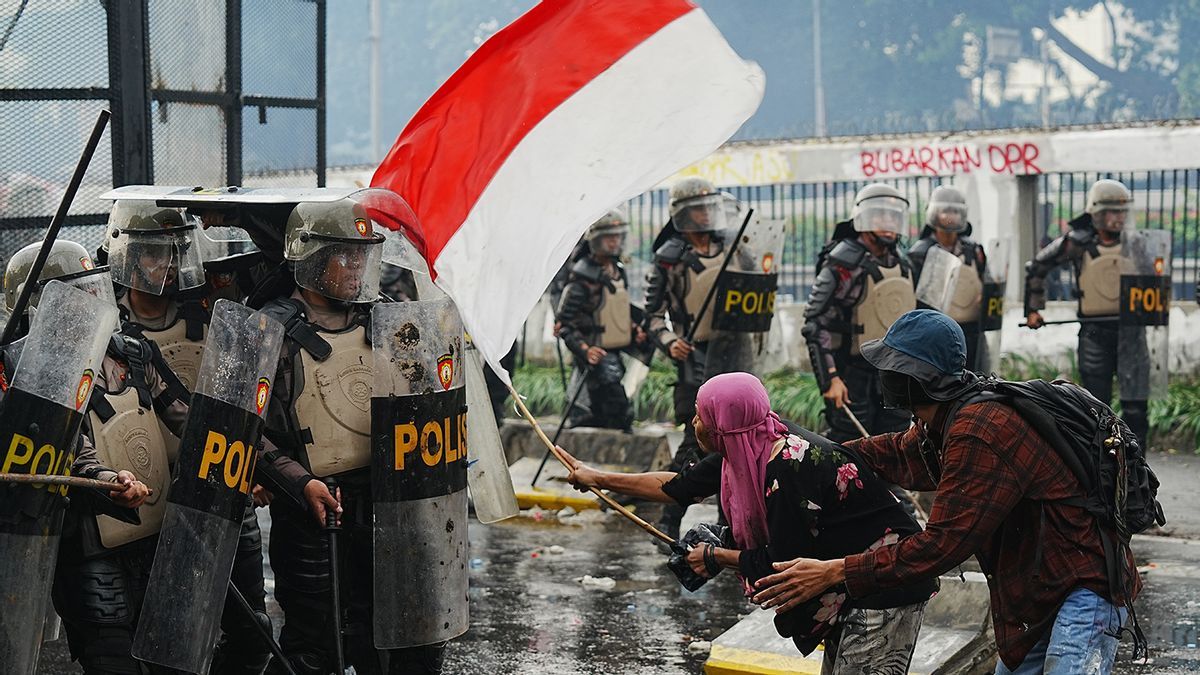
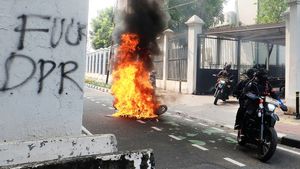
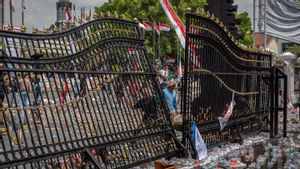
A group of people, including students and ordinary people, held a demonstration around the DPR building, Jakarta, on Monday (25/8/2025).
This action was triggered by news about the increase in the income of DPR members to more than Rp. 100 million per month. The increase in income includes housing allowances of Rp. 50 million per month, rice allowances of Rp. 12 million per month, to communication allowances of Rp. 16 million per month.
The fantastic income of DPR members is said to be incompatible with their performance, especially since almost all people in Indonesia are also experiencing economic difficulties.
Demonstrations that occurred around the DPR area earlier this week, not the first and perhaps not the last to occur in the era of President Prabowo Subianto's administration.
look what's happening in Indonesia right now! #PolisiPembunuhRakyat #ACAB #HumanRightsViolations pic.twitter.com/M5D0CFV1Nb
— mishka_ (@mishkaaaaaa_) August 29, 2025
look what's happening in Indonesia right now! #PoliceKillerPeople #ACAB #HumanRaightsViolations pic.twitter.com/M5D0CFF1Nb
In February, students from various universities throughout Indonesia held an action entitled Indonesia Ilang. They voiced concerns about cutting the budget and other policies of President Prabowo.
After that, there was also a student demonstration against the revision of the TNI Law which was passed by the DPR on March 20. Many of the demonstrators were injured in order to refuse the return of ABRI's duality.
Not only at the central level, demonstrations also occurred in the regions. For example, Pati and Bone, whose residents recently protested the decision to increase the signification of Rural and Rural Land and Building Tax (PBB-P2).
Most recently, on Thursday (28/8) there was also a demonstration in the DPR area. In the evening, an online motorcycle taxi driver reportedly died during the demonstration as a result of being run over by a tactical police vehicle.
The series of demonstrations that occurred twice a week was said to be due to the government's insensitivity in the aspirations of the community. Instead of answering the demands of the community, one of which is canceling the DPR's allowance, which is of fantastic value, members of the DPR are found to be arrogant, lack of empathy, and choose to budge. Not even a few who respond to the demands of this community with bad words. This, of course, makes the public even more angry.
In a democratic government, the idea is to have a ruling party and opposition. In the context of democracy, the opposition is an integral part of a political system that ensures that there is supervision of government power. In essence, the opposition is to guard and criticize government policies so that they run in accordance with the law.
However, seeing what has happened recently, political observer Ray Rangkuti assessed that the demonstrations that have recently been carried out cannot be separated from the inaction of the opposition in the government.
The Executive Director of Lingkar Madani explained that there are three opposition levels in the Prabowo Subianto government. The first level is formal opposition, represented by political parties that lost the election. At this level, it can be said that PDIP and the National Democratic Party (Nasdem) should be occupied.
The next level is non-formal opposition, namely election participants who do not have political parties, lose the election, but they do not also have representations. Examples are religious organizations. They are figures who are expected to advocate for politics outside of power politics.
At the last level, Ray Rangkuti called the opposition independent or opposition to the people. As a result of President Prabowo Subianto's policy of wanting to embrace all groups, the opposition that should be the supervisor of the government did not function properly. Thus, what remains is an independent opposition, aka the public who continues to criticize.
"This independent opposition is a mechanism, yes, the streets, demonstrations like what happened in Pati, in Bone, in the DPR," Ray Rangkuti told VOI.
"This shows the public that there are 'jumps' at the two opposition levels. As a result, political executions go straight to the streets, not through formal channels," he added.
In elections, the winner is in power, while the losers control power. But when one of these doesn't exist, it causes inequality of democracy, and it has the potential to become authoriARism.
"Without opposition, of course not healthy, not in accordance with our goal of designing a democratic republic," he explained.
The absence of opposition in government also makes big programs not run smoothly. One of them is a free nutritious food project which for up to eight months of its implementation, which continues to be controversial.
SEE ALSO:
-
 | BERNAS
Menkeu Sri Mulyani Kehilangan Sentuhan Teknokrat, Cenderung Mengikuti Program Politik
26 Agustus 2025, 12:00
"Indeed, because there is no opposition, these programs may not run smoothly, because there is no criticism, no one is watching," said Ray Rangkuti.
To that end, he called for the importance of growing the opposition, be it formal, informal, and independent. Because when you get used to jumping over the first two levels of the opposition, tragedy like this will repeat itself.
"Until 2025, perhaps formal and non-formal opposition will continue to slope. For this reason, keep being a noisy society, which gives rise to the government so that it remains on track," he concluded.
The English, Chinese, Japanese, Arabic, and French versions are automatically generated by the AI. So there may still be inaccuracies in translating, please always see Indonesian as our main language. (system supported by DigitalSiber.id)
Most Popular Tags
#Prabowo Subianto #donald trump #2026 World Cup #Febrie Adriansyah #8791Popular


