
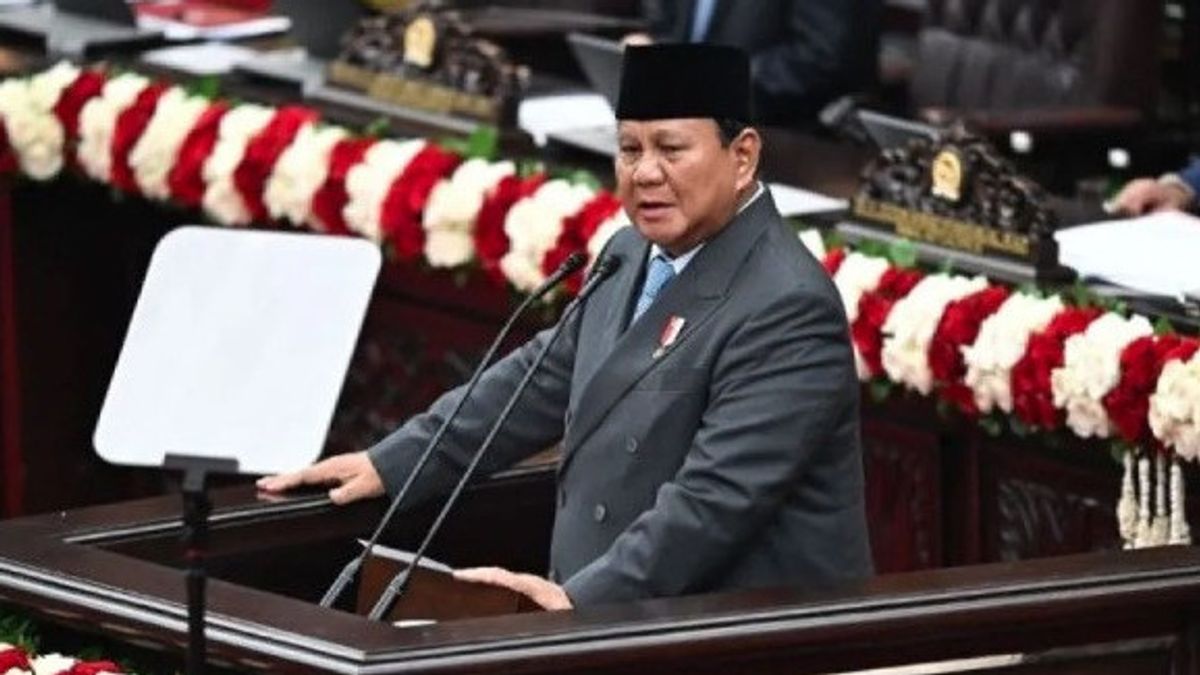


JAKARTA The series of successes in the education sector described by President Prabowo Subianto in the presidential speech did not match the facts on the ground.
In his first presidential speech at the MPR Annual Session at the Parliament Building, Jakarta, Friday (15/8/2025), he explained the achievement of his government's performance for eight months, one of which was in the education sector.
Since being elected President of Indonesia for the period 2024-2029, Prabowo and his deputy, Gibran Rakabuming Raka, have a number of leading programs in the education sector, including free nutritious food (MBG) and people's schools.
MBG is Prabowo's ambitious program that consumes a jumbo budget. This program is also said to be a number of observers forcing the Prabowo government to tighten its budget.
Meanwhile, people's schools, which began running in mid-July, were formed to provide free education to children from poor families so that they could go to school without a hitch.
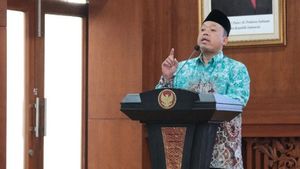
However, a series of achievements by the Prabowo government in the education sector are said to be inconsistent with reality. Ubaid Matraji, the National Coordinator of the Indonesian Education Monitoring Network (JPPI), said that President Prabowo's state speech was filled with overclaims of success without seeing real reality data.
There are six things that are in the JPPI spotlight regarding the claim of President Prabowo Subianto's success in the education sector which was conveyed in yesterday's state speech. Starting from the people's school program, free nutritious food (MBG), to optimizing the 20 percent budget from the state budget for education.
In his speech, Prabowo expressed his wish that small people could smile because they were no longer afraid of illness, were afraid of hunger, and not afraid that their children would not be able to go to school.
According to Ubaid, the small people can smile because they are not afraid that they will not be able to go to school is a hallucinations. He explained data from the Data and Information Technology Center (Pusdatin) of the Ministry of Elementary and Secondary Education (Kemendikdasmen) as of August 2025, that the number of children who do not go to school (ATS) is increasing and has now reached 3.9 million children.
This figure increased compared to December 2024 which amounted to 3.5 ATS. The existence of public schools, which have gradually started running since last July 14, according to Ubaid, is also not necessarily the answer regarding access to education for poor families.
SEE ALSO:
-
 | BERNAS
Pengunduran Diri Dirut Agrinas Tunjukkan Karut Marut Tata Kelola BUMN
15 Agustus 2025, 20:05 -
 | BERNAS
BPS Dilaporkan ke PBB: Data yang Anomali Dapat Berdampak Besar pada Masyarakat
13 Agustus 2025, 16:00
"So, the presence of people's schools has not been able to stem the number of children not going to school, the majority of which are due to economic problems, aka having no costs," said Ubaid Matraji.
President Prabowo promised 100 public schools that accommodate 1,000 students. However, this figure, said Ubaid, is still far from the ATS figure due to economic factors (poorness and child labor) which amounted to 2.9 million children. This means that people's schools are only able to accommodate about 0.33 percent of the total needs of children who drop out of school due to economic problems.
"So the claim of success in people's schools is too excessive, and is still very far from the target that should get equal, quality and equitable education services for all," he explained.
The high number of dropouts in Indonesia is partly due to the increasingly expensive cost of education. The number of public schools in some areas is not commensurate with the number of students forcing them to attend private schools. But for some people, especially the poor family group, sending children to private schools means increasing the financial burden of their families.
As a result of the high cost of school, many children who drop out of school and who insist on continuing school are not uncommon to get a diploma because they are detained by schools due to failing to pay bills that are very burdensome.
The Constitutional Court (MK) some time ago decided that the nine-year basic education from elementary to junior high school was free of charge, both public and private. This MK affirmation is stated in the consideration of the Constitutional Court's decision in case number 111/PUU-XXIII/2025 related to the judicial review of Law 20 of 2003 concerning the National Education System (Sisdiknas).
Unfortunately, the issue of free basic education both in the country and in the private sector in accordance with the Constitutional Court's decision was not touched by the president. Thus, Ubaid doubts the seriousness of the government in carrying out the decision.
"Why is this not mentioned at all by the president in his speech? This is a constitutional order, why does the resident ignore it? So, the President's appreciation for the performance of the Constitutional Court mentioned in the speech, it is only mere omons, if it is not accompanied by political will of the resident to carry it out," said Ubaid.
Free nutritious food is a priority program for President Prabowo's government. But on its way, this program often accepts obstacles.
Starting from changing names, those who previously had free lunch, budgets that drained the state budget, cases of leaks in several areas, food that was not in accordance with nutritional standards, the existence of MBG partners who were not paid even though they had issued very large capital, until finally the polemic of import food routes by the National Nutrition Agency (BGN).
With a series of problems, in his speech President Prabowo actually mentioned the success of MBG. Although it has only been eight months, Prabowo Subianto claims that the results of MBG are starting to be felt, namely the increasing number of children attending school, as well as the children's achievements are also increasing.
"So, it really doesn't make sense, if the program only runs for 8 months, then bimsalabimada claims that the achievements of children at school are increasing because of MBG. Where did this data referral come from? Is this based on feelings, studies, or dreams in broad daylight?" Ubaid asked.
In addition, regarding the optimization of 20 percent for education and the existence of Garuda schools, there is also no escape criticism. At ABPN 2025, JPPI saw that 20 percent of the education budget was still wasteful on financing official schools and support for the MBG program.
Garuda School, which is said in a speech is a school to produce national leaders in the future, according to Ubaid, in fact, it shows that education is not equivalent.
"Therefore, JPPI urges the President to evaluate and review unsubstantiated claims and immediately restore education policies in accordance with the 1945 Constitution article 31, and take concrete steps to resolve crucial problems faced by the world of education in Indonesia. Education is the right of all people, not political commodities to claim their success without evidence," concluded Ubaid.
The English, Chinese, Japanese, Arabic, and French versions are automatically generated by the AI. So there may still be inaccuracies in translating, please always see Indonesian as our main language. (system supported by DigitalSiber.id)
Most Popular Tags
#Prabowo Subianto #donald trump #Febrie Adriansyah #8791 #giias 2026Popular


