
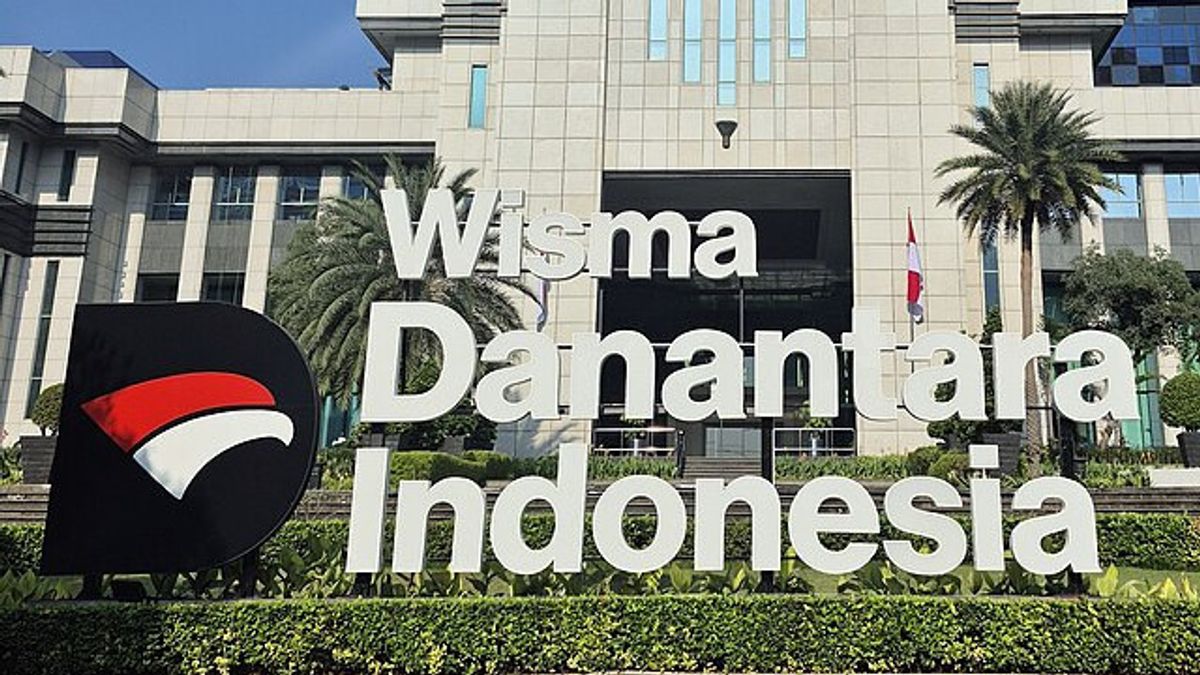


JAKARTA – The resignation of Joao Angelo De Sousa Mota from his position as President Director of PT Agrinas Pangan Nusantara (Persero) indicates problems in the governance of the State-Owned Enterprise (BUMN) under the Danantara Investment Management Agency.
Joao's resignation as President Director of Agrinas surprised many. He stepped down after only six months in office.
In his announcement, Joao attributed his decision to BPI Danantara's suboptimal performance in helping Agrinas achieve its goal of strengthening food security in Indonesia.
"Therefore, we deeply regret and apologize to all citizens, especially farmers, the nation, and the President (Prabowo Subianto) who appointed us to this position. Therefore, please allow me to submit my resignation and apologize," Joao said at his office in Jakarta on Monday, August 11, 2025, as quoted by Antara.

Joao also admitted he felt ashamed of the results Agrinas achieved during his short tenure. "I feel ashamed and deeply responsible for what has happened over the past six months," he continued.
An economist from the Center of Economic and Law Studies (CELIOS) said the complaints expressed by the Agrinas CEO in his resignation announcement indicate that food security is not a priority for Danantara.
Danantara's Complicated Bureaucracy
In his resignation statement, Joao not only revealed how he hadn't been able to contribute anything during his six months in office.
He also revealed the complexities of working at Agrinas under Danantara. Joao stated that President Prabowo's commitment to supporting and promoting food sovereignty was not fully supported by stakeholders or his aides.
"As a result, to this day, we haven't received maximum support to implement the concrete steps we've prepared, including budget support. To date, Agrinas Pangan Nusantara remains at zero," Joao said.
"Our colleagues at Danantara are still bogged down by lengthy, complicated, overlapping, and never-ending administrative processes. So, it's been six months since we've been able to do anything," he emphasized.
Joao further assessed that the bureaucracy run by Danantara still falls short of President Prabowo's expectations. Instead of expediting all business-oriented processes, Danantara is also protracted and unfocused on the current situation.

Farmers in Panggung Baru Village, Palaihari District, Tanah Laut Regency, South Kalimantan, harvest rice using a combine harvester on Wednesday (August 13, 2025). (ANTARA/Harianto)
Meanwhile, agricultural observer Syaiful Bahari admitted he had predicted this. From the outset, the emergence of Agrinas Pangan, a transformation of the state-owned enterprise Yodya Karya, has raised questions. According to Syaiful, there is a lack of clarity regarding Agrinas Pangan's vision, concept, and priority program design, distinguishing it from other state-owned food enterprises, of which there are many. Furthermore, Agrinas Pangan also lacks an independent budget.
"With no independent budget, this new state-owned enterprise will certainly be unable to achieve anything. Therefore, it's understandable that this has caused frustration among its directors, leading to their resignations," Syaiful said.
Without a clear vision and program distinct from other state-owned enterprises, Agrinas Pangan is considered to only add to the complexity of the food institutional chain, which could exacerbate the confusion surrounding individual interests, duties, and responsibilities.
"When Agrinas takes on the role of an agricultural institution already run by another state institution or business entity, a conflict of interest will inevitably arise," he continued.
Busy Taking Care of Troubled State-Owned Enterprises
Joao's complaints about the bureaucratic red tape at Danantara have drawn widespread attention. Bhima Yudhistira, Executive Director of the Center of Economic and Law Studies (CELIOS), stated that Joao's resignation reflects a number of issues within Danantara.
One of these is that food security is not a focus for Danantara. This is reflected in Joao's statement, which alleges that he was asked several times to submit a feasibility study for an activity, but it still failed.
"This has been a concern for Danantara from the start. Danantara isn't pursuing efficiency but rather complicating coordination, making strategic decisions take longer to execute. This is Danantara's first blow," Bhima said.
"This bureaucratic red tape raises questions about whether food security is not Danantara's focus and is not aligned with Prabowo's vision," he said.
Furthermore, Bhima also questioned Danantara's funding to Agrinas after Joao admitted he hadn't received a single cent during his six months in office. Danantara has a very large fund from state-owned enterprise dividends, but what is surprising is that with such a large budget, priority programs such as food security are being neglected.

Danantara, Bhima said, appears to be preoccupied with managing troubled state-owned enterprises (SOEs), such as providing loans to Garuda, stepping in as a savior for the Whoosh high-speed train debt, and so on.
"Danantara should be looking ahead to future projects. This should be Danantara's priority," Bhima explained.
"So, Danantara is too busy restructuring and consolidating SOEs, but not looking ahead. Danantara, unlike the Ministry of SOEs, is expected to be more forward-looking, to see what economic potential exists," he continued.
Bhima added that the resignation of the President Director of Agrinas Pangan should be an important momentum for Danantara to ensure transparency and clarity in selecting the most urgent projects to be funded.
"Do SOEs, whether it's Himbara, state-owned construction companies, or the energy sector, experience the same bureaucratic complexities as Agrinas? I think the answer is yes, but not all of them dare to speak up, they don't dare to express their opinions openly," he concluded.
The English, Chinese, Japanese, Arabic, and French versions are automatically generated by the AI. So there may still be inaccuracies in translating, please always see Indonesian as our main language. (system supported by DigitalSiber.id)
Most Popular Tags
#Prabowo Subianto #donald trump #earthquake #independence day #8791 #hut riPopular


