
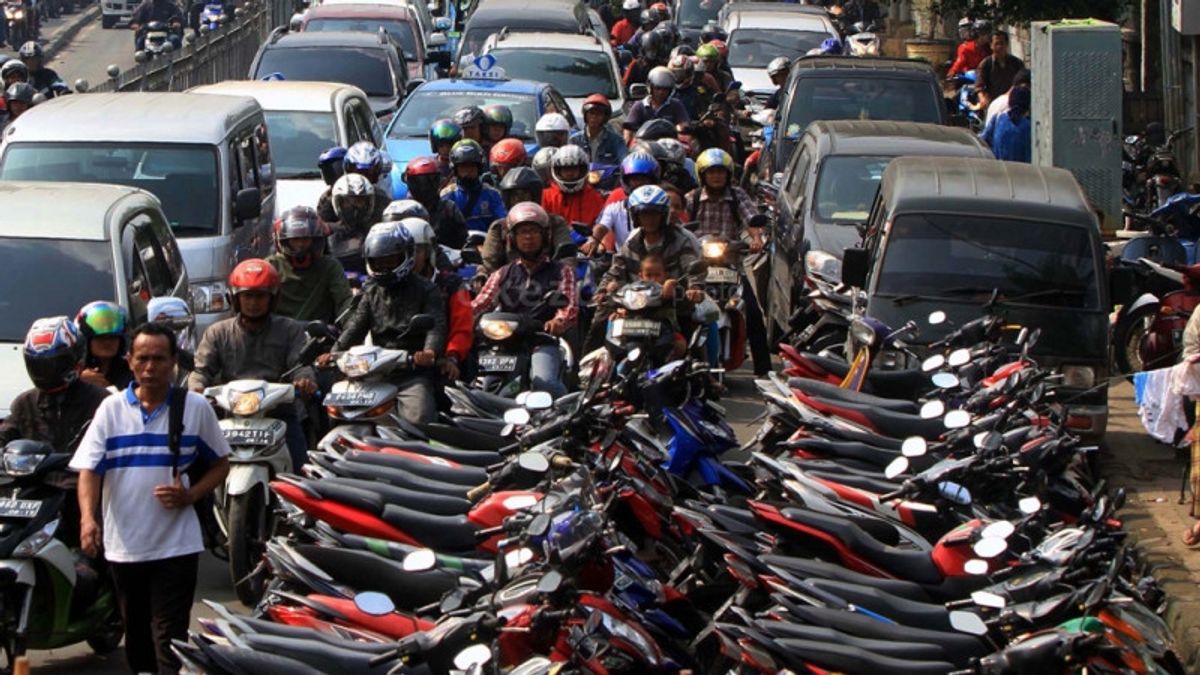


JAKARTA Parking management in DKI Jakarta has been in the spotlight in recent weeks. In fact, through good parking management, the results can finance public transportation and control the congestion of the capital city.
Recently, the DKI Jakarta Provincial Government proposed a decrease in the target of parking retribution income in the Regional Revenue and Expenditure Budget (APBD) housing for the 2025 fiscal year.
If originally the parking retribution target for this year was IDR 350 billion, the DKI Jakarta Regional Revenue Agency (Bapenda) asked for the target to decrease by IDR 50 billion to IDR 300 billion. This is stated in the Draft Amendment to the General Policy of the APBD and the Draft Priority and Temporary Budget Ceiling (KUA-PPAS) of the APBD for the 2025 fiscal year.
Public policy observer Sugiyanto explained the overview of parking retribution problems in Jakarta. There is a major difference between parking tax and parking fees, namely the type of service.
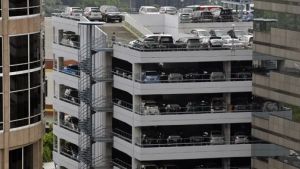
Parking tax, said Sugiyanto, is imposed on parking services provided by the private sector, such as parking in buildings, courtyards, or garages that charge costs.
Meanwhile, parking fees are imposed on parking services provided by local governments, such as parking on public roads or parking special places managed by the government. However, both are sources of Regional Revenue.
According to information obtained by Sugiyanto, parking tax receipts until the first half only reached 30 percent, or around Rp. 90 billion from the target of Rp. 300 billion. "The assumption is that this figure includes parking taxes from the off-street sector as well as on-street which also includes parking retribution," he said.
He continued, there are around 1,300 parking locations in Jakarta that are managed by the private sector and by the Transportation Agency through the Parking BLU UP. The private sector dominates the management of parking lotoff-street, while the Parking UP only manages about 85 off-street locations.
Based on Gubernatorial Regulation No. 188 of 2016 concerning Public Parking Parking Parks Managed by the DKI Jakarta Provincial Government, there are 441 roads designated as parking locations-street, but so far only 244 roads have actually been operated.
Setoran dari sektor parkion-street juga tergorong rendah. Menurut Sugiyanto, baru sekitar Rp4 miliar yang berhasil disebutkan atau kurang dari 20 persen dari target tahunan sebesar Rp20 miliar.
Sugiyanto did not deny that parking has great potential as one of the main sources of Regional Original Revenue (PAD). However, this must be managed seriously, professionally, and transparently.
To increase parking tax revenue, Bapenda needs to adopt an integrated strategy that includes re-registering taxpayers, new cooperation with the private sector, and improving management.
SEE ALSO:


"One of the first steps that must be taken is to increase the data collection and validation of taxpayers through updating parking location data, periodic data verification, and the use of integrated information technology," said Sugiyanto.
Parking, said Sugiyanto, is not just a matter of vacant land and vehicle premises, but also a reflection of city governance. Cities that are able to manage parking systems properly will be better prepared to realize modern, efficient, and inclusive public transportation.
Meanwhile, Deputy Chairperson of the Central Indonesian Transportation Community (MTI) Empowerment and Development Area, Djoko Setijowarno, revealed that parking management in Jakarta needs to be seen from three perspectives, namely as part of traffic management, PAD sources, and public services.
Managing parking properly can help control traffic congestion and also improve the quality of public services.
However, in some places, parking management is often a political event, where certain individuals use the parking space as a political commodity to support the victory of regional heads.
"Parking management should not only prioritize money, but also as an instrument to reduce congestion, control the use of motorized vehicles, and support public transportation," Djoko continued.
Djoko is optimistic that with proper parking management, Jakarta can reduce congestion and improve the quality of public transportation. "Income from well-managed parking fees can be a source of public transportation financing. All these incomes must go into the regional treasury and partly allocated for better public transportation," said Djoko.
If the DKI Jakarta Provincial Government manages parking management, Djoko is confident that other regions will imitate this policy. Jakarta can be an example for other regions in managing parking to support public transportation and better managing traffic management," he concluded.
The English, Chinese, Japanese, Arabic, and French versions are automatically generated by the AI. So there may still be inaccuracies in translating, please always see Indonesian as our main language. (system supported by DigitalSiber.id)


