


JAKARTA The term cancel culture is again a concern in Indonesia, after the Indonesian version of the Business Proposal film came down from the cinema screen just a few days after its premiere on February 6, 2025. Could this cancel culture trend be applied to public officials?
The audience's interest in watching the film Business Proposal is associated with the controversial statement of the main character in this film, Abidzar Al-Ghifari. In a press conference before the film was released, Abidzar admitted that he did not watch the original version of the Korean drama Business Proposal or read the original webtoon because he wanted to create his own version.
Criticism of Abidzar is heating up after he referred to the fans of the drama as 'fanatic' and 'racist'.
The statement made drakor fans, who should be the main target of this film, even more disappointed. In the aftermath, they called for a boycott of films on social media as a form of protest.
Trencancel culture seems easier to do in the entertainment industry. The question is, does this trend penetrate the world of politics?
Cancel culture or boycott is actually not the only time this has been done by the community. In South Korea (South Korea), the phenomenon of cancel culture has been very common. Some time ago, actor Kim Seon-ho had become a conversation because of accusations by his ex-girlfriend who forced him to have an abortion.
Regardless of whether or not the rumors were true, Kim Seo-ho was the target of cancel culture which harmed him both materially and non-materially, because not a few of his work contracts were canceled.
But Kim Seon-ho was among the lucky ones because he was able to rise after being hit by cancel culture. The opposite fate was experienced by actress Kim Sae-ron, who was recently found dead due to suicide.
Actress 24 tahun ini diketahui mengalami tekanan besar akibat budaya cancel culture setelah kasus dirinya kecelakaan akibat pendir dalam ketidungan pada 2022.
The phenomenon of cancel culture does not only occur in the South Korean entertainment industry. A well-known actor from the United States, Johnny Depp, also openly admitted that he was a victim of cancel culture. He felt he did not get Hollywood community support for his career after losing the defamation case against British tabloid The Sun.
According to Depp, the phenomenon of cancel culture is far out of control and warns of the dangers behind it. He said one accusation could lead to a career crash.
According to Britannica, cancel culture or also referred to as a recall culture is an act of stopping support for someone, group, organization, or company because their opinions or actions are deemed inappropriate by some.
In simple terms, cancel culture can be interpreted as pumulture of confinement', culture of rejection" or mass boycott'. Usually this weathering process is carried out by boycotting their works or activities as a form of social punishment.
But lately, cancel culture is not only aimed at entertainment industry players, but also public officials who are often considered incompetent in carrying out their duties and authorities.
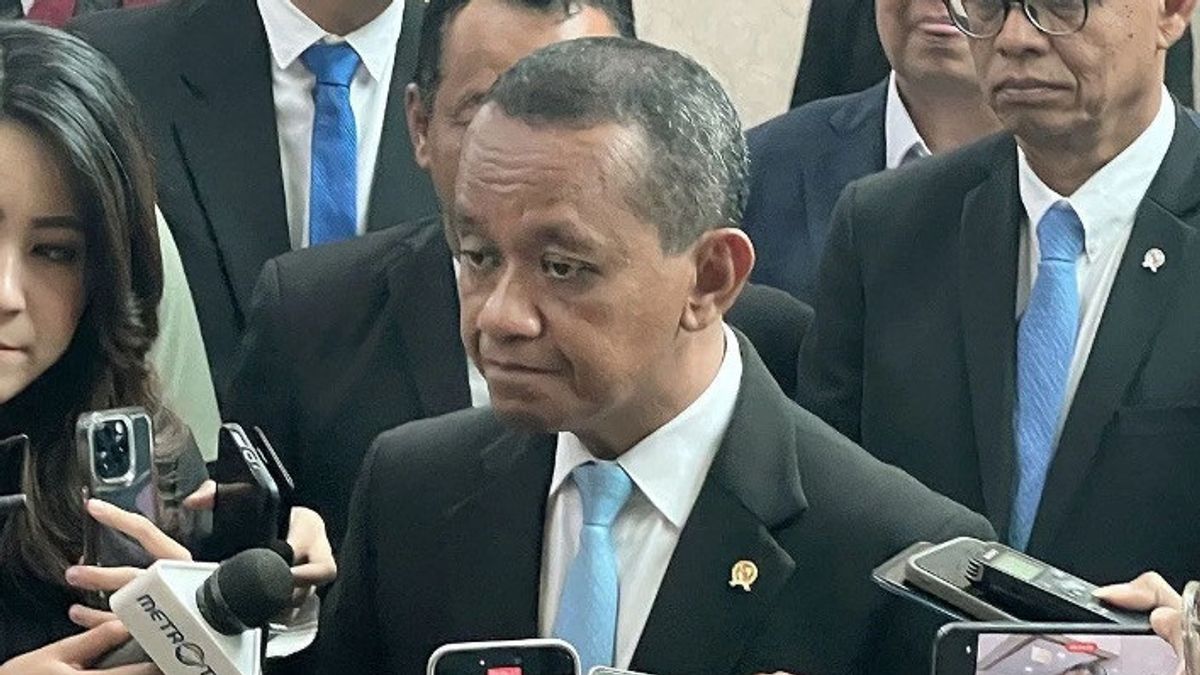
When the sale of 3 kg LPG gas was banned at the retail level, Minister of Energy and Mineral Resources (ESDM) Bahlil Lahadalia became the target of public anger. A man in Tangerang even had time to express his actions directly to Bahlil when the minister monitored the queue of 3 kg LPG gas in Tangerang.
Looking back, Miftah Maulana, who had served as the Presidential Special Envoy for Religious Harmony and Development of Religious Facilities, was also viral as a result of insulting the ice tea seller at an event.
Receiving criticism from almost all people, Miftah finally chose to resign from her position.
SEE ALSO:
-
 | BERNAS
Tak Ada Guna Bikin Partai Super Tbk Kalau Masih Berharap Kucuran Duit Negara
18 Februari 2025, 08:00 -
 | BERNAS
Percuma Presidential Threshold 20 Persen Dihapus jika Kita Setuju Koalisi Permanen
17 Februari 2025, 22:00 -
 | BERNAS
Kebijakan Berbasis Viral di Era Presiden Prabowo, Kesalahan yang Seolah-olah Benar
17 Februari 2025, 07:00 -
 | BERNAS
Pantauan Netray: Sentimen Negatif Warnai Kebijakan Efisiensi Anggaran
16 Februari 2025, 17:00

The phenomenon of cancel culture actually has a complex, both positive and negative impact. Cancel culture is often a tool to demand responsibility from public figures in making mistakes.
In many cases, public pressure has indeed succeeded in forcing individuals or institutions to improve themselves or apologize. In the past, it was difficult for the public to hold people accountable. Now with the massive use of social media, it provides space for the people to fight injustice.
However, according to The Indonesian Institute, cancel culture does not immediately apply to officials in Indonesia, at least it is reflected in the general election (Pemilu).
For example, in 2012 when the Indonesian people were surprised by the case of Aceng Hulik Munawar Fikri or known as Aceng Fikri. At that time he was the Regent of Garut who married a serial with an 18-year-old woman.
This woman was then divorced by Aceng Fikri after four days of marriage only via text message because she was considered not a virgin.
This case did make Aceng Fikri lose his position because he became the first direct elected regional head to be impeached on February 1, 2013. The impeachment of Aceng Fikri could be considered a cancel culture. However, it is a concern that he was elected as a member of the Regional Representative Council (DPD) in the 2014 General Election.
Tri Sulistyani's research in 2019 with the title Political Factors and Performance of Corruption Suspect Candidates in Affecting Behavior in Choosing the Community in the Pilkada of Tulungagung Regency in 2018. This research is based on the fact that on exactly 19 days to voting day, Syahri Mulyo, a candidate for Regent of Tulungungagung, was declared a suspect in corruption. However, Syahri Mulyo still won the regional head election.
Research from Sulistyani explained that the majority of the people of Tulungagung knew about Syahri Mulyo's case as a corruption suspect, which was 86.50 percent. In fact, the corruption issue does not affect the behavior of choosing the Tulungagung community. The reason people choose candidate candidates is because they like the figure of the regent candidate.
Selain itu, kesukaan masyarakat terhadap Syahri Mulyo disebabkan karena Ia merupakan incumbent, di mana masyarakat lebih mengenal sosoknya dibandingkan dengan calon calon calon lainnya.
The election of Syahri Mulyo as the head of the Tulungagung region once again proves that cancel culture has no effect on election in the election.
This explanation was strengthened by research from Welch & Hibbing (1997) entitled The Effects of Charges of Corruption on Voting Behavior in Congressional Elections. There are a number of reasons why people still choose candidates who have been declared corruption suspects.
First, voters consider the level of seriousness of the corruption allegations, whether it is very detrimental to the public or not; second, voters see how the ability of prospective pilgrims to provide an economy for their regions. If the economy is good then corruption cases are not a problem; third, because of the lack of information on corruption issues by voters; and fourth because voters believe that all politicians are corrupt.
The English, Chinese, Japanese, Arabic, and French versions are automatically generated by the AI. So there may still be inaccuracies in translating, please always see Indonesian as our main language. (system supported by DigitalSiber.id)


