



JAKARTA - WHO has asked countries that have closed borders or banned travel from the Democratic Republic of Congo and Uganda to review the policy. According to WHO, too strict restrictions risk complicating the handling of Ebola.
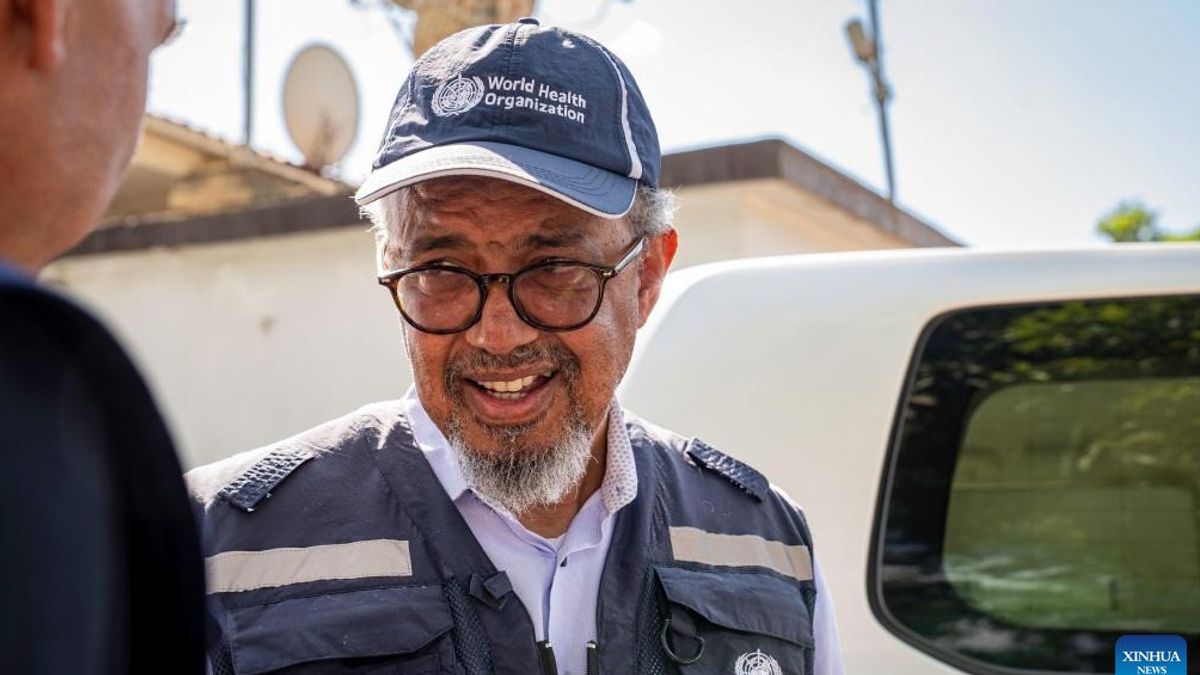
Quoted from Xinhua, Sunday, May 31, WHO Director-General Tedros Adhanom Ghebreyesus made the appeal at a press conference in Bunia, the capital of Ituri Province, Democratic Republic of Congo, Saturday, May 30.
Bunia is in the spotlight because it is in an area affected by the Ebola outbreak. In this latest outbreak, more than 1,000 cases suspected of being related to Ebola have been reported.
"I ask countries that have imposed travel bans or border closures to reconsider them," Tedros said.
According to Tedros, travel bans and border closures can hinder the work of health teams. The policy can also make the affected countries or communities reluctant to open up, even though transparency is needed when facing an outbreak.
"These measures make it more difficult to handle, and hinder the transparency and trust that saves lives," he said.
Ebola is not a disease that can be taken lightly. However, WHO assesses that the right response does not always mean closing the doors tightly. In many outbreaks, the speed of detection, contact tracing, patient care, and public confidence are the key.
Tedros said that although there is no approved vaccine and special medicine for this outbreak, patients still have a chance to recover if they receive quick and quality medical treatment.
Tedros' visit to Bunia was also aimed at meeting directly with the affected community. In handling the outbreak, hearing the people on the ground is often as important as reading the numbers in official reports.
Still according to Xinhua, Uganda reported nine confirmed cases. The figure came after two new infections were detected in Kampala, according to the Ugandan Ministry of Health on Friday.
The Minister of Health of the Democratic Republic of Congo Roger Kamba said his country is targeting this outbreak to be controlled and ended in four to six months, in the best scenario.
The target, said Kamba, is based on his country's experience in dealing with epidemics and the pattern of spread of the Ebola virus disease.
Currently, the DRC government's top priority is to contain the spread of the virus in the three affected provinces: Ituri, North Kivu, and South Kivu. The government is also trying to prevent the virus from spreading to other areas.
Kamba said the laboratory examination capacity had been strengthened. There was no more accumulation of samples waiting to be tested.
Around 900 samples have been examined. Of that number, around 260 were positive.
According to Kamba, DRC is now able to process all incoming samples. This capacity can still be maintained even though the daily number of examinations has increased to 200 to 300 samples.
For the WHO, the big challenge in the outbreak is not only to stop the virus, but also to keep case reporting, access to health workers, and public confidence from being damaged by the wrong policies.
The English, Chinese, Japanese, Arabic, and French versions are automatically generated by the AI. So there may still be inaccuracies in translating, please always see Indonesian as our main language. (system supported by DigitalSiber.id)
Most Popular Tags
#Prabowo Subianto #donald trump #firearm #8791 #giias 2026Popular


