

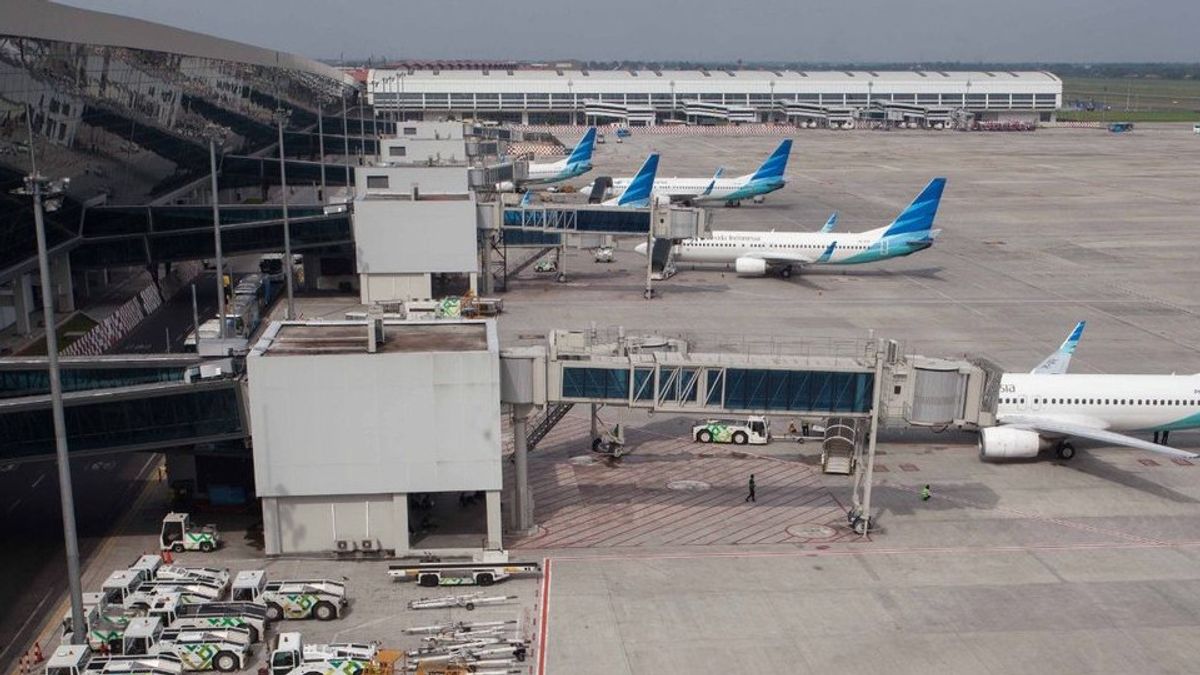


JAKARTA - The Soekarno-Hatta Health Quarantine Center (BBKK) has strengthened surveillance at Soekarno-Hatta International Airport to anticipate the potential entry of hantavirus through international flight routes.
Head of the Soekarno-Hatta Health Quarantine Office, Naning Nugrahini, said that the readiness step was taken by tightening the examination of travelers from a number of countries that have reported hantavirus cases.
"For hantavirus, which is currently being widely discussed, we at Soekarno-Hatta have prepared through filling out health declarations. From there we can know the risks of flights and travelers," said Naning, Monday, May 11.
According to him, the examination is carried out through the filling of health declarations, monitoring body temperature using thermal scanners, and visual observation of passengers who have just arrived at the airport.
If a passenger is found with symptoms that lead to hantavirus, health workers will conduct a follow-up examination by a doctor at the airport health facility.
"If the results of the examination are declared probable, we will refer them to the central infection hospital for further treatment," he said.
BBKK Soekarno-Hatta also prepared a special evacuation lane for infectious diseases to avoid the potential for transmission to other passengers. In addition, there are special ambulances that have been equipped with decontamination systems.
"This ambulance has a decontamination system so that viruses, bacteria, or germs from patients can be cleaned and not spread to others," he explained.
Naning explained that hantavirus is not a new disease in Indonesia. Studies related to the virus have been carried out since 2015. Based on data received by BBKK, there were 23 cases of hantavirus identified throughout the period 2024 to 2026.
"From 2024 to 2026, 23 people have been identified with hanta virus," he said.
Additional surveillance is also applied to direct flights from countries that report hantavirus cases, such as the United States, Argentina, Paraguay, and Panama.
"We are tightening supervision of flights from these countries. However, the list can change according to the development of the situation," he said.
He emphasized that hantavirus has a different pattern of transmission compared to Covid-19. If Covid-19 spreads between humans, hantavirus in Indonesia is more transmitted through urine, saliva, and rodent feces contamination.
"If Covid is transmitted from human to human. Whereas hantavirus is more through contamination from rats," he said.
Naning also reminded the public to apply clean and healthy living behaviors and be aware of the presence of rats in the surrounding environment.
"Of the 51 types of rats, there are 24 types that can cause diseases," he said.
For further treatment, officers will assess the travel history and close contacts of passengers suspected of being exposed to hantavirus. If they meet the probable case category, the patient will be referred to the Sulianti Saroso Central Infectious Hospital using a special infectious disease ambulance.
He added that the observation period for patients and close contacts can last up to 42 days because the incubation period of hantavirus is quite long.
"Until now we have not found any hantavirus cases at the entrance to Soekarno-Hatta Airport," he concluded.
The English, Chinese, Japanese, Arabic, and French versions are automatically generated by the AI. So there may still be inaccuracies in translating, please always see Indonesian as our main language. (system supported by DigitalSiber.id)
Most Popular Tags
#Prabowo Subianto #donald trump #firearm #8791 #giias 2026Popular


