

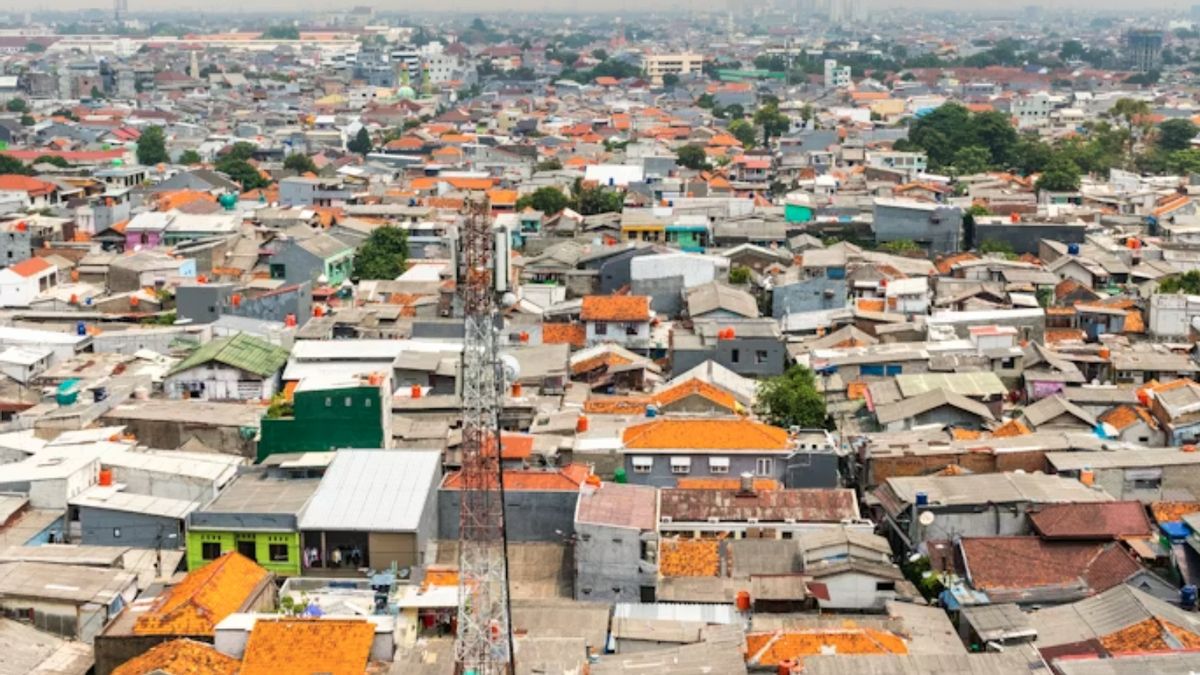


JAKARTA - The DKI Jakarta Regional Disaster Management Agency (BPBD) recorded five villages with the highest fire frequency from 2021 to 2025. The areas are Kapuk, Cengkareng Timur, Penjaringan, Pegadungan, and Pulo Gebang.
This data shows a recurring pattern related to the causes of fires in densely populated areas. The electrical factor is still the main trigger, followed by the condition of the settlement which is close and home industry activities.
"Based on the characteristics of the region and general data regarding fire incidents in Jakarta, the five sub-districts have some similarities in patterns that trigger the high frequency of fires," said Head of the BPBD DKI Jakarta Data Center M. Yohan in his statement, Friday, April 24.
Yohan said that most of the fires in Jakarta were caused by electrical short circuits with a proportion of 70-80 percent of fire incidents.
He explained that excessive electricity loads and the use of non-standard installations were found in densely populated areas such as Kapuk and Penjaringan. This condition makes the potential for fires higher.
In addition, building density accelerates the spread of fire. Many houses are crowded without safe distances and still use flammable materials such as wood or plywood, so that the fire quickly grows before the officers arrive.
In some areas such as Cengkareng Timur, Pegadungan, and Pulo Gebang, the risk of fire is also triggered by the presence of small industries and warehouses mixed with settlements.
"The large stock of cloth, plastic, or chemicals without adequate fire protection systems increases the risk of large-scale fires. then, Welding activities or the use of industrial stoves that are less or not supervised," explained Yohan.
Another factor that exacerbates the situation is the limited infrastructure. Narrow access roads make it difficult for fire trucks to reach the fire point, while water sources in dense areas are often inadequate or covered by buildings.
Apart from that, human negligence is still a cause of fires, such as leaving the stove while cooking to burning garbage without supervision in open areas.
"In areas such as Pegadungan and Pulo Gebang which still have open land or piles of residual materials, the activity of burning unmonitored waste is often a trigger for the fire to spread to surrounding buildings," said Yohan.
To reduce the risk, the BPBD together with the Fire and Rescue Service (Gulkarmat) prioritized these five areas in the mitigation program, including strengthening the Fire Volunteer (Redkar) and installing Automatic Circuit Breaker Lights (LOVA).
The English, Chinese, Japanese, Arabic, and French versions are automatically generated by the AI. So there may still be inaccuracies in translating, please always see Indonesian as our main language. (system supported by DigitalSiber.id)
Most Popular Tags
#Prabowo Subianto #donald trump #Febrie Adriansyah #8791 #giias 2026Popular


