

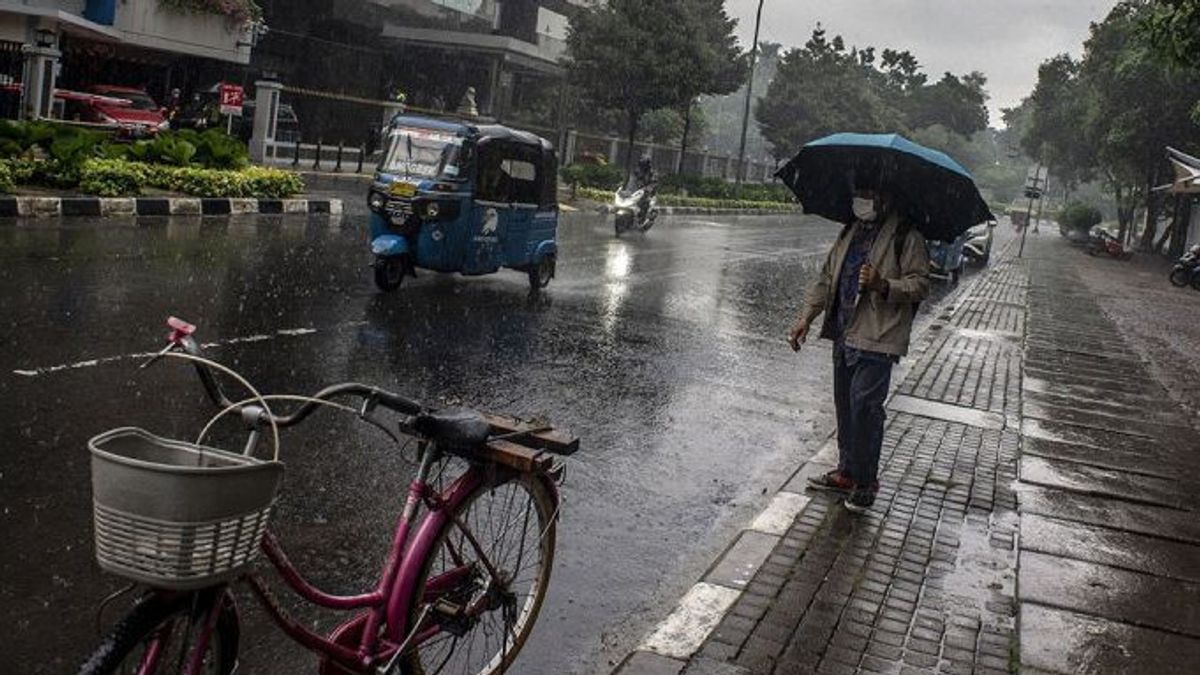


JAKARTA - Many people wonder why it still rains often, even though it has entered the dry season. Of the total 699 seasonal zones, as many as 531 regions are still experiencing rain, 55 regions have entered the dry season, and 113 regions have different seasonal patterns.
Based on the explanation from the Meteorology, Climatology, and Geophysics Agency (BMKG), quoted by Antara, Wednesday, April 22, this condition occurs because April 2026 is still in the transition phase.
BMKG noted that currently only about 7.8 percent of Indonesia's territory has actually entered the dry season. The majority of the area or about 76 percent is still experiencing the rainy season, while the rest is in a transitional condition.
In detail, out of a total of 699 seasonal zones, 531 areas are still experiencing rain, 55 areas have entered the dry season, and 113 areas have different seasonal patterns.
BMKG explained that the dry season in Indonesia is influenced by the monsoon winds from Australia which move from south to north. Therefore, not all regions experience drought simultaneously.
The initial estimate of the dry season occurs gradually:
April-May: East Nusa Tenggara (NTT), West Nusa Tenggara (NTB), Bali, East Java, and Central Java June: Most of Sumatra July: Part of Kalimantan and SulawesiThis pattern causes some areas to still be showered with rain, even though other areas have started to dry out.
BMKG also emphasized that the dry season does not mean that the rain stops completely. The dry limit is when the rainfall is less than 50 mm in 10 days (one dasarian) and continues for three consecutive dasarian. So, the chance of rain still exists.
With this condition, light to moderate rain is still potentially occurring in a number of areas, especially during the transition period of the season.
Regarding the issue of extreme drought, BMKG ensures that the 2026 drought is indeed predicted to be drier than the normal average. However, this condition cannot be categorized as the worst in the last 30 years.
BMKG also emphasized that the dry season does not mean that the rain stops completely. The dry limit is when the rainfall is less than 50 mm in 10 days (one dasarian) and continues for three consecutive dasarian. So, the chance of rain still exists.
With this condition, light to moderate rain is still potentially occurring in a number of areas, especially during the transition period of the season.
Regarding the issue of extreme drought, BMKG ensures that the 2026 drought is indeed predicted to be drier than the normal average. However, this condition cannot be categorized as the worst in the last 30 years.
The English, Chinese, Japanese, Arabic, and French versions are automatically generated by the AI. So there may still be inaccuracies in translating, please always see Indonesian as our main language. (system supported by DigitalSiber.id)
Most Popular Tags
#Prabowo Subianto #donald trump #firearm #8791 #giias 2026Popular


