

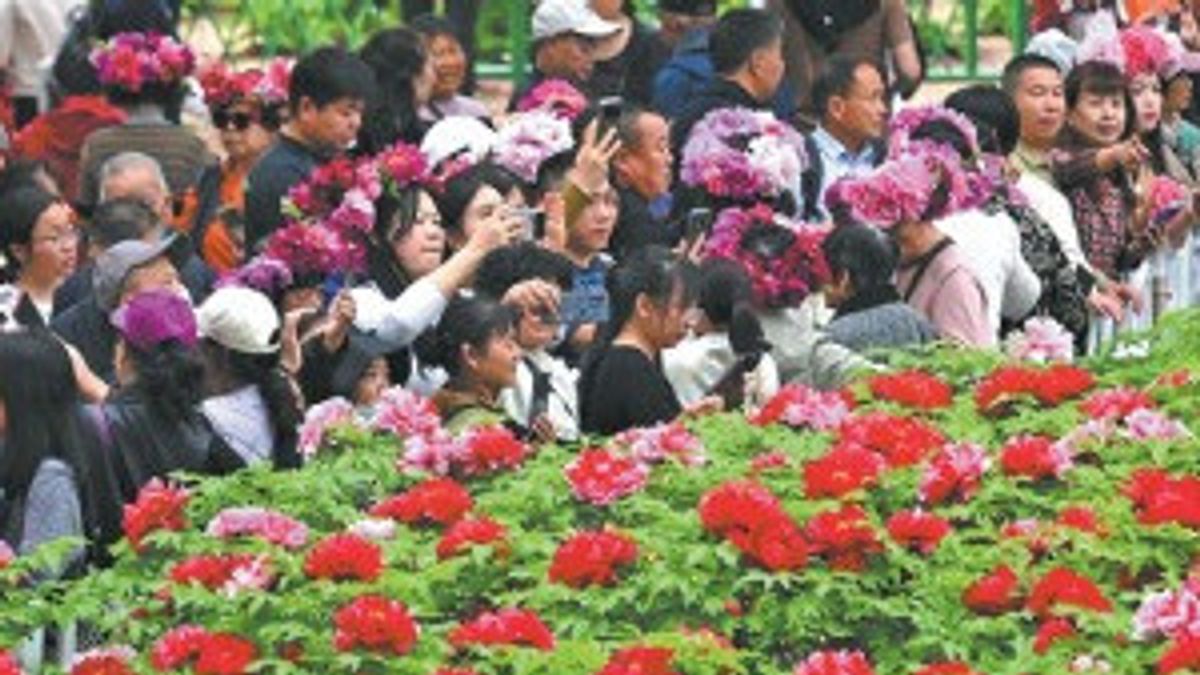


Heze in Shandong Province, China, is not only known as a flower city. China Daily quoted Thursday, April 16, reported that the city dubbed "China's peony capital" makes peonies not only a sight, but also part of local tourism, culture, and economy.
The impression was felt by a tourist from Tunisia, Samar Kerkeni, when he first came to Heze. He thought he would only see peonies in the garden. It turns out that the flower dubbed "king of flowers" in China appears everywhere, from food, hotel decorations, to carpet motifs.
"There are peony elements everywhere," said Kerkeni, who now lives in Wuxi, Jiangsu Province.
However, according to Kerkeni, the main attraction is still in the flower field. The peony expanse in Heze is said to be very wide, colorful, and different from what he has seen before.
In China, peonies have a special place. This flower has long been seen as a symbol of elegance, prosperity, and national pride. Heze itself was officially crowned the "Chinese peony capital" by the China Flower Association in 2012. The city has cultivated peonies for more than 1,500 years.
Now Heze has more than 1,300 registered peony varieties. The colors are not only pink, white, purple, and red, but also green, yellow, even black. More than 1,000 varieties of which were developed by local modern cultivators.
At Caozhou Baihua Park, visitors can meet Sun Wenhai, a 70-year-old agronomist who is still diligently examining the roots and petals of flowers. One of the varieties developed by him, the green peony Lyu Mu Yin Yu, had attracted widespread attention after appearing in the popular costume drama Flourished Peony last year.
Still referring to the China Daily report, Heze also stores old peonies from the Ming and Qing Dynasties. One of them is a pink peony over 400 years old that bloomed again this spring with more than 100 buds.
Heze cultivates tree peonies or mudan and herbal peonies or shaoyao. The first type blooms in early April, followed by the second type a few weeks later. The pattern makes the Heze spring last for a month.
What makes Heze stand out, the peony in this city does not stop in the garden. The flower is present in salads, teas, cakes, wine, peony seed oil, to skin care products. Tourists also have a simple tradition: wearing a fresh peony crown for 10 yuan.
"Once you put it on, it feels like spring wherever you go," Kerkeni said.
The English, Chinese, Japanese, Arabic, and French versions are automatically generated by the AI. So there may still be inaccuracies in translating, please always see Indonesian as our main language. (system supported by DigitalSiber.id)
Most Popular Tags
#Prabowo Subianto #donald trump #Febrie Adriansyah #8791 #giias 2026Popular


